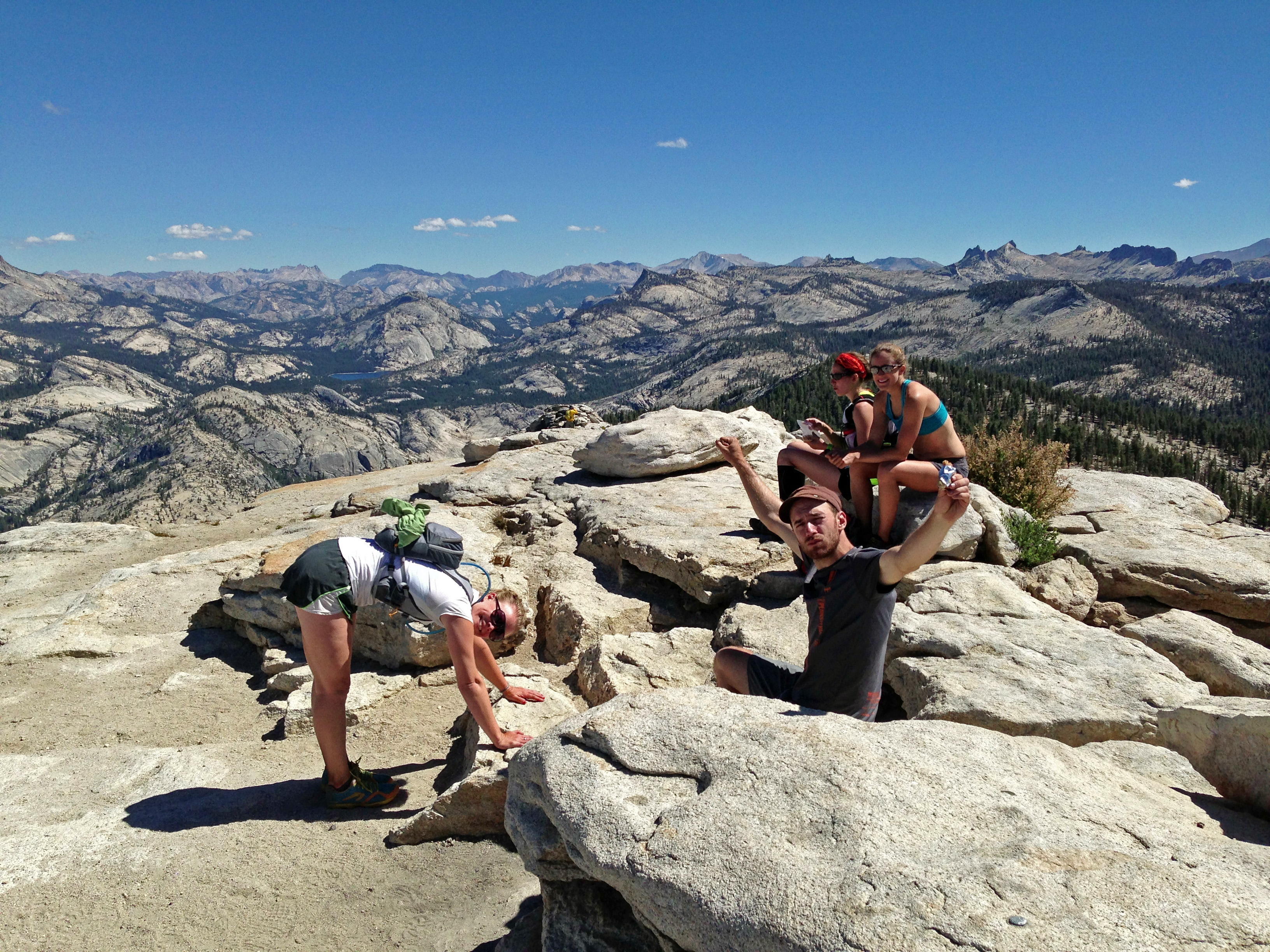
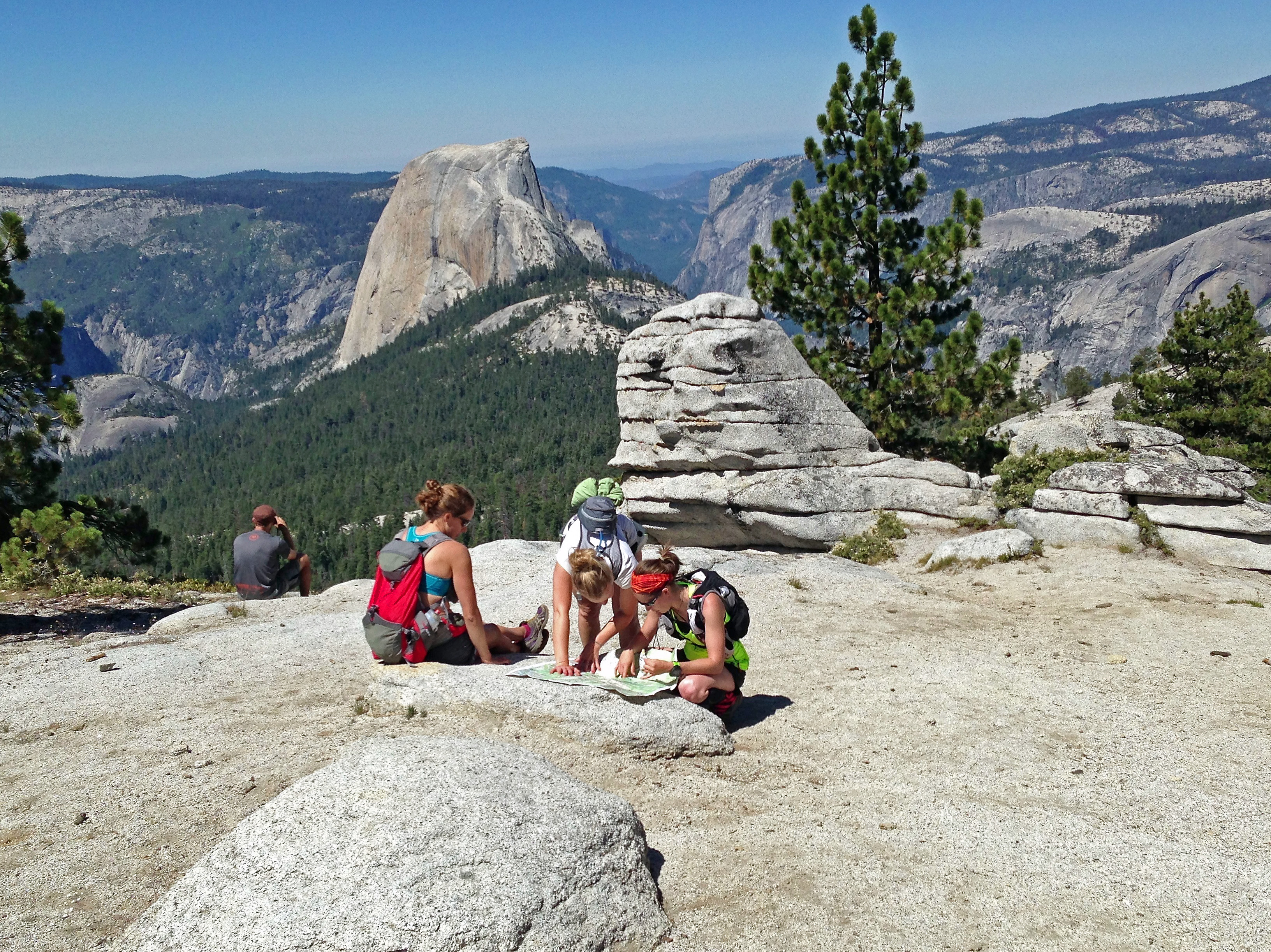
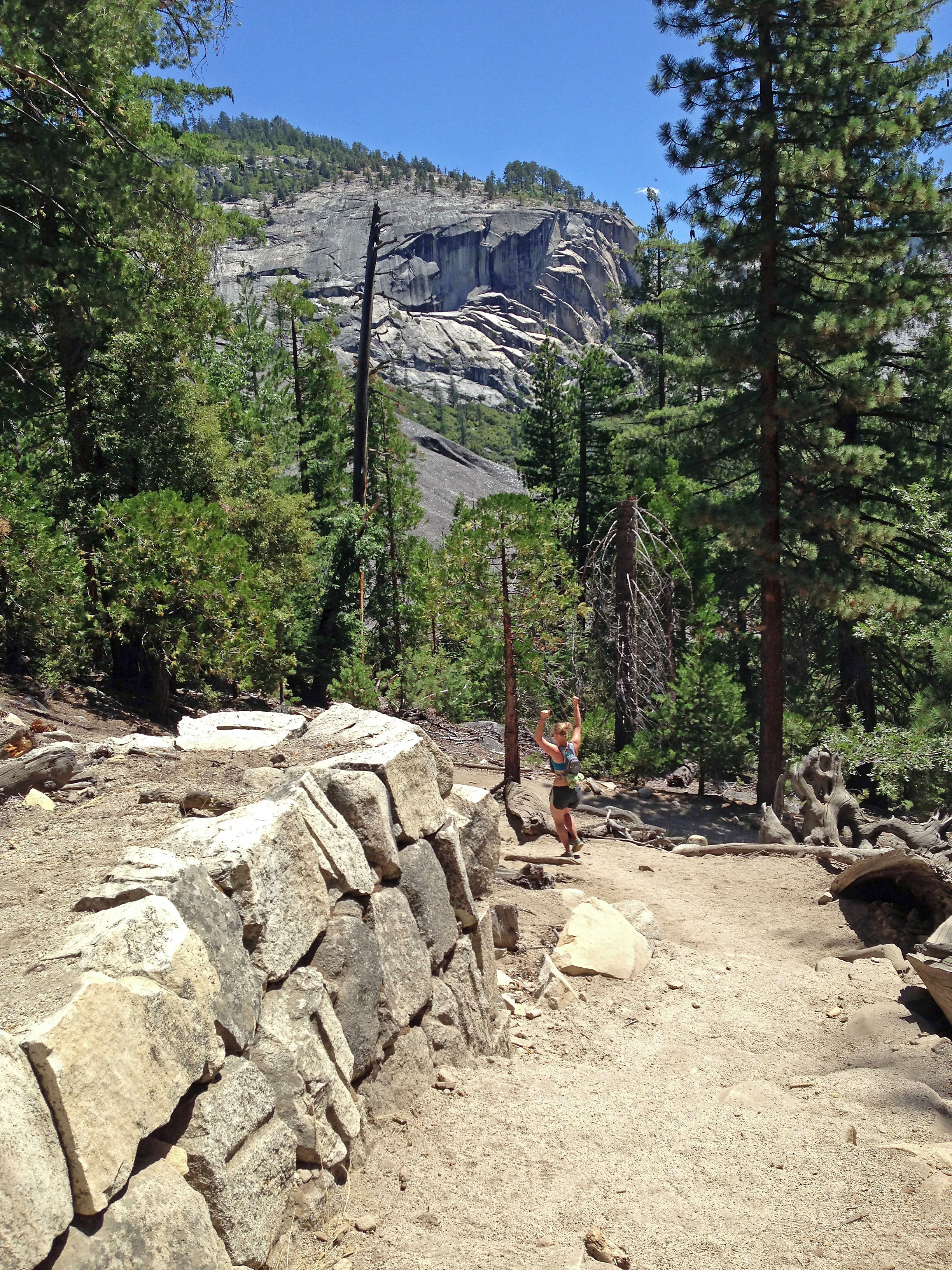
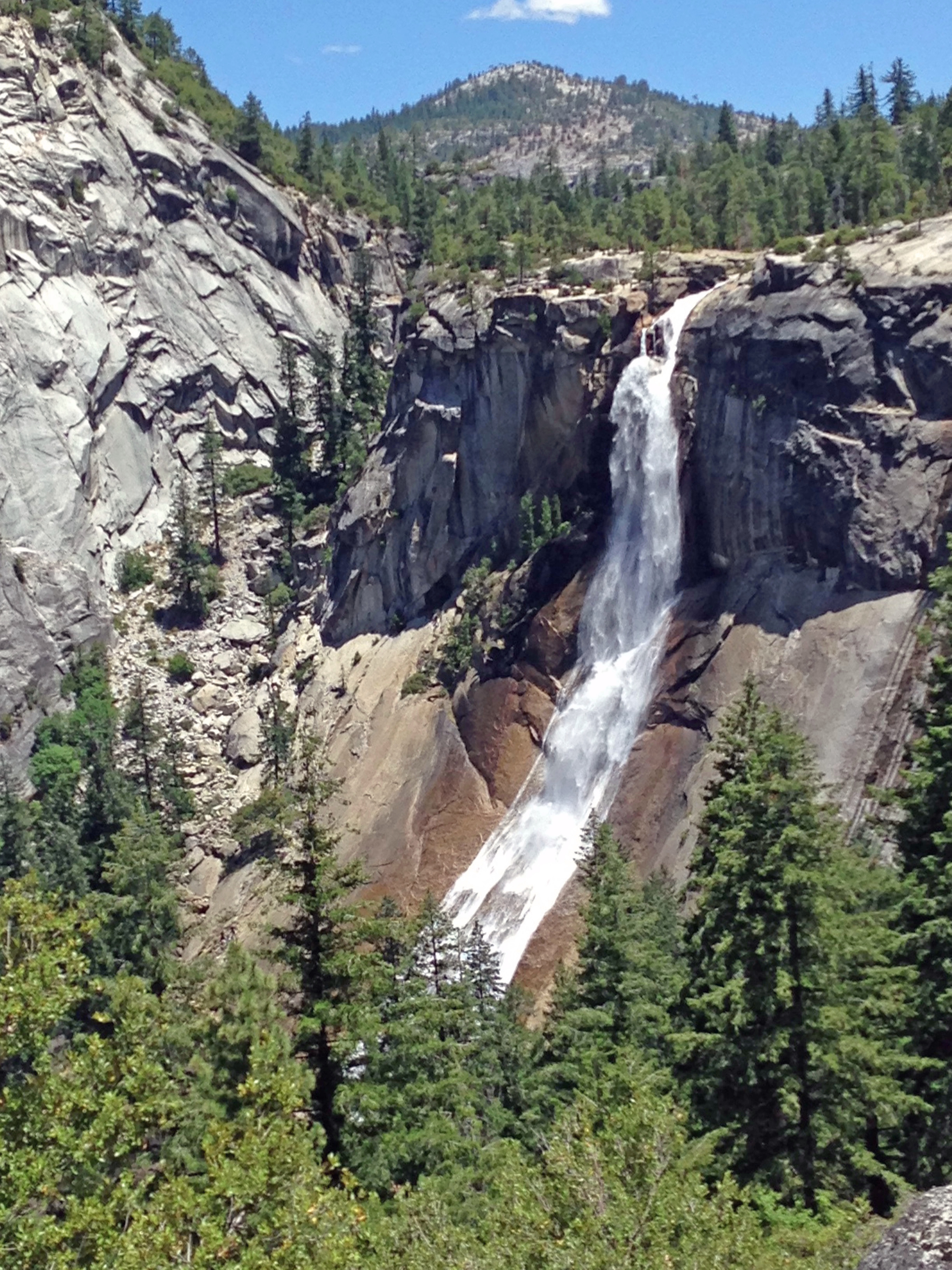
The Benson Lake/Matterhorn Canyon Loop Backpacking Trip

It started with a somewhat random text from my daughter, Ashley. She wanted to know if she could take my dog, Sport, on a solo backpacking trip. After a little back and forth texting, I invited myself instead. Playing the part of Sport is Terri. After a little bit more discussion about destinations, I suggested we do the 54 mile Benson Lake/Matterhorn Canyon Loop. I have wanted to do this trip for at least 15 years. And, I have wanted to return to Matterhorn Canyon ever since an amazing backpacking trip I took from Tuolumne Meadows to Twin Lakes in 1975. I was excited to share the canyon with Ashley. I did warn her that it would be strenuous. We are both marathon runners but backpacking has been an only an occasional thing for both of us. However, she was definitely game. Especially because this route had the varied scenery she wanted during the trip. It passes through thick forest, travels along beautiful alpine lakes, traverses the wide and long Kerrick Meadow, crosses over several high elevation passes and threads up two rocky canyons, Matterhorn Canyon and Slide Canyon, before descending into thick forest again.

Me in Matterhorn Canyon in the summer of 1975. Photo Credit: Ivan Lee

Me in Matterhorn Canyon in the summer of 1975. Photo Credit: Ivan Lee

Among family and friends, I am known as the trip planner. All it takes is a vague suggestion for a trip and in 10 minutes flat I’ve got the itinerary, lodging, and menu planned. This trip was no different with the exception of the menu, which I will get to in detail a little later. Ashley and I settled on a 5 day trip over the Labor Day weekend. We would camp near Twin Lakes Wednesday, enter Hoover Wilderness from Twin Lakes on Thursday, and exit on Monday. We decided to do the loop counterclockwise because I wanted to walk up Matterhorn Canyon from the south. The camp spots were chosen with each day’s mileage charted out.

With only 5 days we would need to stick to the schedule (or better) or we would not make it out by Monday! I typically have a pretty relaxed approach to backpacking planning. I don’t mind carrying a heavy-ish pack for the kind of trips I usually take. But this time the goal was much bigger. In fact, I had not done a trip this big since 1975! So, I did a lot of research on hiking speed, calories burned, and meal planning. We needed to keep things light since we needed to average 11 miles per day. I found the website https://caseyfiedler.wordpress.com by an ultra-light hiker that covers everything you need to know about the calorie to weight ratio approach. I used that approach to plan our meals and snacks. We are not ultra-light hikers, neither of us have the latest and lightest equipment. But the food information was excellent. I developed an EXCEL spreadsheet to calculate the weight of the food and the calories for each day. It totally changed which freeze dried meals and what kind of snacks I chose for the trip. I will never look at backpacking food the same again! By the time I was finished we each had 3000 calories per day with an average calorie density of 150 calories per ounce and our total food weight was 5 lbs apiece. We were never hungry. We ate all the food except for a couple of snack bars and some of the gorp.I also estimated the time each day’s hike would take (It turned out we tended to be faster uphill than estimated but we were a little slower downhill). At the start of the trip our packs each weighed under 30 lbs without water. I added 4 lbs of photography equipment because that was important to me.
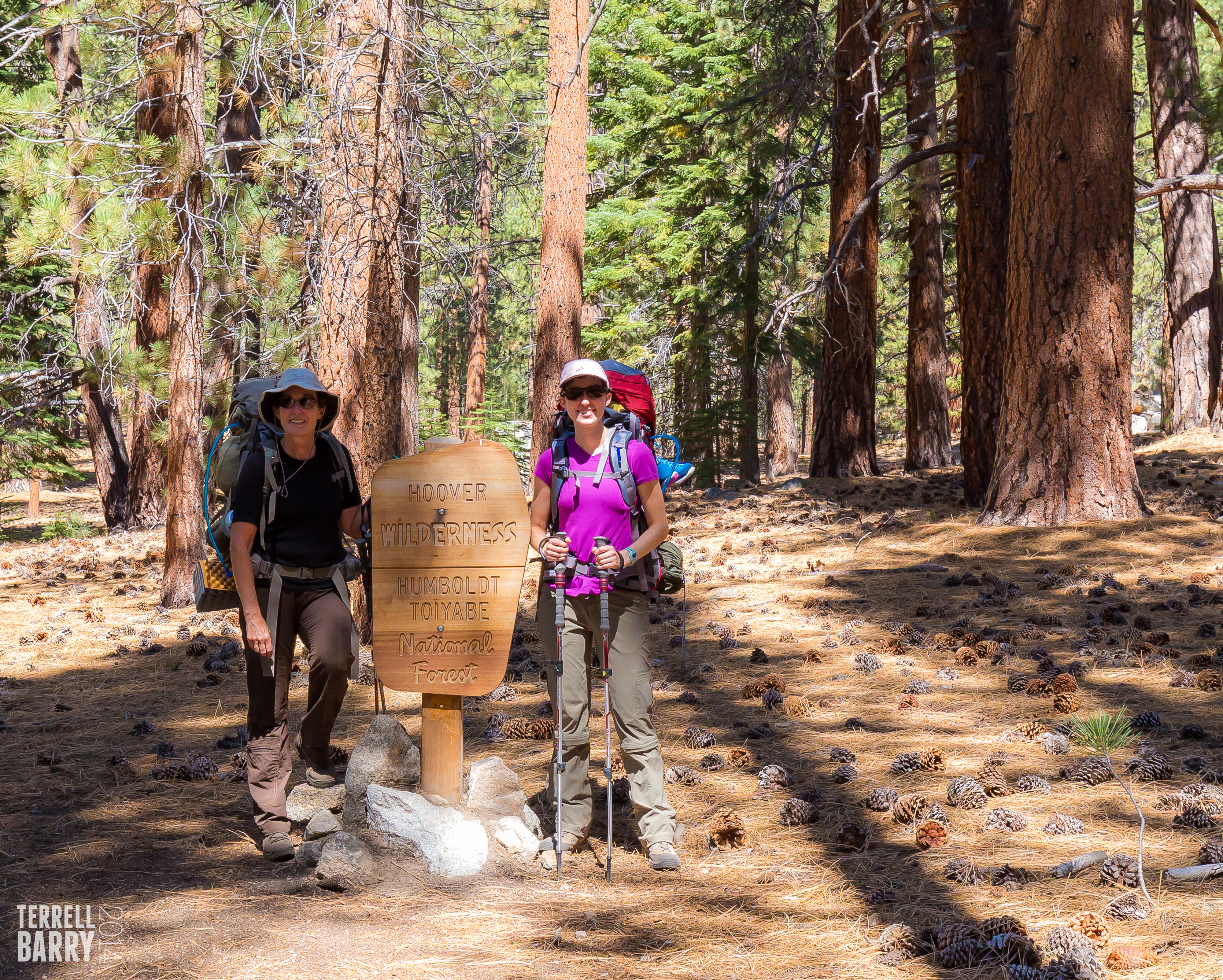
Entering Hoover Wilderness

Entering Hoover Wilderness

Our first night was at Peeler Lake. This was the shortest day at 8 miles. We found a beautiful campsite on the southwest side of the lake. We had gotten a later start than we wanted so we arrived late. We were setting up camp and getting water in near darkness. Ashley did remark that night that everything about backpacking was harder than she remembered. But she is a tough cookie and took it all in stride.
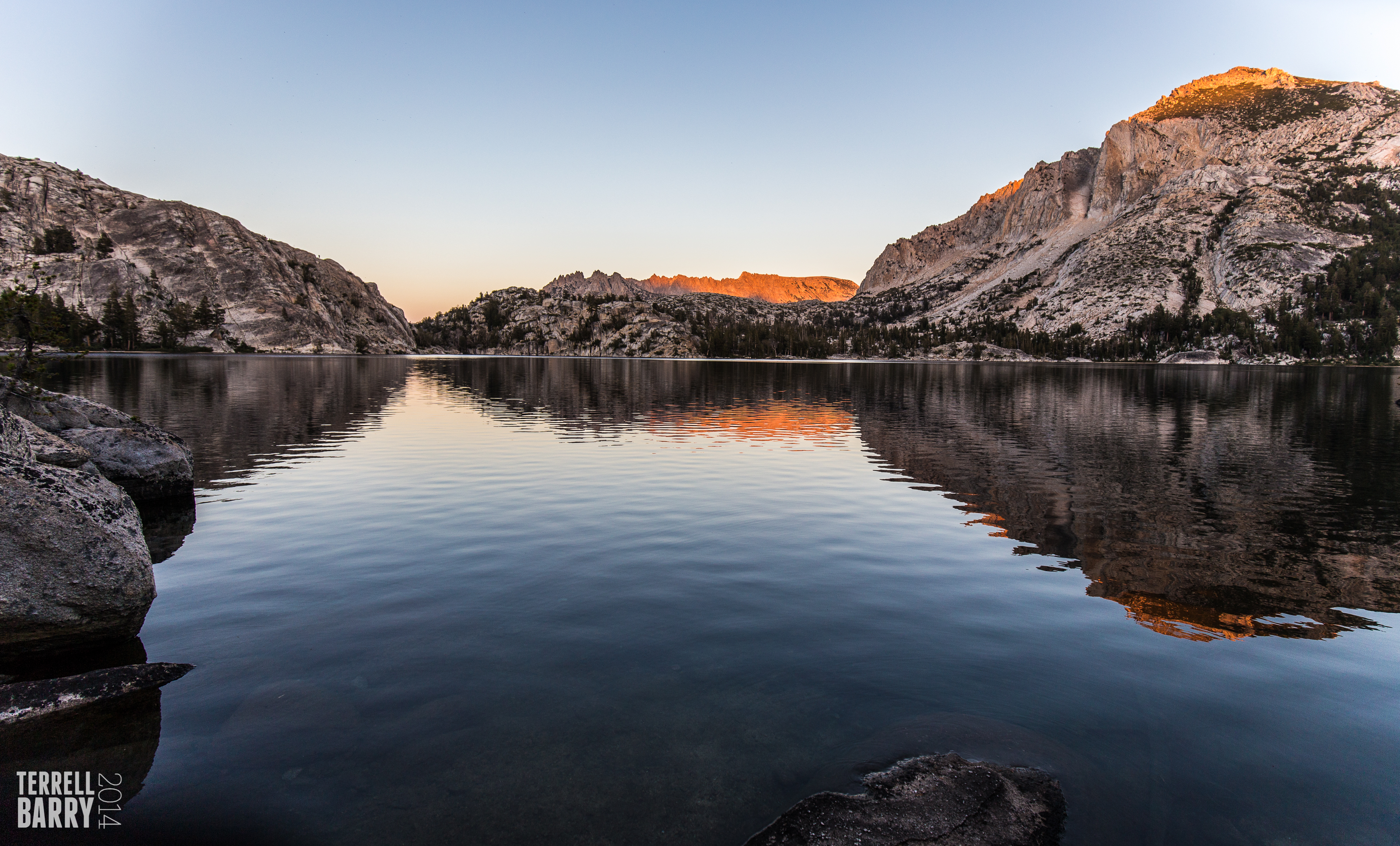
Peeler Lake at sunset

Peeler Lake at sunset

Once we were finished with dinner and the sun had set, I prepared to take my first Milky Way photos ever. I set up the tripod and camera and realized right away that I had not played with my new manual lens enough at home. I couldn’t get the remote to interact with the camera (that turned out to be operator error!) so I had to use the delayed shutter instead. Oh, well, I still got some shots I really like. In between one of the shots we saw a meteor so big it actually lit up the sky like firework. I wish I would have been lucky enough to get it in one of my photos. But just seeing it was amazing.
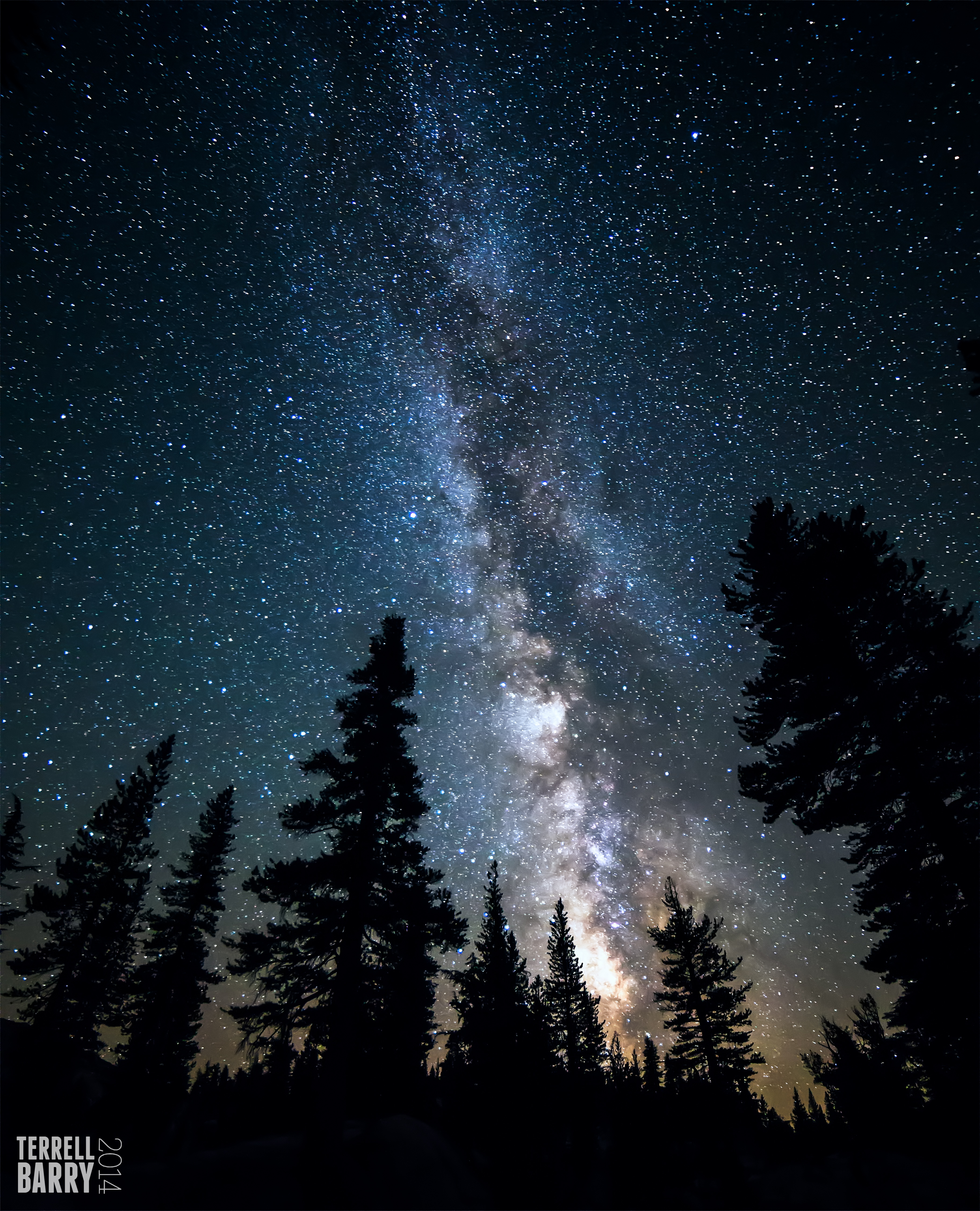
My first serious Milky Way photo!

My first serious Milky Way photo!

The next day, Friday, we headed to Benson Lake. This is an alpine lake with a huge sand beach. The hike to Benson Lake was lovely. The route travels through Kerrick Meadows and over Seavey Pass. I will say this day was tougher than either of us expected. The elevation gain on the route was not huge and it was net downhill. But once we were over Seavey Pass it seemed like it took forever to reach the lake, even though it was only 3 miles.
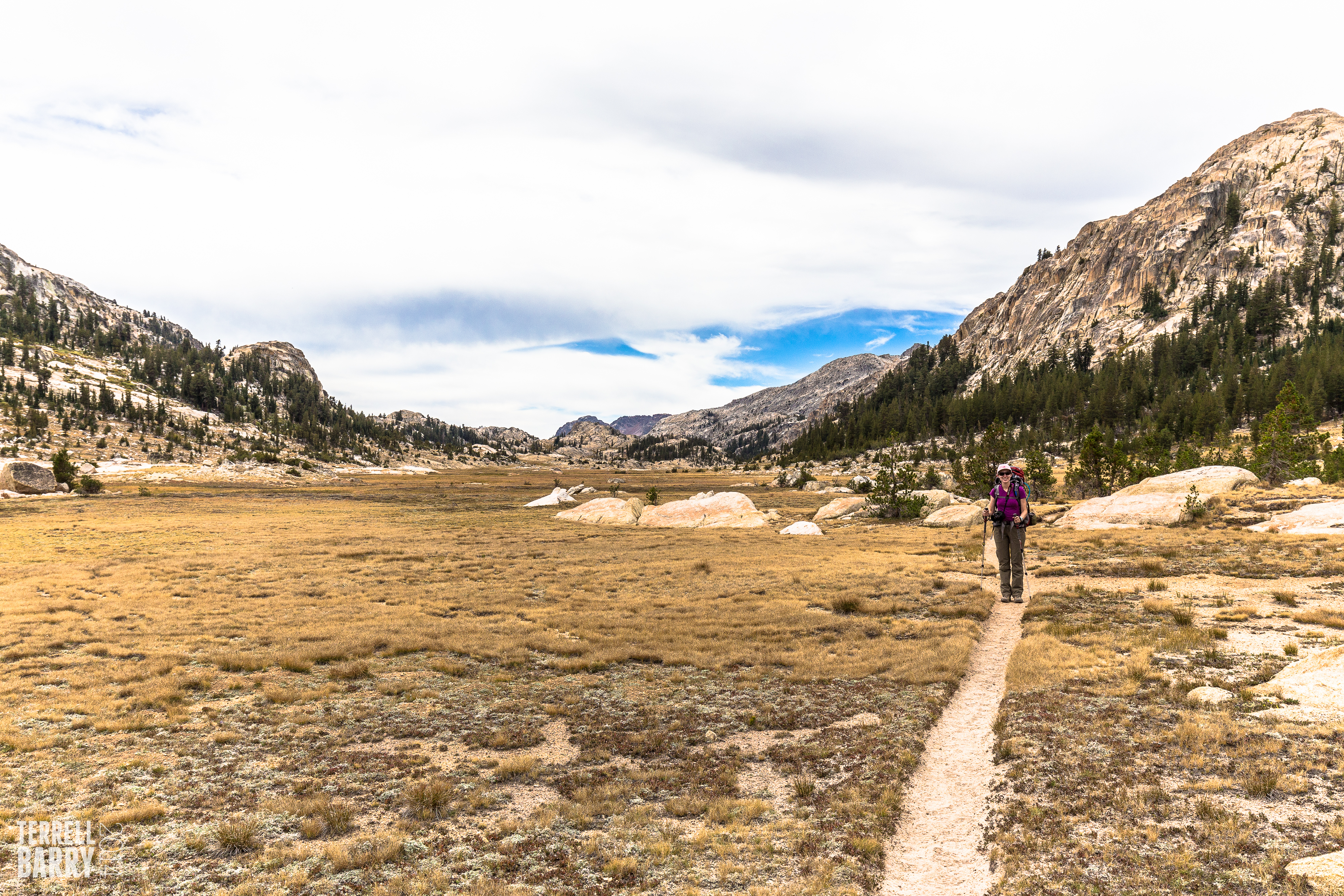
Ashley enjoying  the hike through Kerrick Meadow

Ashley enjoying the hike through Kerrick Meadow.

When we finally arrived we were surprised and happy to find that we had the lake completely to ourselves. Ashley wanted to camp on the beach, which we did. It was nice and soft but I worried about getting sand in everything. But, we managed and it was a really nice view from our spot. Unfortunately, it was too late and chilly for the swim we had hoped to take. We also found we had to stand in the lake to collect water. Oh, well. More information for next time!
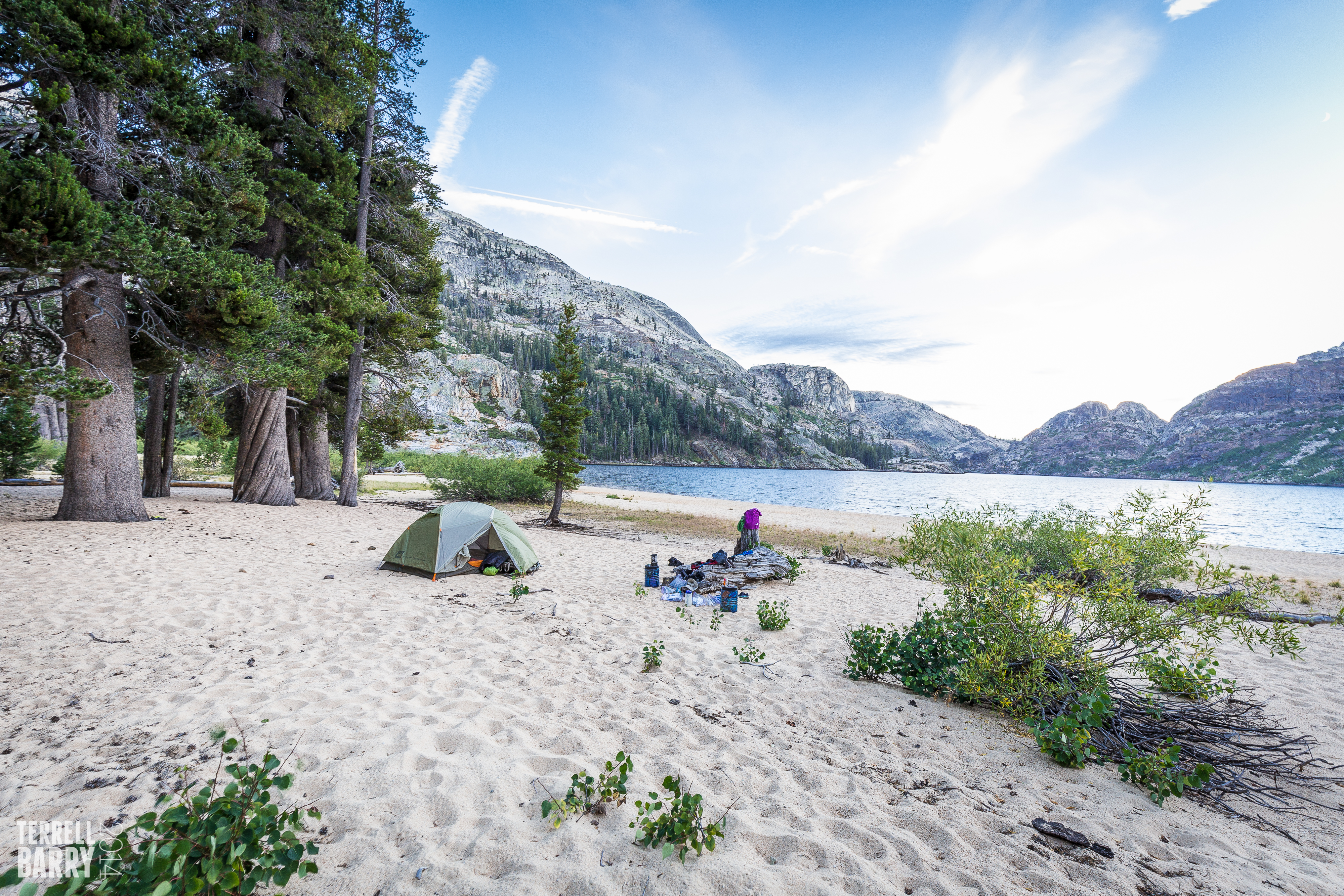
Camping on the beach at Benson Lake.

Camping on the beach at Benson Lake.

Saturday’s hike was from Benson Lake to the south end of Matterhorn Canyon. This was a big day with 11 miles that included 2500 elevation gain and 1600 ft of elevation loss. And I was not entirely clear where we would camp in Matterhorn Canyon. But the weather was beautiful and we were excited to head to Matterhorn Canyon. Our first climb of the day was from Benson Lake (7581 ft) up to Smedburg Lake (9213 ft). We arrive at Smedburg Lake around 2 pm. Smedburg Lake is one of the most remote lakes in Yosemite National Park. It is beautiful, huge, and 25 miles from anywhere. I wish we had an extra day to spend there. However, the wind had picked up. It was very windy, the white caps on the lake were impressive.
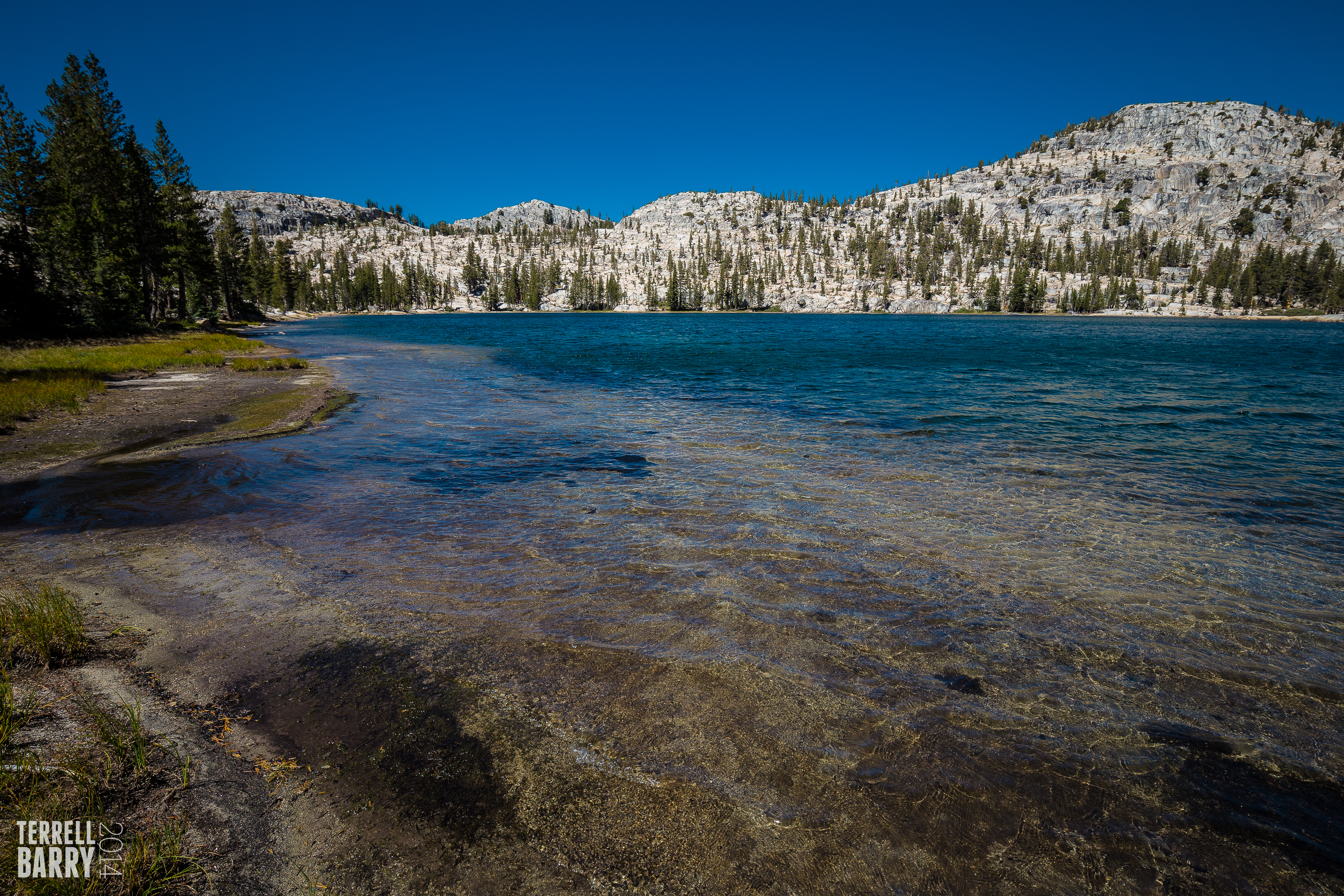
Just the southwest corner of Smedburg Lake. This lake is huge and 25 miles from anywhere.

Just the southwest corner of Smedburg Lake. This lake is huge and 25 miles from anywhere.

We had lunch at Smedburg Lake and then headed out to cross Benson Pass. We thought we had crossed the pass several times but each time we were deceived! Once we reached the pass it was unmistakable. The view was amazing. We spend just a little time there because we still had 5 miles to go and it was 4:00 pm. Onward!
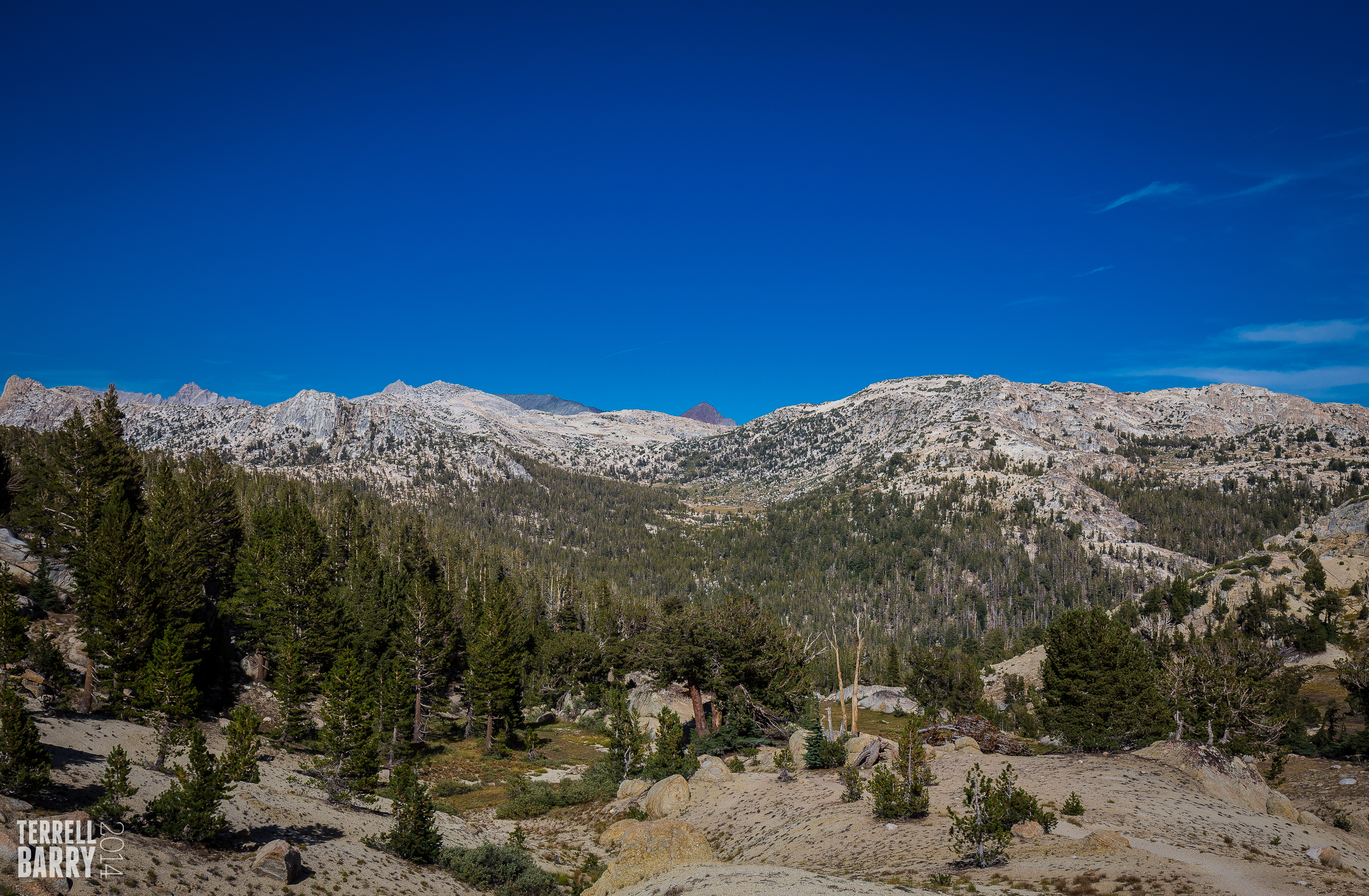
Benson Pass, facing east.  Matterhorn Canyon is to the left.

Benson Pass, facing east.
Matterhorn Canyon is to the left.

We reached the Matterhorn Canyon trail junction at 6:00 pm. I had thought we would camp close to that junction but there was no convenient water and it was not a great camping location. So, we continued up the canyon. We ended up hiking 2 more miles, the last of it in the dark, to arrive where the trail crossed Matterhorn Creek. That made for easy water collection. Finding a relatively flat spot to set the tent was challenging since the canyon gets more narrow and steep-sided the higher up you travel. And we were in thick forest. We made do with a slightly sloping spot positioning our heads up hill. Dinner made in the dark with the stars above was still better than any day back in civilization!

We hiked a total of 13 miles that day. We were now a little ahead of schedule. That night we discussed the last two days of hiking. The itinerary as planned for Sunday was to have a shorter hiking day and to camp in Slide Canyon. Then Monday we would hike 13.5 miles out over Mule Pass on Monday. We decided, instead, to hike over both Burro Pass and Mule Pass on Sunday, camping just below Mule Pass. After all, Saturday was a huge day, with more elevation gain, and we handled that fine. How hard could it be? This would make Monday a shorter day.

Our first view of the head of Matterhorn Canyon

Our first view of upper Matterhorn Canyon


Re-enactment of 1975. Photo credit: Ashley Barry

Re-enactment of 1975.
Photo credit: Ashley Barry

Sunday morning we set out to cross our two passes, Burro Pass and Mule Pass. After a short time Matterhorn Peak came into view. It was just a beautiful as I remembered. Our pace was leisurely to enjoy the canyon but we were mindful of the time. We were at the top of Burro Pass at 1:00 pm. We took our lunch break there. The view in both directions were breathtaking. I had scrambled up Matterhorn Peak in 1975 but there was no time for that this trip. I looked across to Mule Pass and thought it didn’t look too bad…
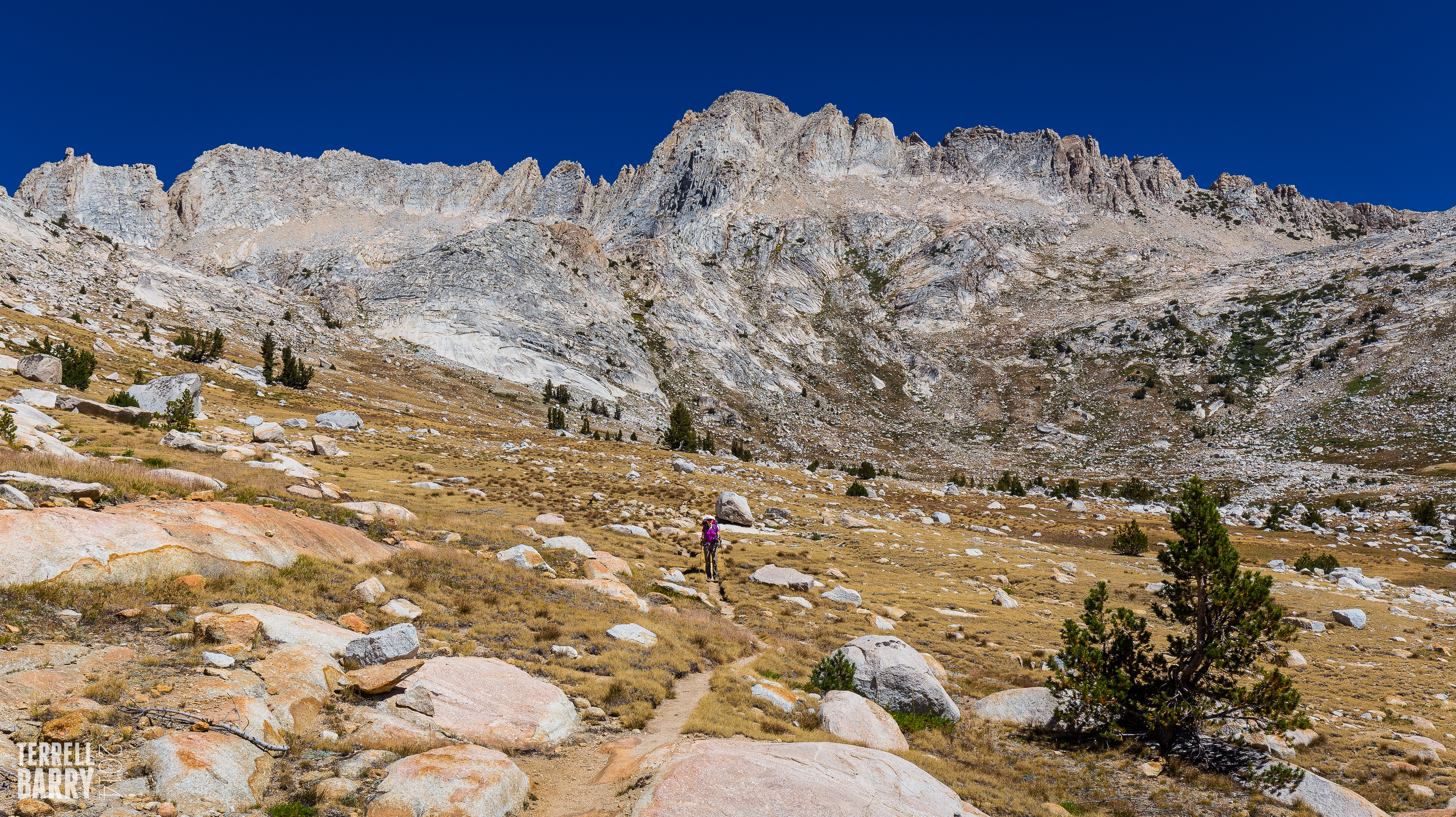
Approaching Burro Pass.
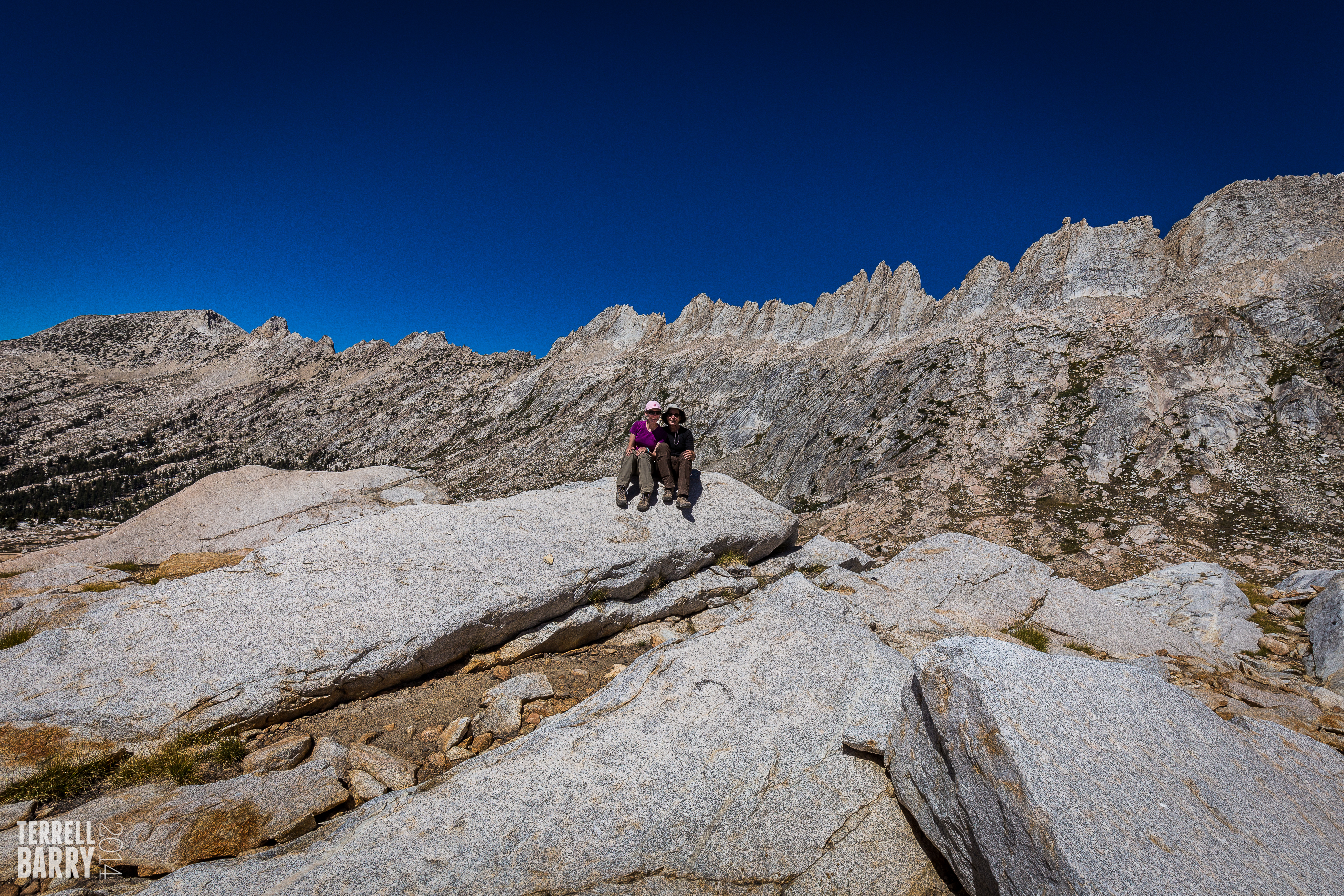
Approaching Burro Pass.

Our one and only selfie attempt. Sawtooh Ridge behind us.
Our one and only selfie attempt. Sawtooh Ridge behind us.

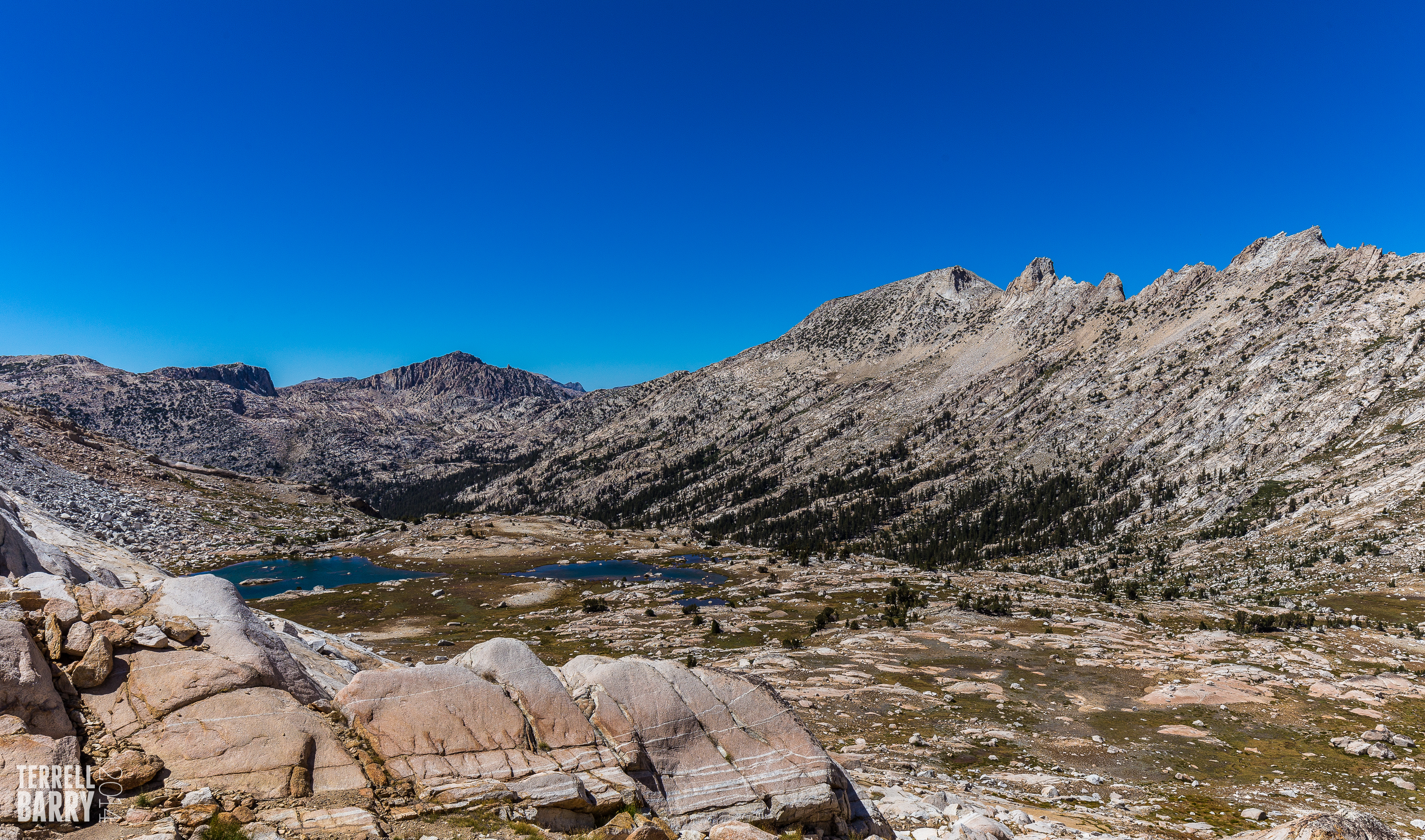
Slide Canyon and Mule Pass directly across from us on the right.

Slide Canyon and Mule Pass directly across from us on the right.

After lunch we quickly descended into Slide Canyon. This is such a beautiful area that I plan to return next season directly from Twin Lakes. The hike directly from Twin Lakes into Slide Canyon in the clockwise direction is about 14 miles. Ashley loved the Sawtooth Ridge, that’s my daughter! I love the Sawtooth Ridge too. In retrospect, we probably hiked through Slide Canyon at a little too leisurely a pace but we planned to camp just over Mule Pass so it didn’t seem that far. As we hiked along I started to think about the pass name. Burro Pass versus Mule Pass. Hmmm, mules are more cantankerous than burros. I hope that isn’t why the names were assigned that way. Well, Mule Pass kicked our butts. It was long and hard even though the elevation gain was only 1000 ft. That was a big surprise, nothing we hiked the entire trip felt that hard. It could have been because we were tired from the day before or the trip as a whole. But Ashley reminded me that people  we talked to way back on the first day said that hikers had to be “dumb as a mule to go up Mule Pass.” The counter-clockwise loop (our direction of travel) takes hikers up Mule Pass. When we reached the top, which is the border between Yosemite Park and Hoover Wilderness, Ashley remarked that Yosemite had just chewed us up and spit us out.

The next surprise was that a party with pack lamas was camped in the only dry spot in the area below Mule Pass we had planned to stop. So we had to continue hiking. I wasn’t sure exactly where the next opportunity to camp would be but I knew it was at least a mile. We were hungry, tired, and almost out of water. I was not happy. Luckily, Ashley became the cheerleader. Then in a talus field along the trail we saw our first, and only, Pika. It was so cute and it really interacted with us. We both enjoyed the Pika visit. We also took that opportunity to also have a snack and a little water. We also put on some warmer clothes since it had gotten quite chilly. Refueled, we headed further down in elevation. We ended up finding a perfect camping spot, flat and nearby water. There was even still a little daylight as we set up camp. That night we had hot chocolate after dinner for the first time during the trip. To make things even better, even tho it was a full moon but I managed to take a few more Milky Way photos. It was perfect!
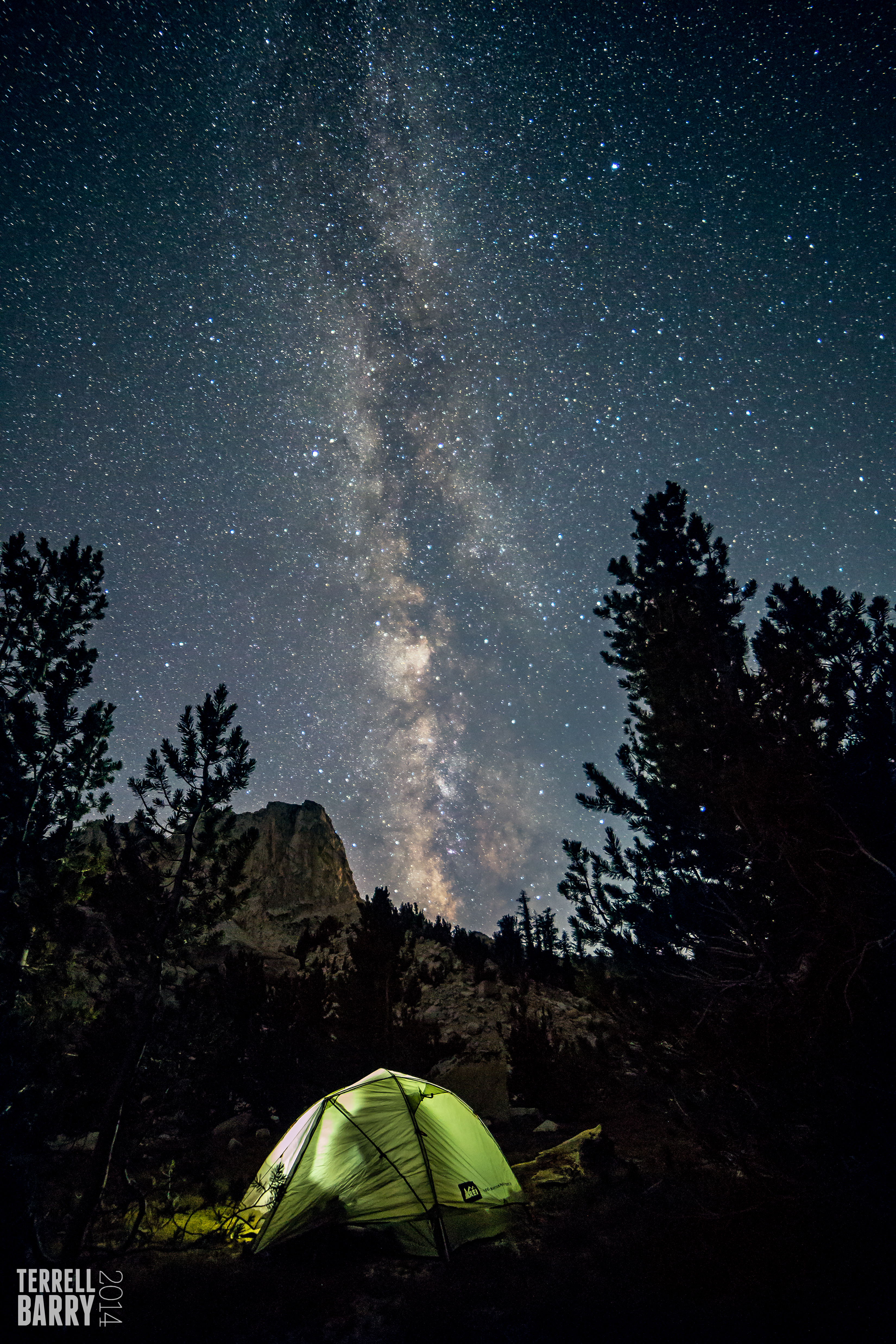
Ashley relaxing in our tent while I'm taking Milky Way photos. It was chilly!

Ashley relaxing in our tent while I’m taking Milky Way photos. It was chilly!

The next morning we woke early, packed quickly, and decided to aim for lunch at the Cafe at Mono Village. We had 9 downhill miles to cover. Off we went. We passed Crown Lake on the way. It was a beautiful little lake but there were not many campsites and people were camped in all of them so we were glad we stopped where we did the previous night.
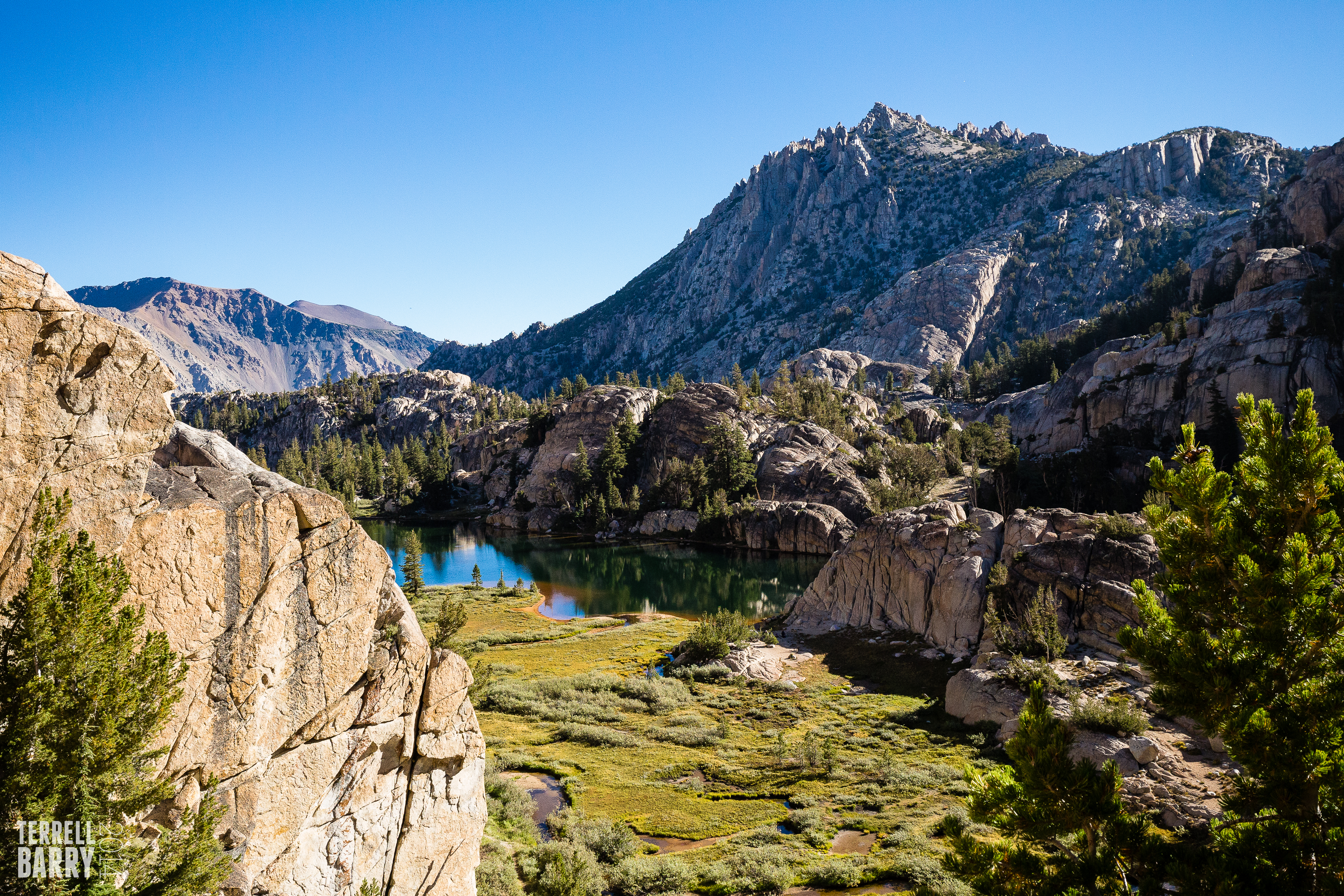
Crown Lake. The colors were gorgeous.

Crown Lake. The colors were gorgeous.

We quickly reached the trail junction heading back to Twin Lakes. We had 6.7 miles left that we had also covered on the way in. Ashley experienced firsthand why backpackers heading out on a route that they covered going in have that “look” in their eye and determination in their step! We covered 9 miles in a little over 4 hours, including breaks. We had a great lunch and then left for home. Since it was Labor Day, and Tahoe traffic can be expected to be heavy, we decided to go home over Sonora Pass. It was a nice drive and a nice end to a wonderful, but tough, mother/daughter backpacking trip.

My full set of photo can be found on Flickr in the Benson Lake/Matterhorn Canyon Loop – Backpacking Album.
The Central Yosemite Tour – A most excellent trail run!

IMG_0226_edited-1

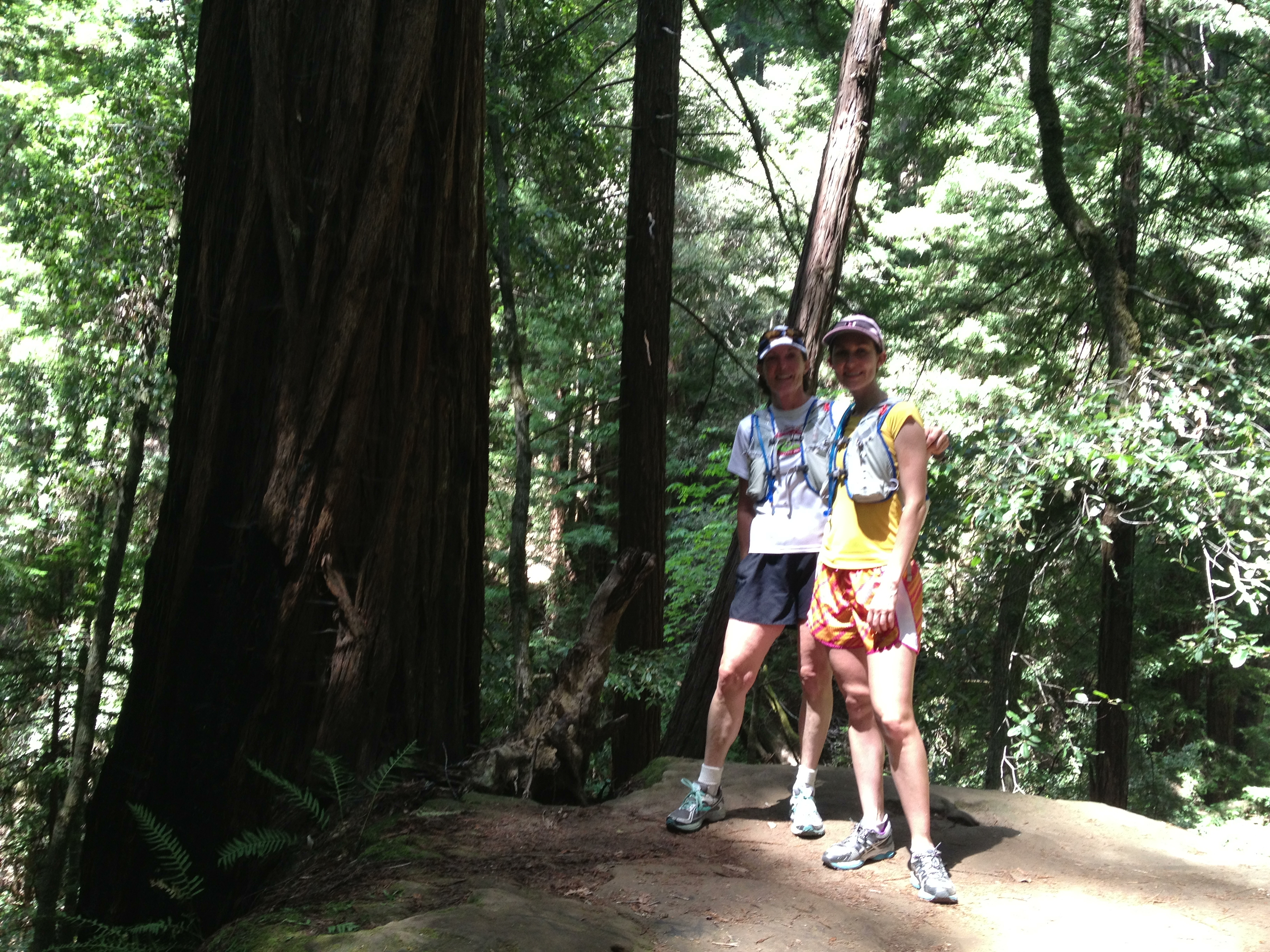
I have run thousands of miles on the road, including 11 marathons and countless shorter races both on the road and on the track. Although I do more climbing than running now, for a long time I was among those people who could say, “I think I’ll run a half marathon this weekend, for fun.” However, I never did much trail running. My friend Lizzy is an ultra-runner. She loves long, long, trail running and is like a gazelle, hopping and skipping down the trails for miles and miles. She has run The Zion Traverse (50 miles) and is training for a 50 mile race this coming August in Squamish, British Colombia. Lizzy invited my daughter, Ashley, and I to join her on a training run on the Skyline to the Sea Trail in Big Basin Park this last spring. Ashley and I only did the second half with Lizzy but it was very fun – even including my face plant into the fire road with 6 miles still to go to the car.

Ashley and me on the Big Basin run. Photo Credit: Colin Delehanty

Ashley and me on the Big Basin run.
Photo Credit: Colin Delehanty

So, when Lizzy posted the Central Yosemite Tour Event on Facebook and it included a 16-ish mile portion I signed up to go. The entire Tour was 50k, which Lizzy was doing as another training run for Squamish. The Tour was on July 14 so everyone showed up at the Tuolumne Meadows store July 13 to start the process of car shuttling. We would leave cars in Yosemite Valley and Glacier Point.

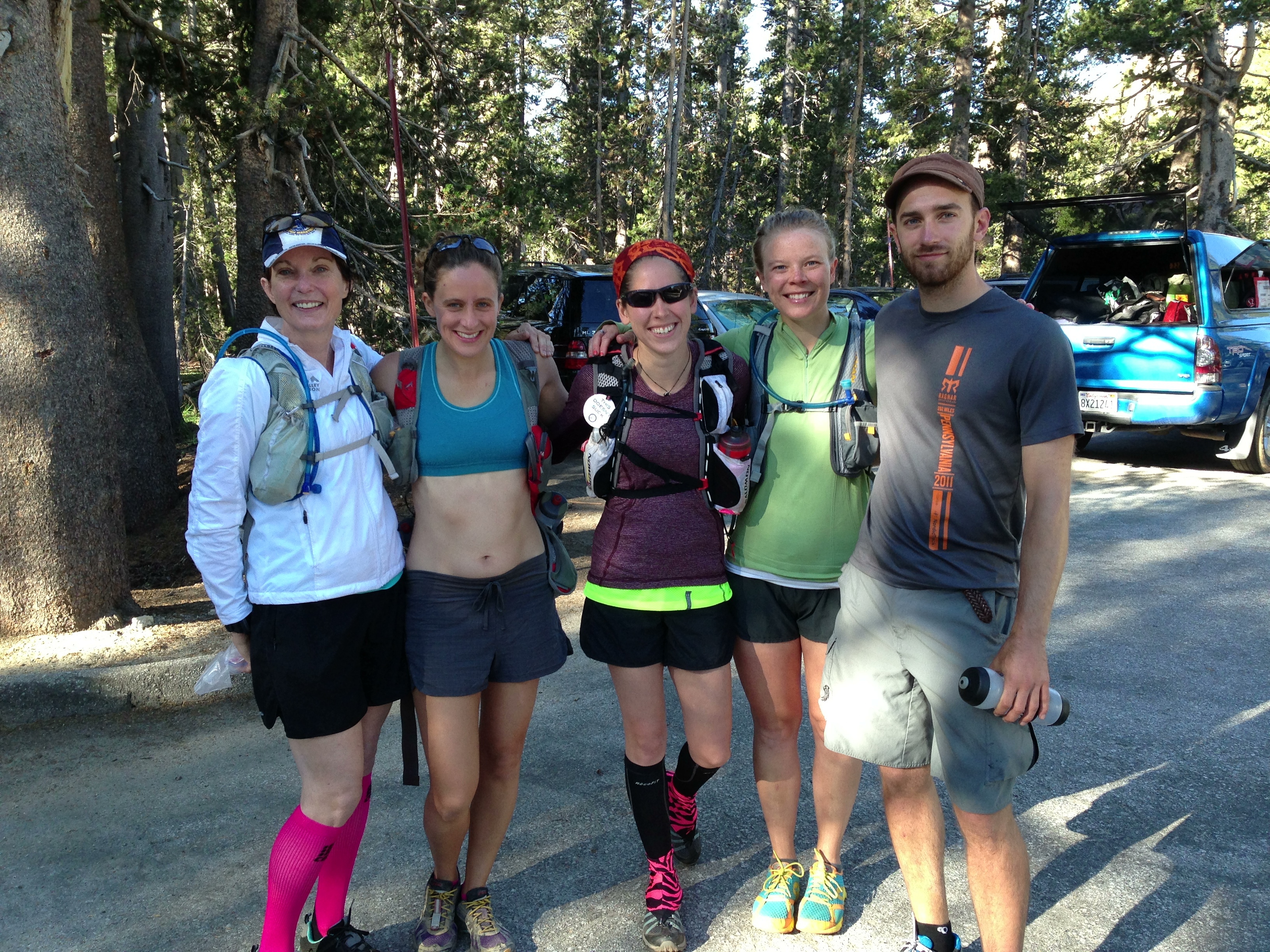
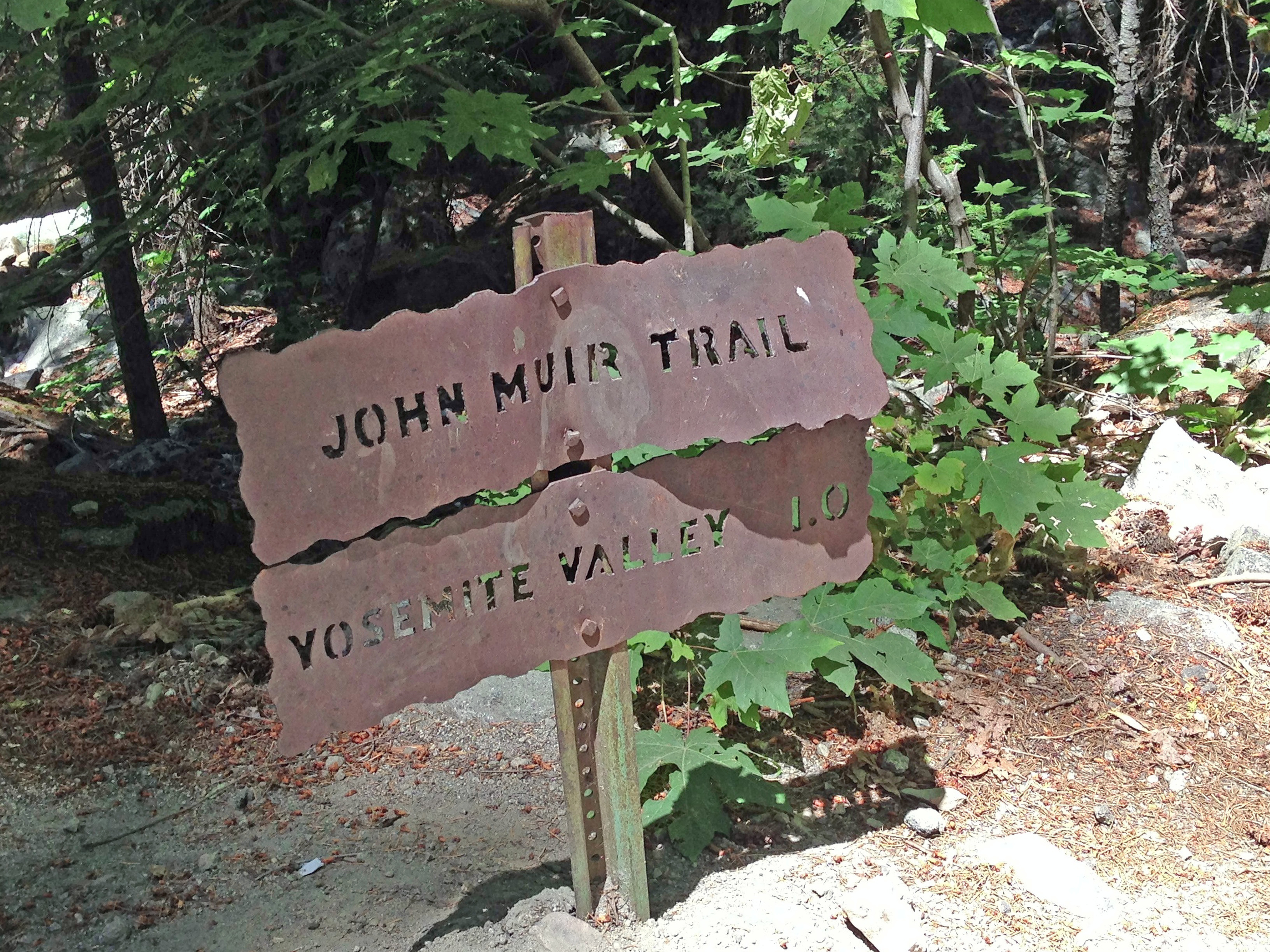
Five of us (Lizzy, Julie, Kate, Geoff, and me) would start the run at Tenaya Lake. Julie planned to run either to Glacier Point or to Tunnel View with Lizzy via the Panorama Trail. Kate, Geoff, and I planned to run to Happy Isles in Yosemite Valley via the John Muir Trail. The run day car plan was that I would run to the Valley and then drive to Tunnel View where Lizzy would finish the run with her husband, Luke. Luke planned to start running at Glacier Point and run to the end with Lizzy. The car shuttling always takes quite a bit of time but we were headed back towards Tuolumne Meadows by mid-afternoon. We stopped at Tenaya Lake for a swim and nap on the beach. They swam… too cold for me. I napped and had weird dreams that incorporated all the conversations I heard among beach goers while I was sleeping. That night we had dinner at the Whoa Nellie Deli at the Mobil Station in Lee Vining. It was a beautiful evening and great food, as usual. You just can’t go to the Eastside without at the Whoa Nellie Deli!

Me, Julie, Lizzy, Kate and Jeff  at Tenaya Lake  Photo Credit: Luke Stefurak

Me, Julie, Lizzy, Kate and Jeff at Tenaya Lake
Photo Credit: Luke Stefurak

The next morning we quickly packed up and were ready to run at the Tenaya Lake/Clouds Rest Trailhead. I had never been on this trail so I was excited to see the views from Clouds Rest. The trail starts out pretty flat but then heads steeply uphill. It became clear to me Luke’s reason for yelling to us to “enjoy the first 2.5 miles” as we started out of the parking lot! Switchback after switchback. I had made a promise to myself that I wouldn’t hammer the beginning only to be in agony at the end of the 16.4 miles. So, I followed Lizzy’s advice and power walked up the switchbacks rather than trying to run. Luke had said sections of the trail were too steep to run – coming from a guy who runs anything that can be run.

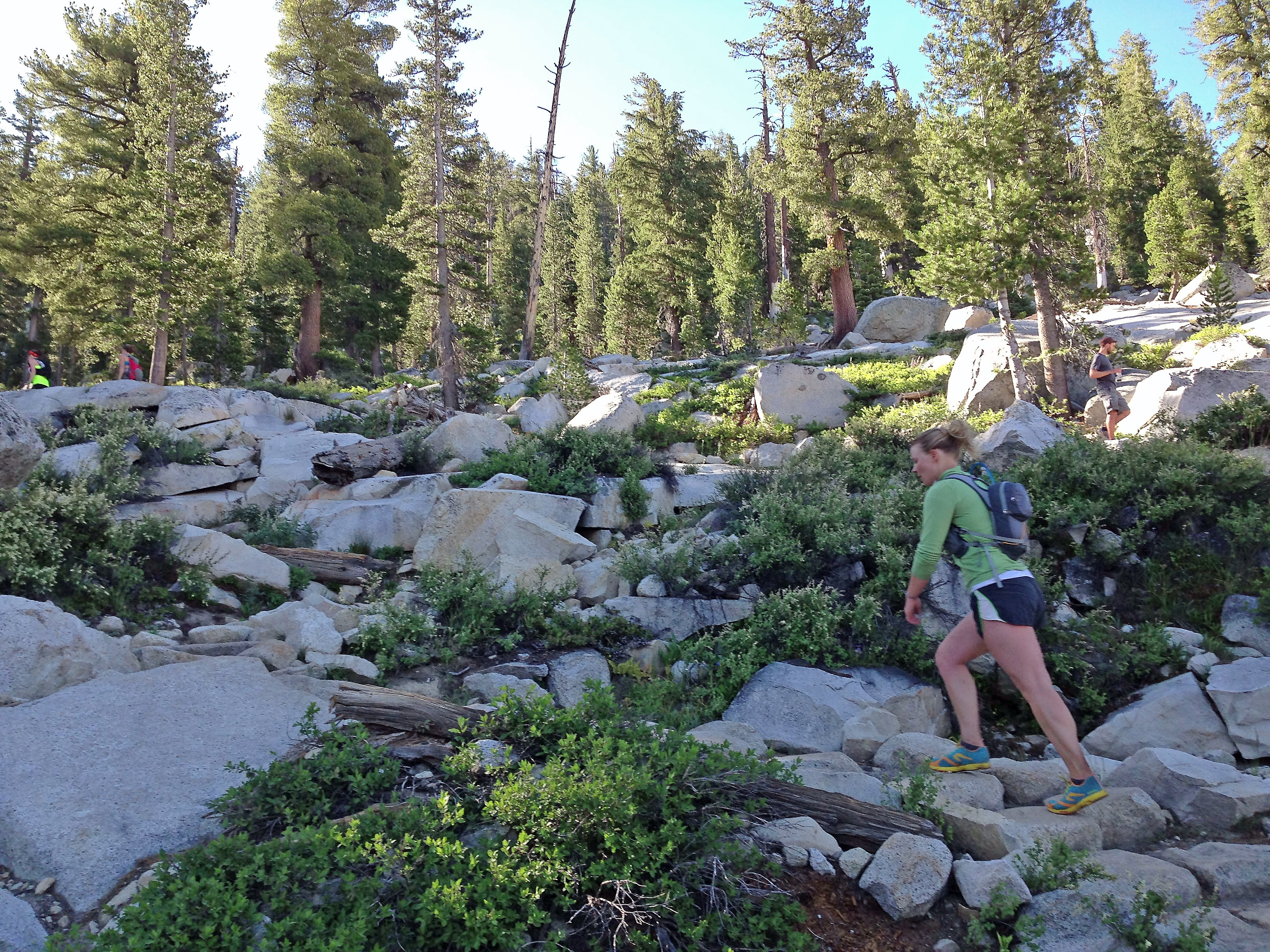
Kate on the trail. Lizzy and Julie are ahead in the upper left corner

Kate and Geoff on the trail. Lizzy and Julie are ahead in the upper left
Photo Credit: Terrell Barry

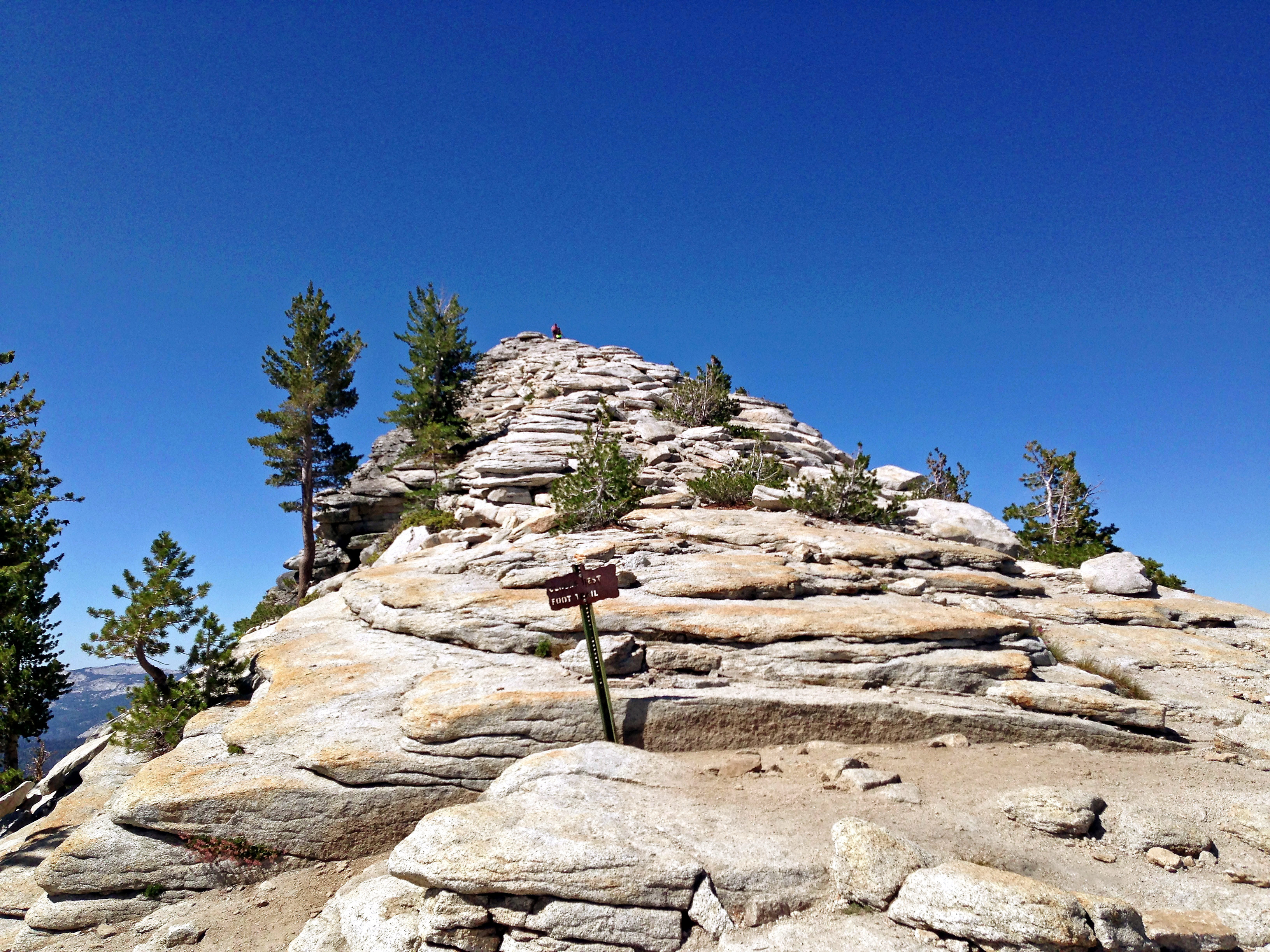
The trail to the top of Clouds Rest Photo credit: Terrell Barry

The trail to the top of Clouds Rest
Photo credit: Terrell Barry

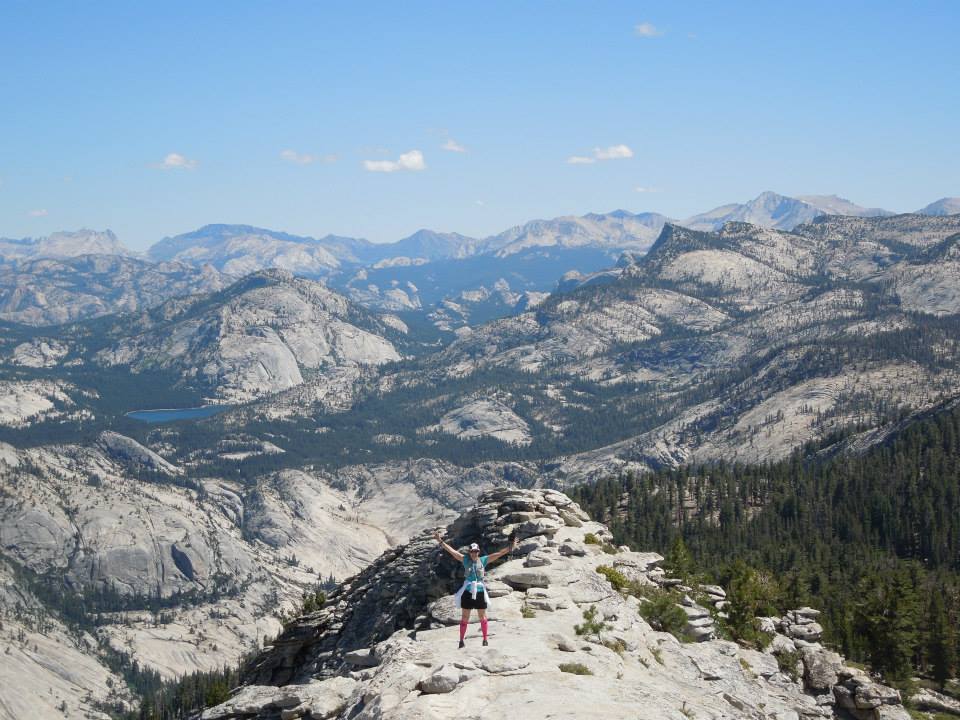
Even with power walking we were on top of Clouds Rest in less than 2 ½ hours. And none of us felt taxed. Good news! The views were astounding. I highly recommend the hike from Tenaya Lake to the top of Clouds Rest, it is totally worth the effort to get there. We actually spent more time than intended on top of Clouds Rest – just soaking in the views,taking pictures, snacking, stretching.

That’s me approaching the top of Clouds rest. Tenaya Lake is above me to the left – the turquoise lake
Photo Credit: Julie Jakoboski

On top of Clouds Rest. Yippie! Photo Credit: Terrell Barry

On top of Clouds Rest. Yippie!
Photo Credit: Terrell Barry

Yosemite Valley and Half Dome from the top of Clouds Rest Photo Credit: Terrell Barry

Yosemite Valley and Half Dome from the top of Clouds Rest
Photo Credit: Terrell Barry

Eventually, we all agreed we needed to move on. Clouds Rest is the highest elevation point on The Tour. It was pretty much downhill from there to Yosemite Valley (my destination), with only a few sections of flat and gently uphill. I quickly felt the effects of running downhill and tried to take it easy. I worried about the last part of the John Muir Trail into the Valley because I’m familiar with that trail and knew it was uncomfortable to hike, let alone run. So, I tried to save my legs for that. The trail was beautiful and well maintained in most sections so the running was technically easy – good thing for me since I’m a known face-planter…

Time to check the map! Photo credit: Terrell Barry

Time to check the map!
Photo credit: Terrell Barry

We stopped together at the bottom of Clouds Rest to check the map. Lizzy and Julie would set a quicker pace from that point on since they had much farther to run than us. There are a couple of trail junctions we needed to be sure we would not miss.

Half Dome from the east. Note the faint white like on the right hand shoulder. That's the cables Photo credit: Terrell Barry

Half Dome from the east. Note the faint white like on the right hand shoulder. That’s the cables
Photo credit: Terrell Barry

It was fun to see Half Dome at completely different angle than I have ever seen it. The faint white streak just to the left of the right edge is where the cables are positioned for all those day hikers who want to summit Half Dome. Interesting to view it from that perspective. The permitting system certainly seemed to reduce the number of hikers on the trail up to Half Dome (for the better in my opinion). We saw a few people but nothing like the last time I was in the area to climb Snake Dike. We were quickly running through Little Yosemite Valley. We stopped at the Merced River to fill our Camelbacks for the last 10k (6.2 miles) of the run. Nice cold water from the Merced River was heaven at that point! Unfortunately, my GPS decided to dump the run up to then and restart in Little Yosemite Valley. So all I would only have our total time, including stops, at the end. Oh well. Not too big a deal. I sort of wanted to know the details but like most of my marathons (except my Boston Qualifier), my main goal was to finish this run, not time it.

Kate on the trail below Clouds Rest Photo credit: Terrell Barry

Kate on the trail below Clouds Rest
Photo credit: Terrell Barry

We reached Nevada Falls in no time. That’s where we hit our first bona fide crowds. I noticed on woman looking at me and my hot pink support sock with an expression of “fashion fopau” on her face. I wanted to yell – “Hey, I just ran from Tenaya Lake” but instead I ignored her. We enjoyed the view of the falls. Kate did a cartwheel for fun. I decided I’d better keep moving…

Nevada Falls from the John Muir Trail Photo credit: Terrell Barry

Nevada Falls from the John Muir Trail
Photo credit: Terrell Barry

My legs and knees were ok until about half a mile down the John Muir Trail. Then my knees tried to take control of the situation. A move I was having none of! I managed to keep moving at a decent pace for a little while longer but the trail got very rocky so I ended up power walking quite a bit of the last 3 miles. The last thing I wanted was to blow a knee at the end of this run! Vernal Falls came up fast with the sign indicating that it was 1 mile to the Valley Floor. Yippie!!!

Photo credit: Terrell Barry

Photo credit: Terrell Barry

Kate had waited at the Vernal Falls Bridge for me and we agreed to run the rest together. But, when she took off on paved but very steep downhill trail my legs just wouldn’t let me follow at her pace. She was quickly out of sight. Oh well, I would see her at the bottom anyway!

Geoff had hung back to take some photos and he caught me towards the end so we finished together. It was that wonderful long run/marathon just done feeling. Tired but ok. Enjoying the accomplishment. Our total time was 5 hrs 44 min. And that included the long stop on top of Clouds Rest, stopping to check the map below Clouds Rest, and a fairly long stop in Little Yosemite Valley to get water from the Merced River. Not bad! And right about where I estimated – 20 to 21 minute miles for total time. I’m liking this trail running.

Yeah! That's 16.4 miles in the log book Photo Credit: Geoff Cotter

Yeah! That’s 16.4 miles in the log book
Photo Credit: Geoff Cotter

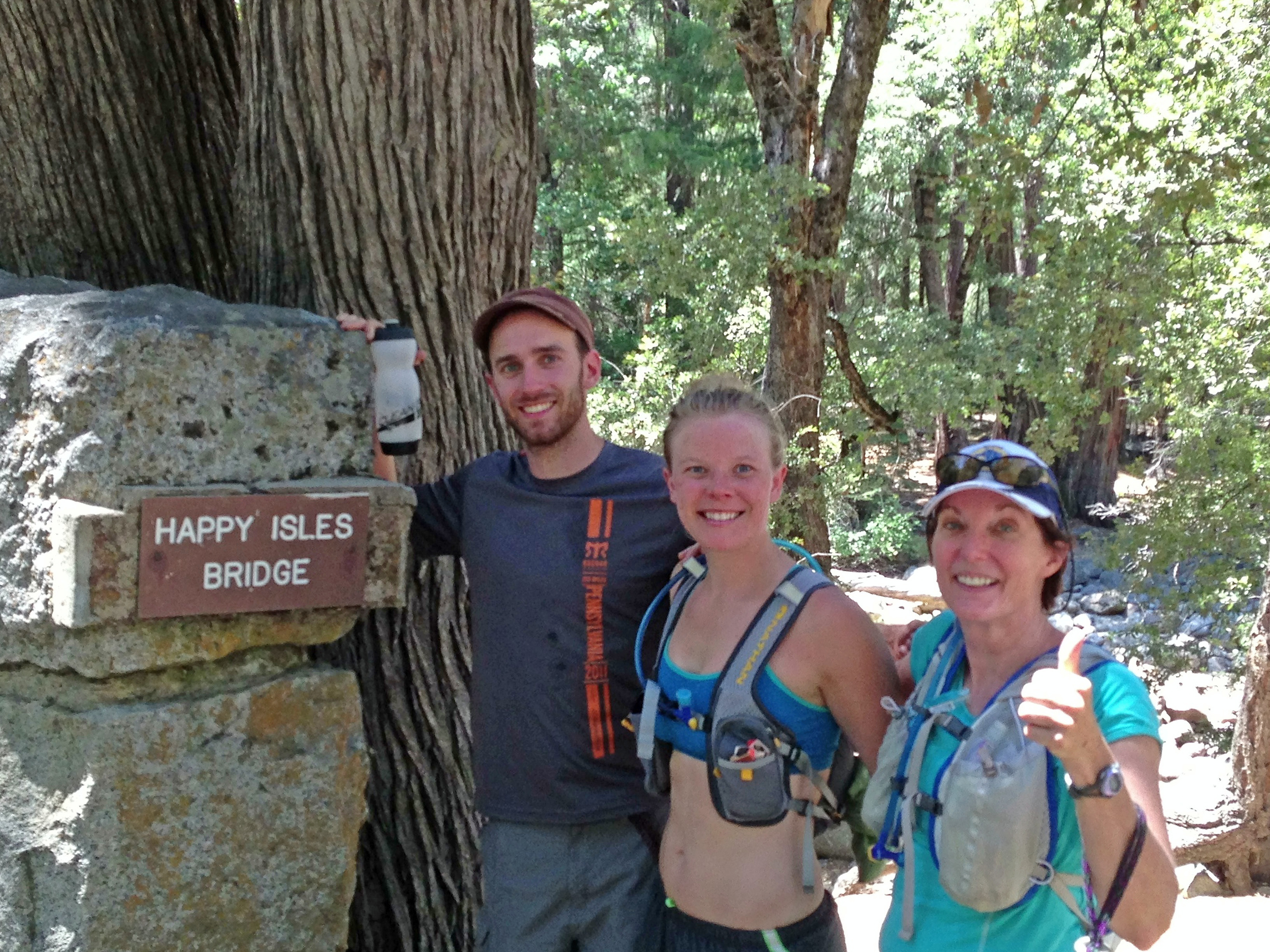
We had someone take our photo at the Happy Isle Bridge then began the 1 mile walk to Curry Village. Walking was wonderful! We all stretched out as we went. At the Curry Village Store I got my usual recovery drink – chocolate milk. Then I bought some flip flops because my pair were up at Glacier Point in Luke’s car. I wanted my running shoes off. Next time I bring 3 pairs of shoes!

Geoff, Kate and me at the Happy Isles Bridge. And, yes, we were happy!

Geoff, Kate and me at the Happy Isles Bridge. And, yes, we were happy!

We waited to hear from Lizzy, Julie, and Luke. Julie let us know she finished at Glacier Point and would be at Tunnel View around 4:30. Earlier than I expected. So I was even going to get home at a decent hour! This was a great day all around. I picked up my things from Luke’s truck and, after getting cold water and some salty snacks, I was on my way home.

IMG_0262_edited-1

Lizzy texted me to let me know they had finished. She had a great run too. She is truly an inspiration. I’m looking forward to hearing all about the Squamish run.

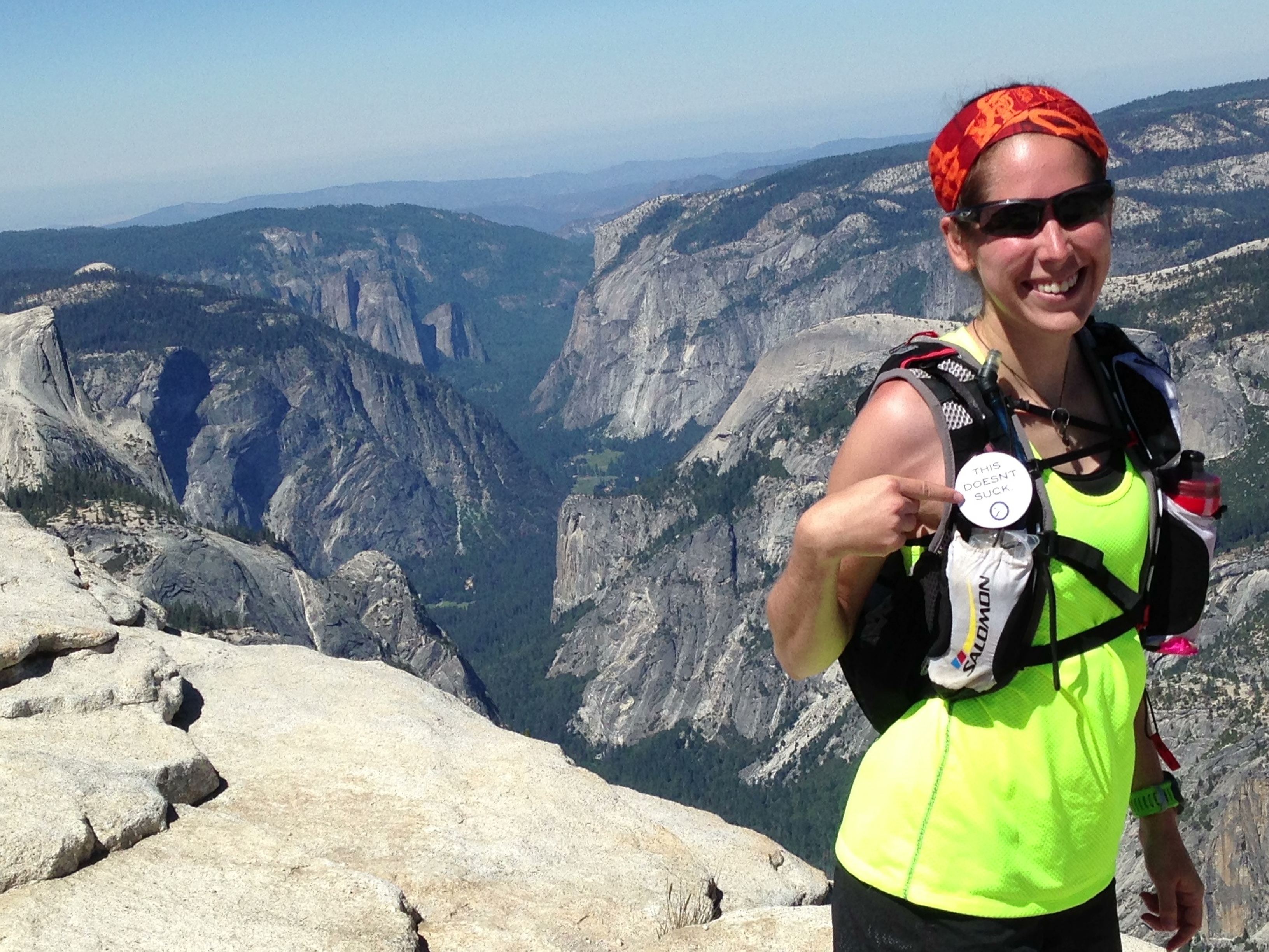
Lizzy proudly displaying her "This Doesn't Suck" pin on top of Clouds Rest Photo Credit: Terrell Barry

Lizzy proudly displaying her “This Doesn’t Suck” pin on top of Clouds Rest
Photo Credit: Terrell Barry

As the days afterwards went on my quads got as sore as when I did my first marathon! The downhill was brutal. I think that’s what I have to work on now. I really enjoy trail running and want to continue to do more of it. I’m looking at the back country in a whole different way now! What loop shall I pick next???

My full set of photos are here.

I’m a WFR!!!

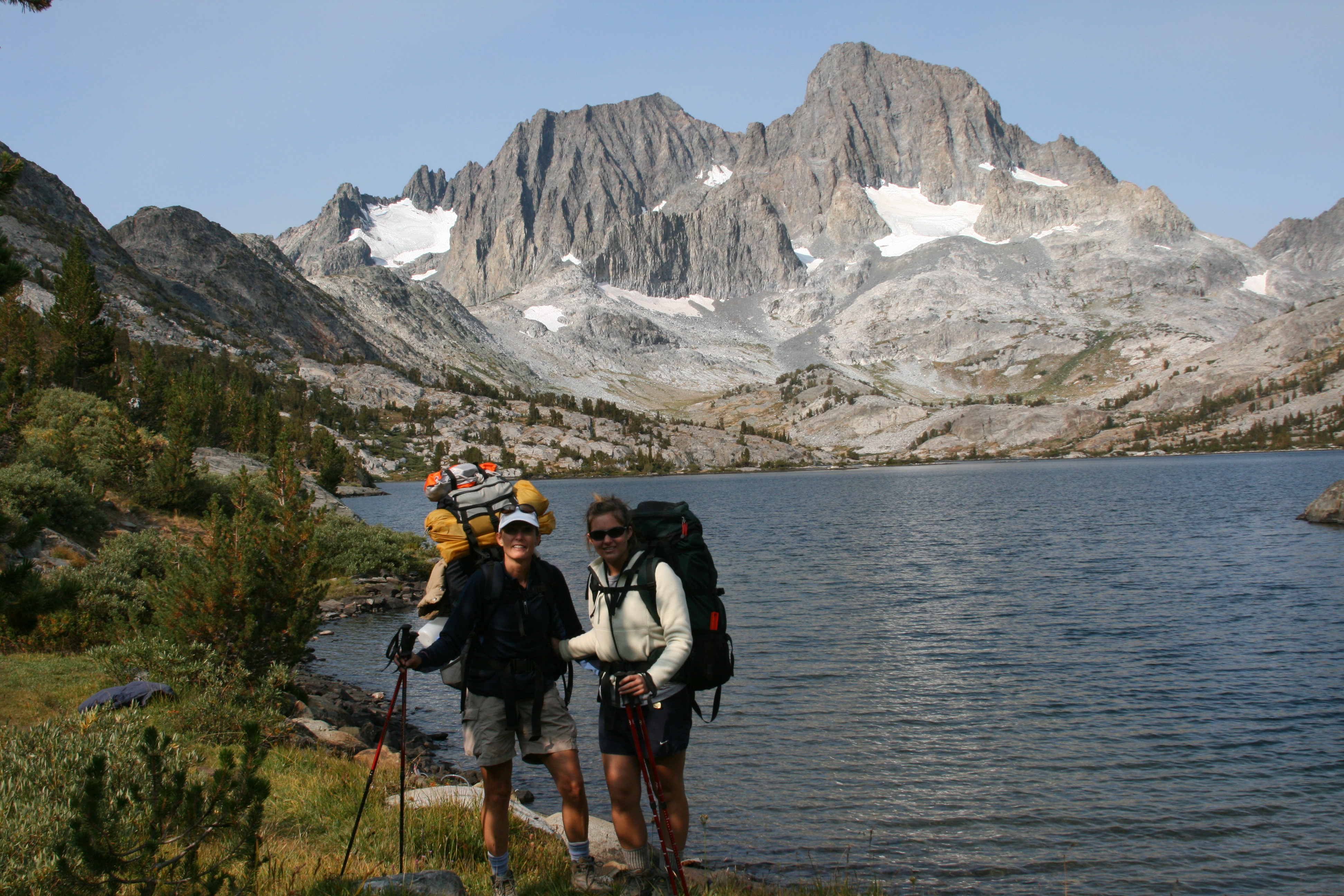
Me and Emily. Garnet Lake. Ansel Adams Wilderness. 2007.

Me and Emily. Garnet Lake. Ansel Adams Wilderness. 2007.

My daughter, Emily, and I just finished our Wilderness First Responder course taught by Dave Yacubian of ReadySF under the Wilderness Medical Institute (WMI) curriculum. Both Emily and I are now certified Wilderness First Responders (WFR)!  My journey to earning my WFR certification began in October 2008. I was sitting at the first belay of my very first outdoor rock climb. It was a multi-pitch climb on the Hogsback formation at Lovers Leap near Lake Tahoe, California. As my climbing partner took off to lead the second pitch, leaving me alone at the belay ledge it occurred to me that I had absolutely no idea what I was doing. I was totally dependent on her, even though, in fact, I had her life in my hands. The climb was scary, we were not on the route we planned to climb. It was difficult but when we were finished it was satisfying and I wanted to do it again and again. However, I also committed to take classes to learn to be a self sufficient partner.  I took a rock climbing anchors class, climbing self rescue, and wilderness first aid (WFA). At the end of the WFA course I think I knew eventually I would take the WFR course. Then, I climbed Snake Dike on Half Dome in Yosemite National Park with a group from the ClimbOn! Group of MeetUp. The climb was awesome, all five of our parties summited and we and a celebration that night in the Little Yosemite Valley backcountry campground. On the hike out the next day one of our party fell. We were hiking in the middle of a cold thunderstorm and she had on a very heavy pack. It was easy to see she had sustained a tibia/fibula fracture. It was not open but the bone was clearly visible just under the skin. I was the only person in the group with any first aid training and the group looked to me. I put my WFA training into action that day.  I remembered the importance of assigning specific tasks to specific people.  We set about getting her as warm and comfortable as possible.  We found a passerby with a working cell phone to call for help. Then we waited for the rescue personnel to arrive. We were only about 2 miles from the trail head on a very well traveled trail. There was intermittent phone service. I decide not to splint her leg since it was so close to being an open fracture and we were so close to medical help. This was a best case scenario. I wondered about the same injury but a day or more from the trail head. I knew at that moment I would take the WFR. The question just was when.

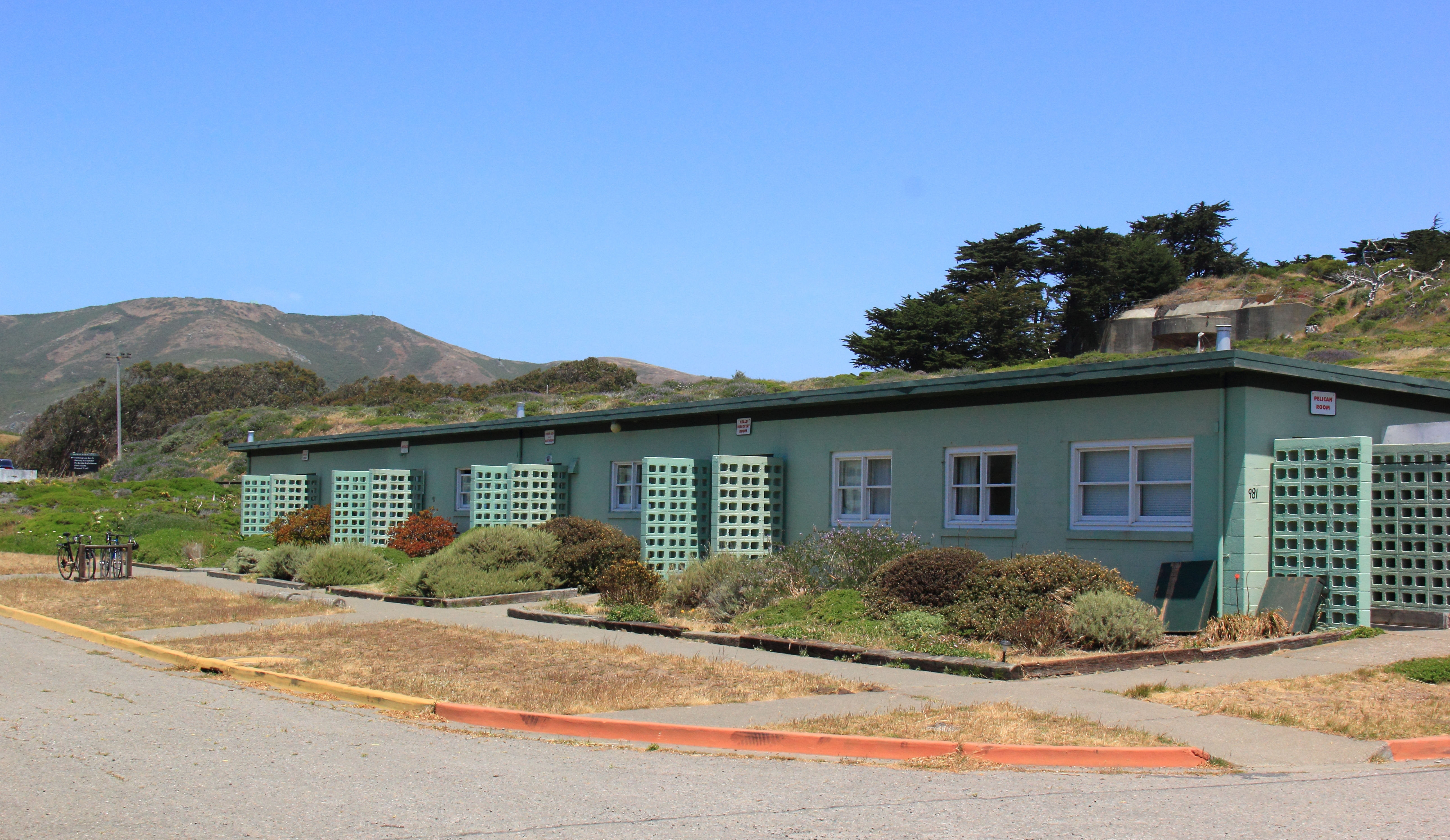
The “when” happened earlier this year. My daughter, Emily, expressed interest in getting wilderness first responder training. I had no idea she was interested! So, I told her we should take it together. We enrolled in the 10 day/80hr class given by Dave at the Marin Headlands. It’s a beautiful location and close to home – although a too far to commute daily. We would stay at the Marin Headlands Hostel. (Be forewarned about the hostel, many school outings stayed there during our stay. Lots of kids, some groups as large as 30 kids plus chaperones, so it was a chaotic at times.) The class is 8am to 5 pm for 9 days. There two evening session and one day off. So, obviously, we would be busy.

Our class room for 9 days. The YMCA SF - Point Bonita.

Our class room for 9 days. The YMCA SF – Point Bonita.

Emily and I arrived bright and early the morning of May 24. Our instructors for the next 10 days would be Dave and Becca. It turns out this was Becca’s first time teaching the class. That was not apparent at all during the course! Her infectious enthusiasm and detailed instruction were excellent. Dave, the seasoned veteran, was also excellent. Not only does he know the WMI protocols cold and is a patient and thoughtful instructor. He also had many firsthand stories from his experiences in the backcountry to round out our instruction. The first thing we saw in class was Dave and Becca going through the steps of caring for an injured person they come upon in the hiking trail. They were so smooth and seamless, it was hard to believe we would be even close to that skill level at the end of the class. But, spoiler alert, we all had the protocol down pretty well at the end of 10 days! A testament to Dave and Becca’s teaching.

Our class had 29 student with ages varying from 17 at the youngest to 56 (me) at the oldest. Most students were in their 20’s and 30’s. Many were in the class because they had employment working as guides or assistants in youth programs. A few, like Emily and I, were in the class because we wanted personal training. We would all end up getting to know each other pretty well, between the roll-playing scenarios and the studying at night. It was a great group!

Our gorgeous break & lunch view.

Our gorgeous break & lunch view.

The course format was introduction of a topic or topics, then outside for a scenario related to those topics. Typically during a scenario a third of the class was victims (complete with realistic looking makeup) and the remaining two thirds divided up into two person teams. We occasionally did scenarios with half the class victims and the other half the rescuers so we could learn how to do all of this if it was just one us alone and a victim. The first thing we learned was the “12345ABCDE” method of initial assessment. The 12345 is the scene size up protocol, principally meant to prevent the rescuer from becoming another victim. The second half is meant to discover any “life threats” present in the victim that need to be dealt with immediately. This would include airway blockage (the “A” for airway) or sever bleeding (the “C” for circulatory). The “D” is for decision about the spine – hold the head or not.  We spent much of the course learning about spinal injuries and how important it is to be very aware and careful about those injuries.  Basically, fall from height, at high velocity or associated with loss of consciousness are modes of injury that can lead to a spinal injury.  I never thought I would remember what that all stood for but eventually it came naturally, except the “E” (which stands for expose the chief complaint) seem to evade me until the second half of the course. The scenarios at the beginning covered the initial assessment and any other topic we had just cover, such as splinting or wound care. Next we learned the Head-to-Toe exam, the important vitals to take (early and late changing), and the patient history interview (SAMPLE). Between these three new steps in the patient assessment and all the new aliments and injury care, my head started to swim in details. Thankfully, it all began to come together for me after the Wednesday break day but up to that point I really didn’t think I would be able to remember everything.

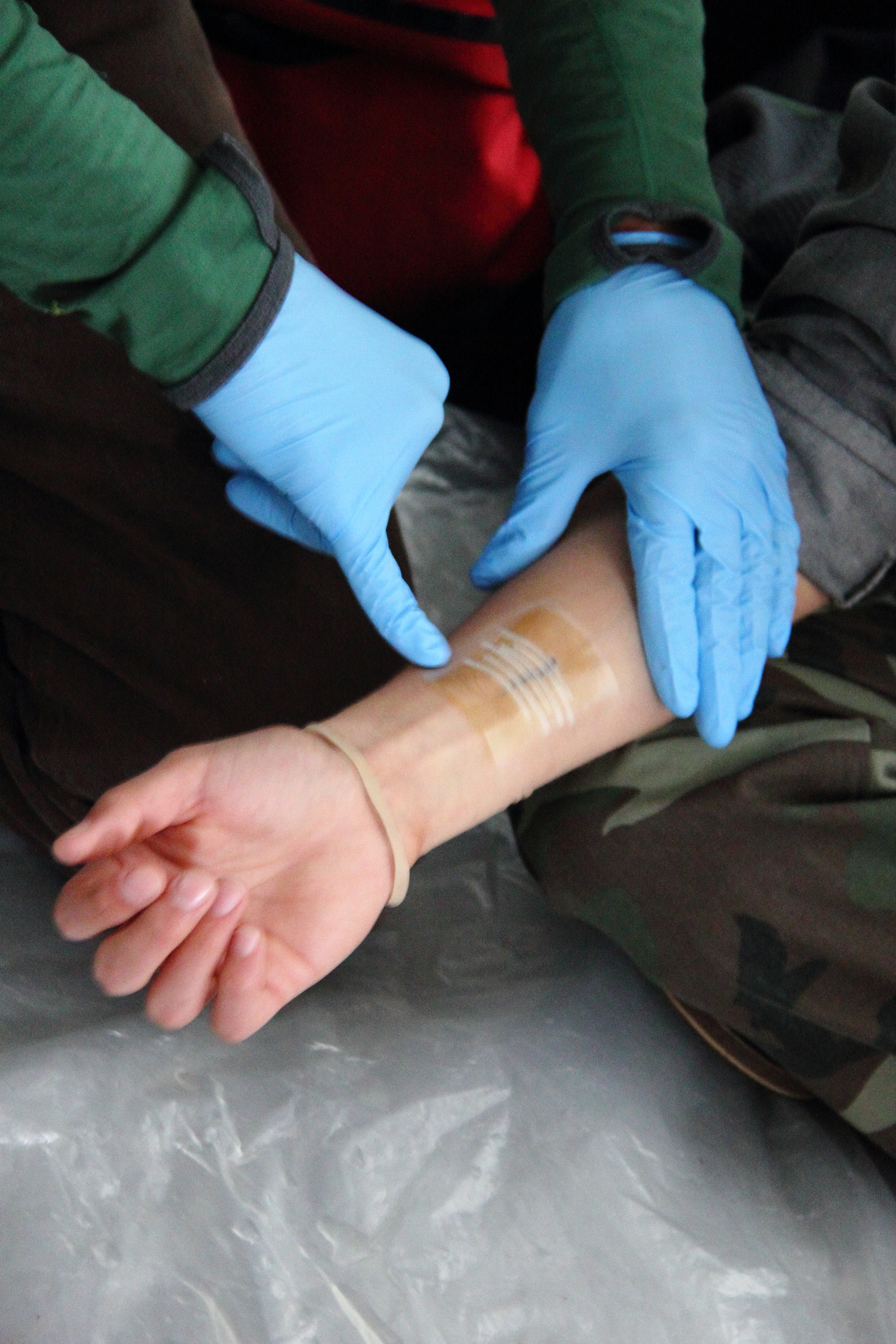
 Trauma injuries were covered first in the class. We learned how to clean and bandage wounds. Irrigate with drinkable water and nothing more. Use sterile tweezers to carefully remove debris. And bandage.

A well dressed wound. He can probably "stay and play."

A well dressed wound. He can probably “stay and play.”

The simulated burn was particularly real looking. Pour cool water over the wound to cool down the skin. Then evaluate the depth of the burn. The burn below would be full thickness. That’s immediate evacuation time.

Serious burn. Cool it down immediately!

Serious burn. Cool it down immediately!

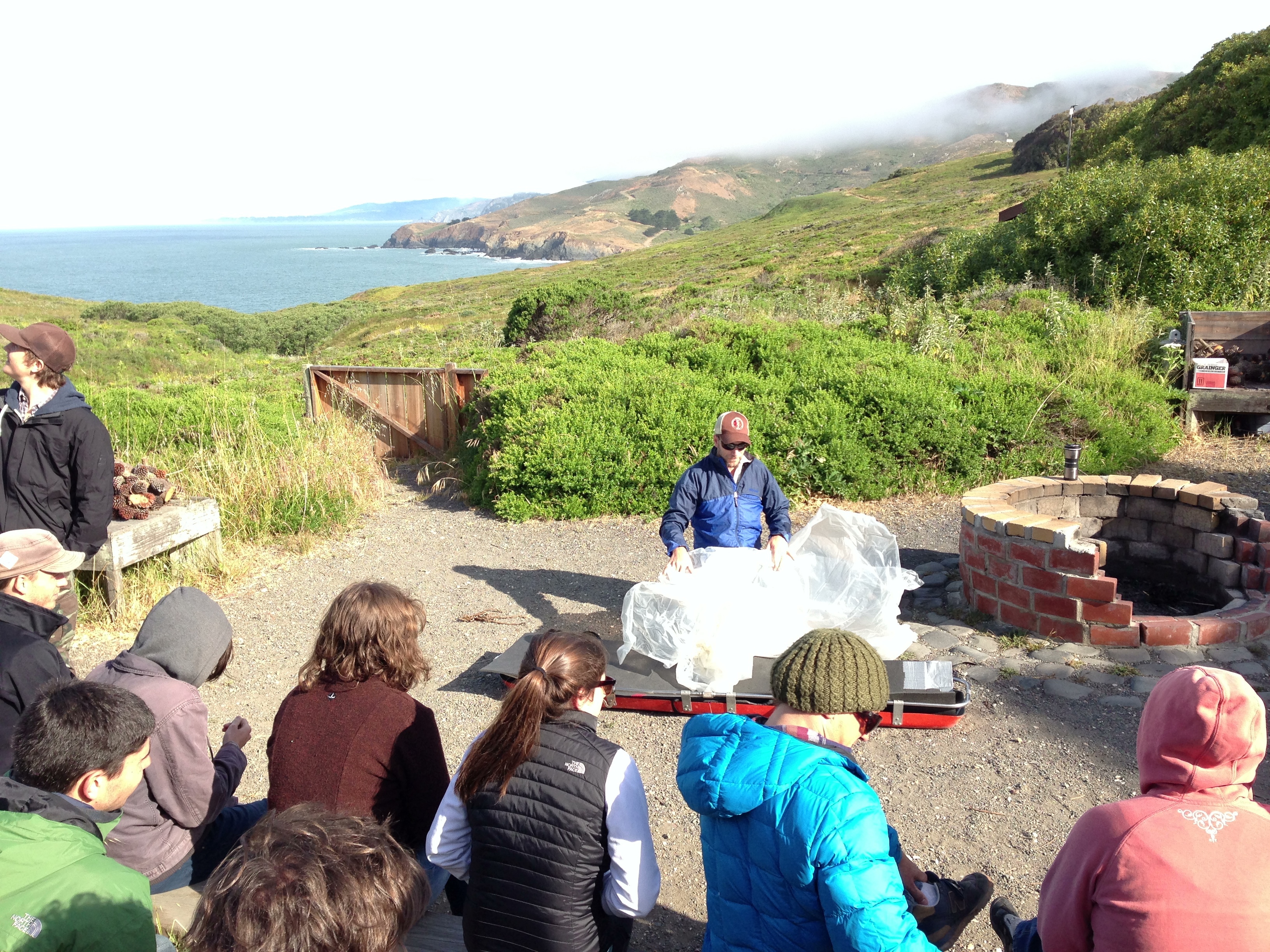
Dave showing us the basics of litter setup.

Dave showing us the basics of litter setup.

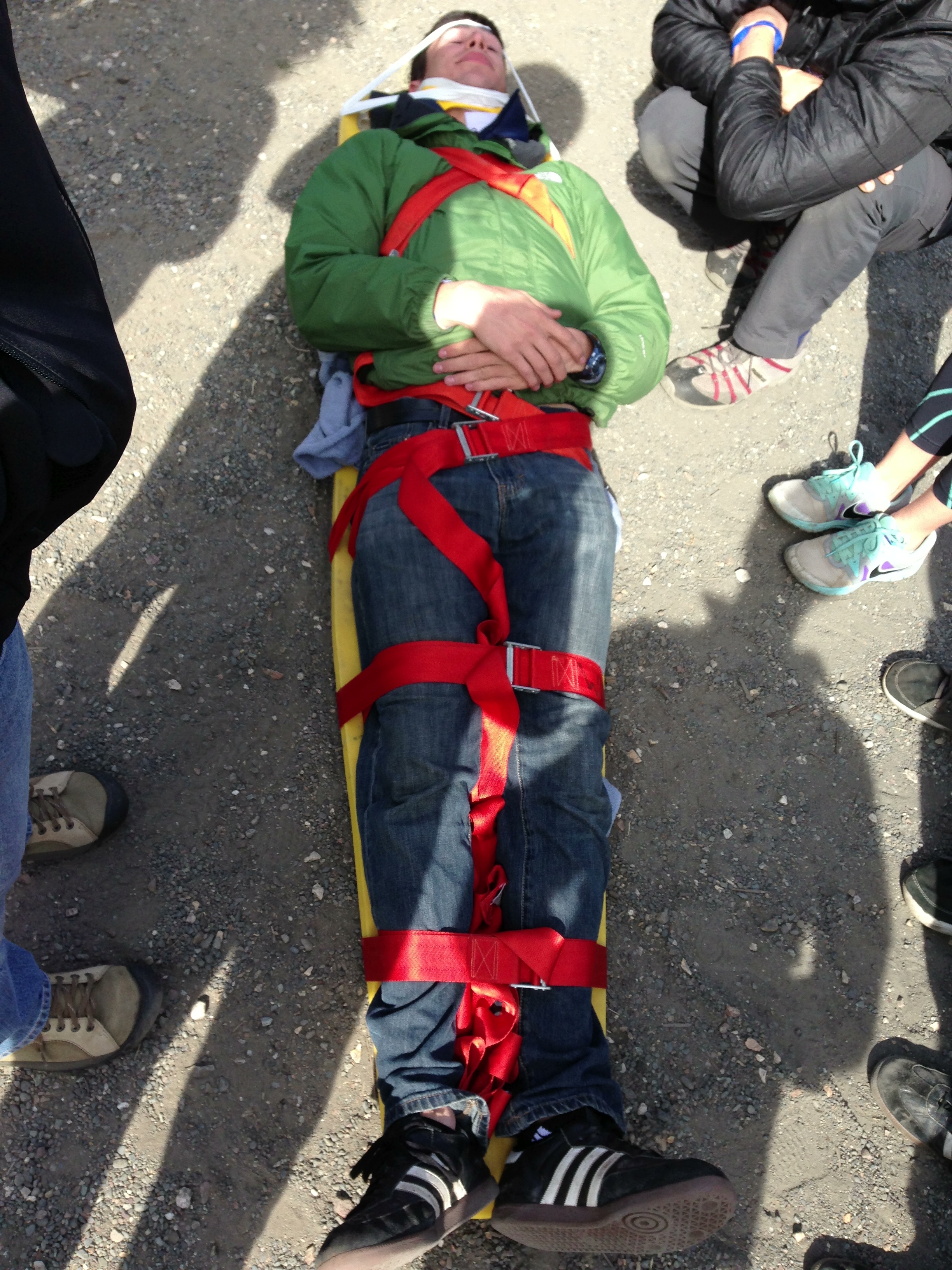
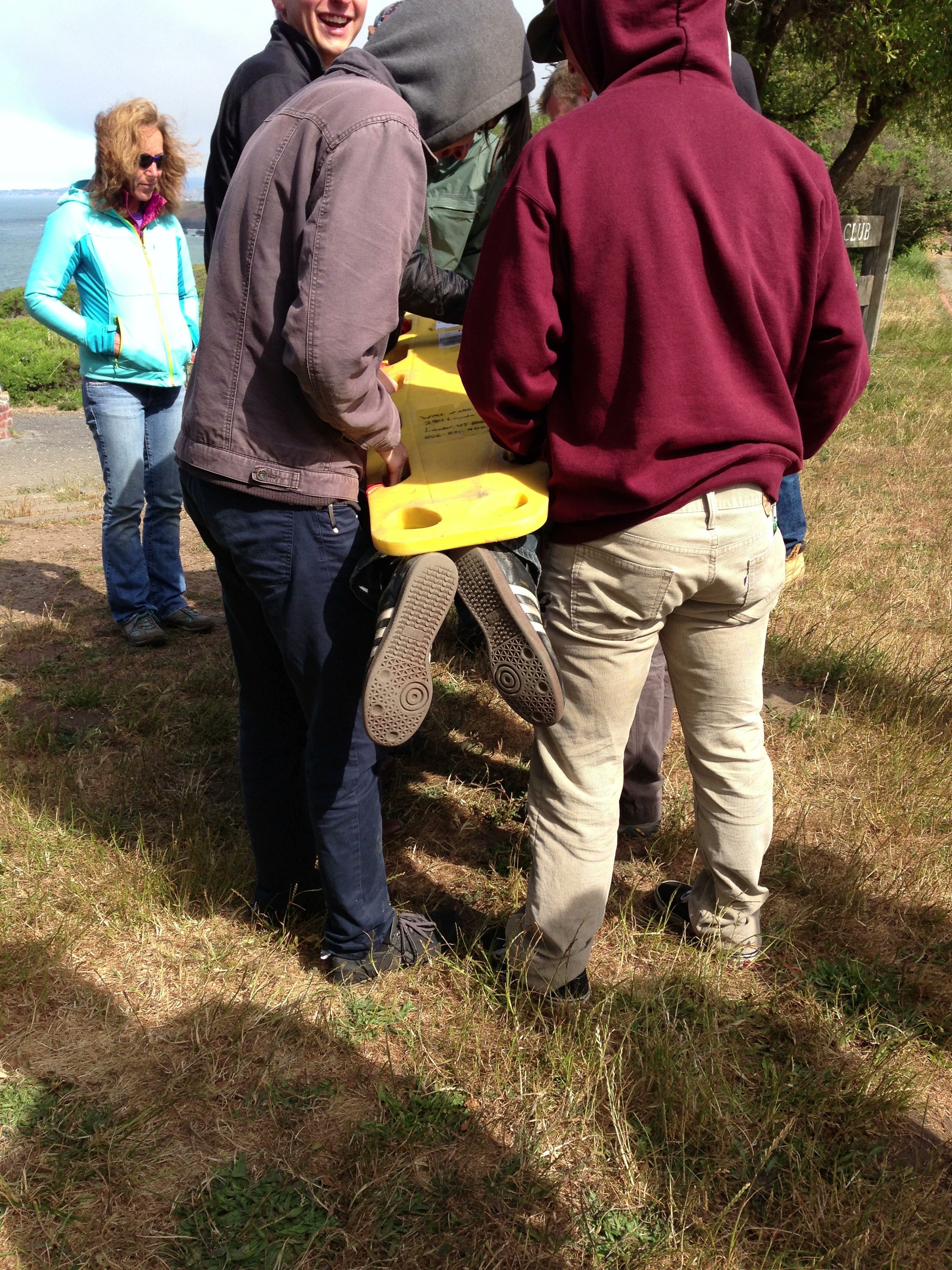
We had a beautiful “classroom” to spend part of our time in. When we learned backboard and litter use we had a lovely view of the Pacific Ocean. We learned our backboard lesson well, our patient allowed us to turn him completely upside down and he didn’t move at all! Dave said that was a really good job because some movement is expected. We managed that without cutting off circulation!

Patient all secure on the backboard!

Patient all secure on the backboard!

Let's check... looks he doesn't move at all!

Let’s check… looks he doesn’t move at all!

We also learned to roll a patient, both with two people and by ourselves. It was much easier than I expected but there is technique to master to make it “easy” on both the patient and the rescuer. One thing I wish I had brought was my pair of knee pads. The head holding job is harder than it seems. I thought I was the only one but several other classmates also said their knees hurt.

Becca demonstrates a one person patient roll.

Becca demonstrates a one person patient roll.

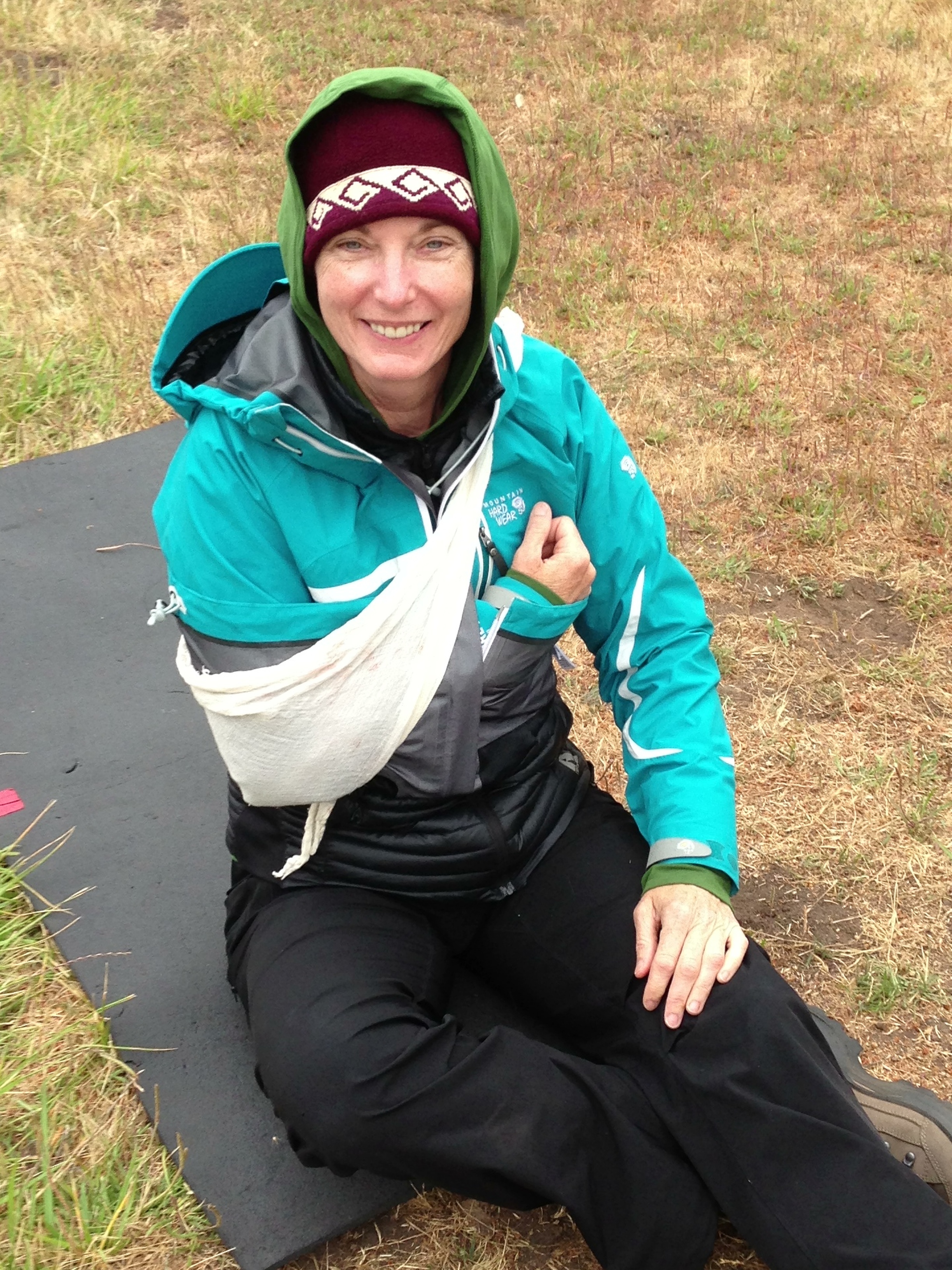
On Monday we had our first of two night sessions. That first night session we learned how to fashion a splint out of just about anything. A good splint needs to be rigid. Immobilization of the joint above and below the break is required. No splint? Do you have hiking poles? Sticks/wood found on the trail? The frame from a backpack? Sleeping pad? The list goes on. Padding? Unneeded clothing (the key there is “unneeded,” never use clothing you may need to keep yourself or the patient warm) or an extra sleeping bag is perfect. Clothes can be shredded for tying. A jacket the patient has on can be zipped and folded up towards the shoulders to start constructing a sling

A sling  fashioned out of my jacket and a triangle bandage.

A sling fashioned out of my jacket and a triangle bandage. I’m good to self evacuate now.

Improvised lower lef splint.

Improvised lower leg splint.

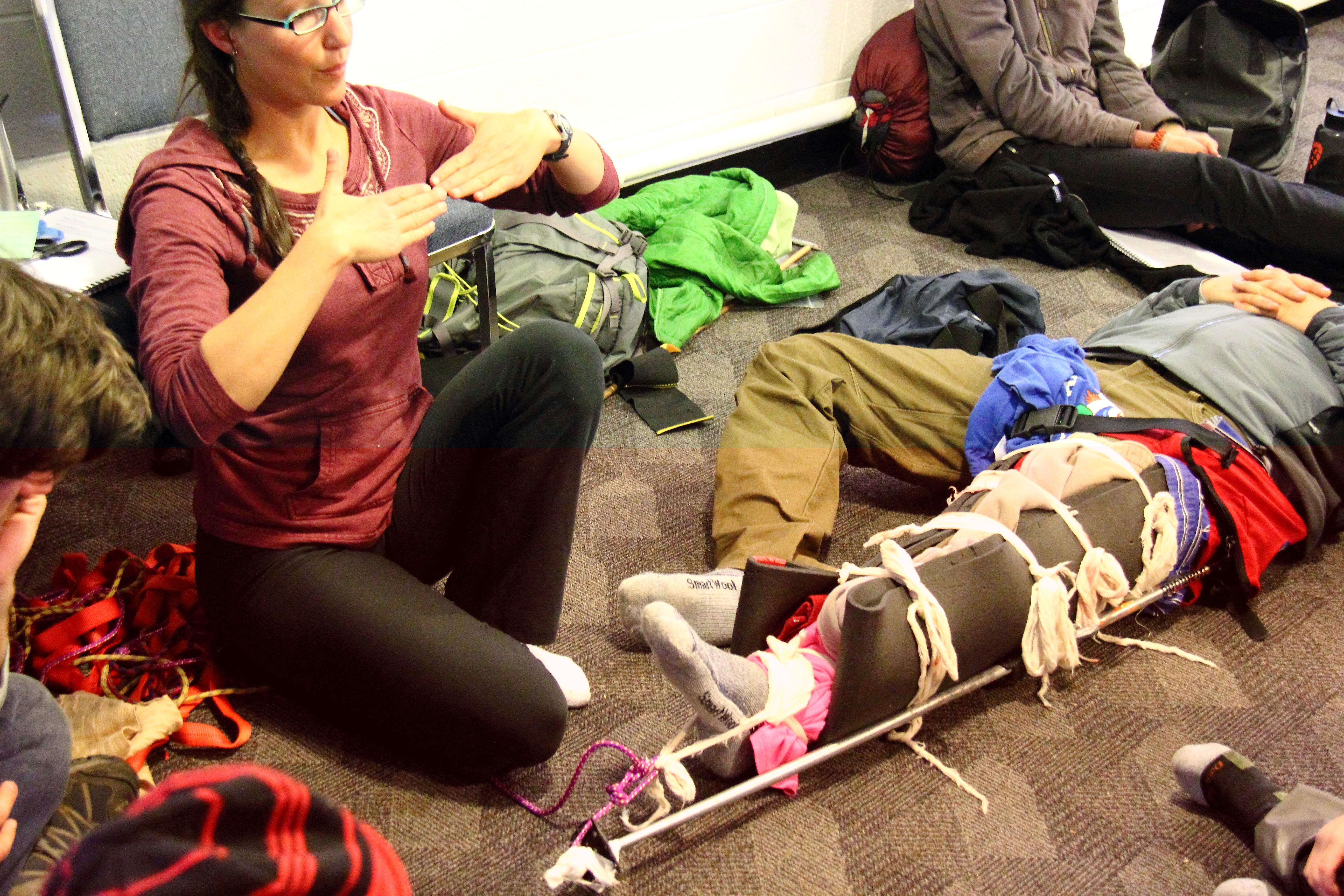
We learned to be creative. The patient’s shoe can be turned upside down and placed against the foot to stiffen a leg splint. The most fascinating backcountry splint was the traction splint for a mid-femur break. After this class I think I will always bring my hiking poles.

Improvised traction splint.

Improvised traction splint.

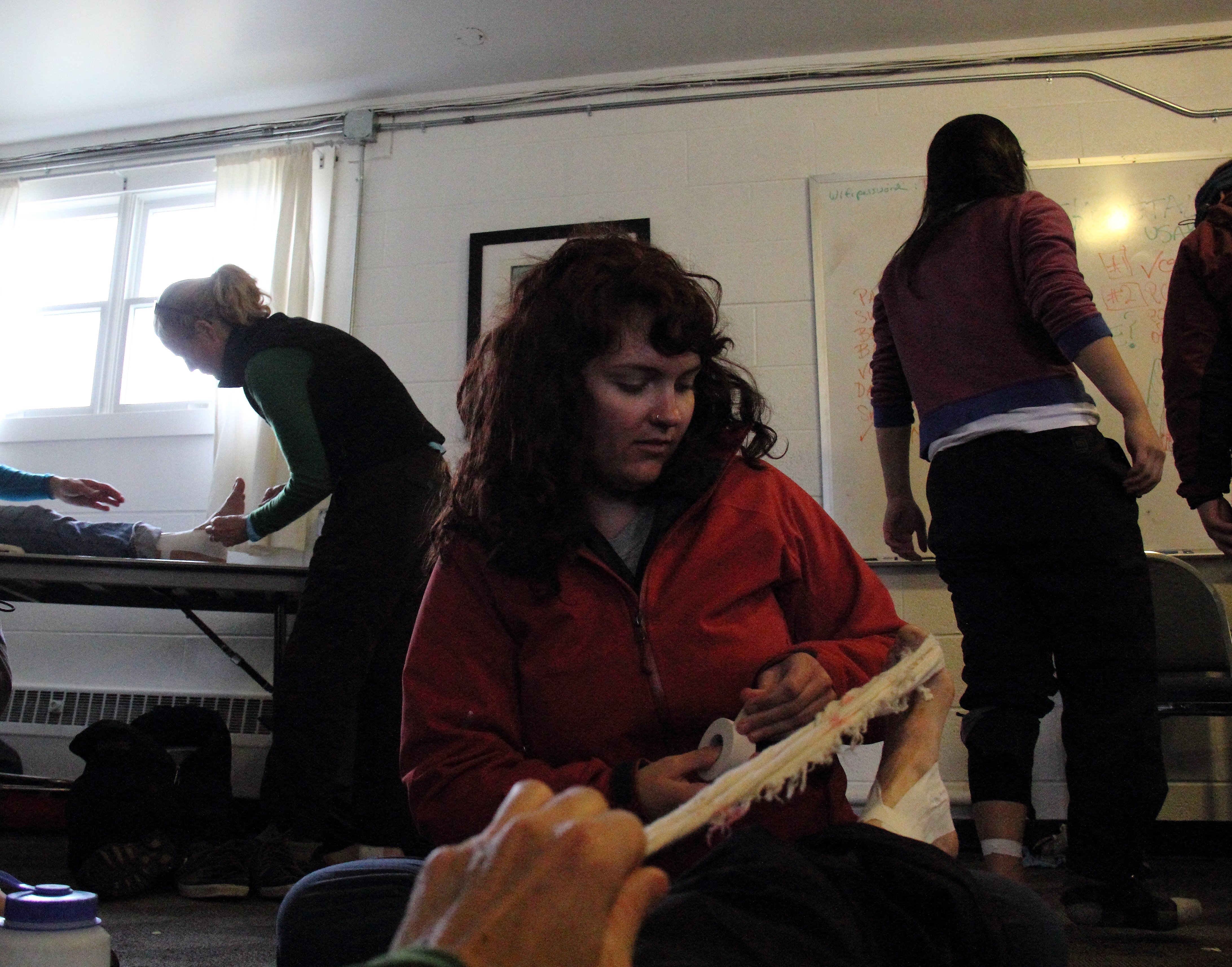
Emily taping my ankle.

Emily taping my ankle. I’m being a good patient, assisting by holding my foot at the proper angle.

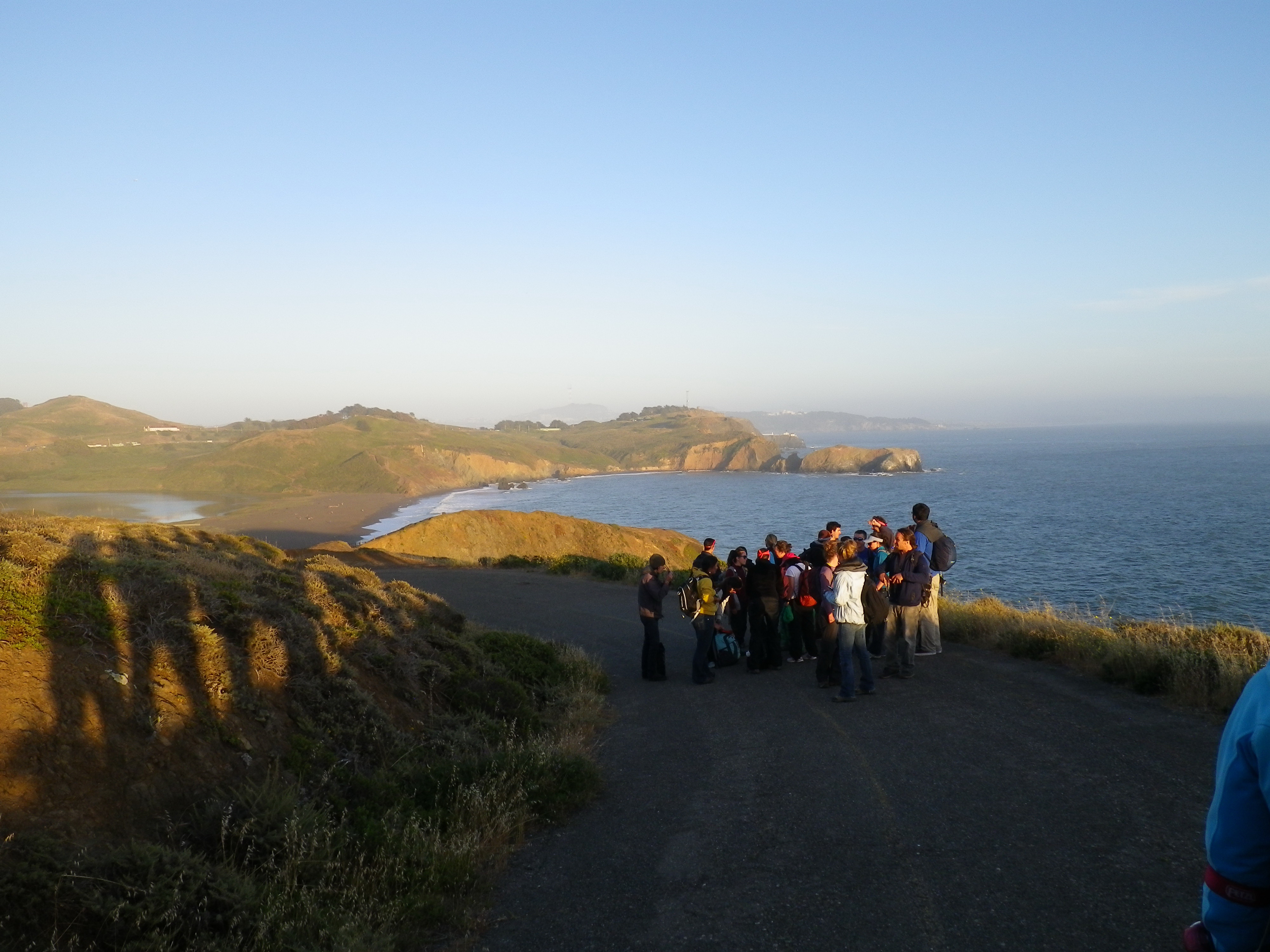
Our first of two outdoor scenarios was at the beach near our classroom. It was a “mass casualty scenario” and those of us who were not victims were assumed to be part of a search and rescue team. We had an incident commander, assistant commander, and a gear management person. The rest of us were broken up into teams.

On our way down to the beach

On our way down to the beach for the mass victim scenario.

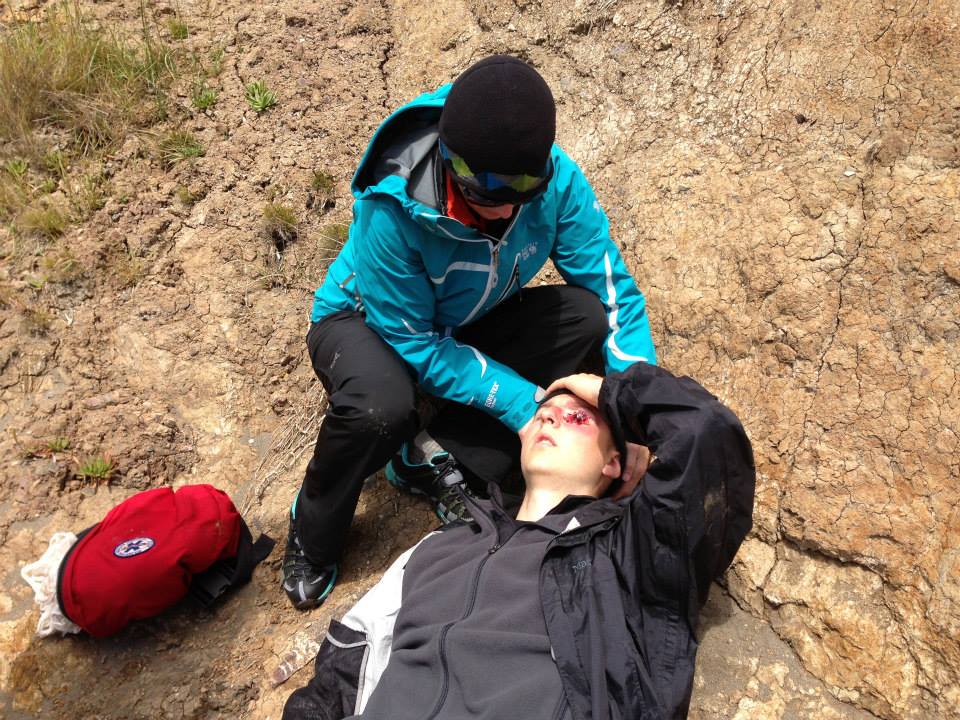
When we got to the beach we found 7 victims of a fishing boat wreck. Two of the victims were either in the water or very close to it. One person was running around with only a mark on her head yelling that we needed to help her friends. Shortly after that she dropped to the sand and became unresponsive. My partner and I were assigned to a person who had lost his eye.

Me attending to my patient on the beach.

Me attending to my patient on the beach. Notice I’m stabilizing his head. Photo credit: Dave Yacubian.

Yes, it looked real. And he behaved as if it was real. He asked for his wife, he kept trying to touch his eye, yelling, “where’s my eye!!! I can’t see.” He kept asking about his friends and whether they would be ok, who’s that down in the beach? Is he going to die? Could he work again? It was very realistic. We got a lot of practice calming him down and not giving answers that would lead him to believe everything would be ok. That is really important. We said we were taking good care of him and his friends and nothing beyond that. We did our complete patient assessment, including a Focused Spinal Assessment and we bandaged his eye. Meanwhile, the other groups were attending to the other victims. There was a mid-femur fracture victim who was down near the water. Both the victim and the rescuers ended up overrun by the surf

A moment of back turned towards the ocean can be serious.

A moment of back turned towards the ocean can be serious. Photo credit: Dave Yacubian.

A lesson in don’t turn your back on the ocean – someone always must be watching. Apparently, just about every class that happens. Good learning experience. It was amazing that after just three days were able to evaluate and treat all 7 victims in about 90 minutes. Dave asked us to consider what we would have done if this scenario was on the very first day. I pictured total bedlam.  I guess we were learning quickly after all. Once the main part of the scenario was over we decided to carry the mid-femur fracture patient all the way from the beach to the parking lot in the litter. That included up stairs and then a 1/8th mile hike on the trail. It was very hard work and illustrated why it takes 18 people to evacuate a victim on foot.  We used the passing technique to negotiate the stairs, then hiked the rest of the way. It went very smoothly but it was clear that carrying out a victim even a short distance is very hard work.

After trauma we covered environmental hazards. This included heat, cold, altitude, lightening, and critters (snakes, spiders, etc.). We learned how to make a hypothermia wrap which is a sleeping bag wrapped inside a tarp. The victim is gently placed in the bag after wet clothing is removed. We also learned it is more effective to place warm water bottles in the sleeping bag (inside a sock) than another person. We even watched a clip from David Letterman! It was with Dr. Popsicle and it was fascinating. I couldn’t find the video but click here for a NOLS link. It turns out that a person does not become hypothermic immediately upon falling into cold water. The key is taking a minute or two to calm down and keep your head above water. The saying is “1 minute, 10 minutes, 1 hour” which means control our breathing in the first minute, you have about 10 minutes to move slowly in order to get out of the water before cold incapacitation occurs (if possible, lightly kick your legs to get into swimming position to climb out), and it is 1 hour before we are gravely hypothermic. So, there is time to get out, don’t panic! Dave told us a story about a person who got just his upper body from the shoulders up out onto the ice. His beard actually froze to the ice and kept his head above water. He was successfully rescued!

The hypothermia wrap.

The hypothermia wrap.

The last major area we covered in class was medical illnesses. While some of these topics were mundane (e.g., garden variety stomach ache), these are also the most common things that occur on a trip. It was important to learn how to distinguish the garden variety from the must evacuate variety. We spend quite a bit of time on how to tell the difference. The diabetes section was very interesting. I will always remember to consider diabetes if I come upon someone who is very groggy or unresponsive.  We also got very thorough coverage on cardiac issues to go with the CPR training we received on Day 2.

On our way up into the hills for our night scenario.

On our way up into the hills for our night scenario.

I think my favorite part of this course was the second night session. This was a night scenario out in the Marin Headlands. I can’t give away details on this one, but I will say that it had to be dark before we started. We were told to bring only what we would take on a day hike under the forecast conditions. Fortunately (or unfortunately depending on how you look at it), the weather was absolutely gorgeous.

sunset2

Beautiful sunset over the Pacific Ocean. The calm before the night scenario storm…

It was clear and we saw a beautiful sunset, then the lights of San Francisco after dark. None of us knew what to expect. Once the scenario was underway it was wild. I would recommend the course just to do the night scenario. I learned so much about being prepared and how to manage an evolving crisis. That’s all I’ll say about it other than brought the class together in our common experiences that night. Those of us staying at the hostel enjoyed hot chocolate and each other’s company when we returned to the hostel that night.

One really important part of the course wasn’t actually anything to do with the “nuts and bolts” of how to care for a patient. Instead, it was how to be a good partner in care for a patient. The patient in the back country is totally dependent on the person caring for him or her. Sometimes this can be a period of days. That’s what really distinguishes wilderness emergency care from urban emergency care. Being a supportive and considerate caregiver was stressed, no matter how dire or unpleasant the situation. The patient will need to urinate or defecate, they may vomit. They won’t like it any better than you. But they need your help. Once the responsibility is accepted it should be carried out with compassion. What is said around the patient should be mindful, including unresponsive patients. We talked about the fact that some unresponsive patients can hear and remember what is said around them. Most importantly, no complaining. The injured patient already feels bad enough. Being made to feel like a burden is not something that needs to be added to that. Dave also continually stressed the concept of slow down to go fast. Hurrying for hurrying sake leads to mistakes and tragedies.  In the wilderness there is time.

So, that’s my story of becoming a certified WFR. Emily is also a WFR! I recommend this class for anyone who spends time in the backcountry. It is a big chuck of time and a little expensive but well worth both the time and dollars. You may save a life.

Ice Climbing at Coldstream Canyon: Lessons Learned and Fun Had

IMGP3407

I had the pleasure of attending the 2013 American Alpine Club (AAC) Sierra Nevada Section (SNS) outing to Coldstream Canyon for ice climbing the weekend of January 25. This has been an annual AAC trip for some time but this was the first time for me to attend. I was apprehensive about attending without a partner for several reasons: I’m relatively new to ice climbing, I had only snow-shoed once and that was in a 5k race, I hadn’t met many of the attendees and didn’t know anyone well except for Karen, who is the current Section Chair. But my friend, Lewis (past Section Chair!), said I should give it a go and I’m really glad I took his advice. Karen is fond of pointing out that “it takes a village” to get things done and this outing was a perfect example of that adage. Like other AAC outings I have attended, it was a remarkable group of people.

The climbing area in Coldstream Canyon is 6+ miles from the parking area. The adventure to the climbs begins with the snowshoe hike (or skiing) to the Lost Trail Lodge, 4 miles from the parking area. Lost Trail Lodge is off the grid and snowbound during the winter. A beautiful place to forget the stuff that isn’t really important. At the lodge about 32 people eventually assembled for the weekend. But first many of us met at 1 pm on Friday at the parking area to help with the task of loading the group supplies for the weekend onto the snowmobile sled. This was followed a few miles down the trail later with helping transport the loads across the double railroad tracks to the snowcat that would take the supplies to the lodge.

IMGP3337
My fellow climbers ahead on the hike to Lost Trail Lodge, several hauling sleds of equipment.

IMGP3342
Listening for trains and moving supplies

It was fun to help with the process of supporting our outing. We were responsible for transporting all of our own personal and climbing gear on foot but, thankfully, the food and drink were on the snowcat.

IMGP3350
Lost Trail Lodge

That night we had a pizza and salad dinner prepared by Karen and others from the group. Karen kept us all well fed that night and the next two mornings. I woke at 5:30 Saturday morning to the smell of coffee, pancakes and bacon. I tried to do my part by doing dishes. Feeding that many of us looked to be a daunting task and I am grateful and amazed at how seamlessly Karen pulled it off.

I planned to leave with the early Saturday morning to help with the group climbing equipment transport. I brought my 70m rope which was needed for the longer climbs and I didn’t want anyone else burdened with the task of carrying it along with the other group climbing equipment. We headed out at 7am for the 2.5 mi hike to the climbs, and I was barely able to keep up with Ridell who was on snowshoes hauling a heavy sled full of climbing gear! My job was to keep the sled from falling into the stream at crossings.

IMG_1246_edited2
My first view of the Coldstream Canyon Cliffs and climbs. Notice the grey weather.

I found out when we reached the climbing area that I knew next to nothing about how to manage clothing when the hike to the ice climbs is strenuous. The places I had been last year were nothing like this place. The approaches to those places were either downhill or easy. The hike to the Coldstream Canyon climbs includes a 1000ft elevation gain. When I took off my goretex shell I found my synthetic nano puff jacket was soaking wet. I could have wrung sweat out of it! Not a good start to the day that was overcast, damp, and breezy. I dug out of my pack my remaining layers, dressed up and hoped for the best. I would spend the rest of the day working to stay warm with my feet and hands alternating who was more frozen. Luckily, I took notes from Kristen about dressing very light for the hike and having a full set of dry clothing in my pack for a waist up change upon arrival. The ideal being literally to strip to the athletic bra, towel off and get dry clothes on. I would implement that plan the next day. That would do me no good on Saturday however…

In addition to my clothing fail, I discovered I forgot my thermal cup at the lodge and I couldn’t find my tea. So, I resorted, for the first time in my life, to drinking hot water. In graduate school, fellow students from China frequently drank hot water. I always thought I wouldn’t like it but it was satisfying in the cold. The next mistake I discovered was not bringing enough food. Geesh, how many mistakes could I make in one day? I carefully rationed what I had brought with me, and I’m sure that contributed to the argument between my hands and feet over who was the most frozen. One thing that did help everyone was the tent that Ellen brought to shelter us from the wind. First you dig a pit with a “table” in the middle, then set up the tent. It was somewhat warm in the tent, thankfully!

IMGP3442
Our tent kindly provided by Ellen

But, now, back to ice climbing. Upon arrival the group of climbers who planned to set up top ropes sprang into action. The temperatures were warm for ice climbing so the ice was not in the best condition. We ended up with only two top ropes and probably 20 or so climbers. I was so appreciative of the guys that set up the top ropes. It was not an easy task and none of us could have climbed without their dedication to the group. It was a hazardous job. One climb at the anchors had a lot of running water underneath the ice that got several of guys setting up the climb pretty wet. Fred was assisting the setup at the bottom of the same climb. Suddenly, he fell into a hole and all we could see was the top of his helmet. Then just as suddenly, he had his legs out of the hole and was belly flopping right back onto the snow. Although I know it was not easy to get out of the hole, Fred’s experience in snow really showed at that moment. Lesson learned: snow at the base of climbs can be unstable, know how to get yourself out!

IMG_1248
First climb. Pretty soft ice in warm and damp conditions.

I have to admit, on Saturday I pondered why I wanted to ice climb. The conditions are harsh and unforgiving, the physical demands are very high, and mistakes can be paid for dearly. But with my brand new BD Cobras in hand, I finally got on a climb at about 2:30pm. But by then the ice was soft and slushy. I had climbed soft ice before but this ice sunk downward under my crampons. And big pieces of ice were detaching under my tools. I had a very solid belay from Rand but it wasn’t enough to make up for my fear of just how much ice might come off as I climbed. After 30 ft I called for a take and came down. Other people climbed after me and made it past where I was but I just didn’t have the skill and experience to deal with the ice conditions. However, I love my tools, as I knew I would!

The hike back to the lodge was a bit of a slog, even though it was downhill. I think the quick pace on the way out that morning set up my day to be difficult. I spent the entire 2.5 miles back thinking about clothing management, how I wanted a pair of down pants, and whether I would be able to handle the next day hiking out to the climb, climbing and then hiking to the car to go home. That would be a total of 9 miles of hiking and several ice climbing routes. I considered staying at the lodge while Fred (my carpool buddy) climbed.

That night we had a dinner catered by a Nepalese couple from Reno. The food was out of this world. I started to feel recharged after a good meal and great conversation. We talked about climbing as a metaphor for life, and great classes and trips we had taken, After dinner I decided to pack my bag for the next day. I used everything I learned from my missteps the day before. I had my stove again but this time I also had my thermal cup and tea! And plenty of food I would force myself to eat. As Kristen advised me, everything I planned to wear from the waist up to climb in, including an extra hat, was put in a waterproof bag. I decided my pants would just have to be a little damp, they had dried pretty fast the day before and I didn’t want to deal with taking off my gaiters and boots. I would endeavor to start my snowshoe hike just a little cold. So I laid out my light weight long sleeve shirt for the hike. I was in bed by 9pm. I missed most of the bluegrass band performance held in the grand room downstairs but I was just too tired to stay up!

My alarm went off at 5:40am and by 6:00 I was down in the kitchen where, once again, Karen had hot coffee and breakfast going. A smaller group of climbers was heading out early to set up top ropes. And they were taking my 70 m rope with them so I didn’t have to carry it this time! I planned to go out with the next group just a little later. After hearty breakfast of French toast & sausage I was ready to head out. Karen, bless her heart, encouraged me to go when I was ready rather than waiting for the next party. It had snowed the night before so following the tracks from the first party would be pretty straightforward. And the trail was marked with flags. So, I took my first solo winter hike! Thank you Karen! It was beautiful and inspiring. The temperature was colder than the previous day but there was no wind. I traveled at my own pace, which turned out to be still a pretty good clip. I took photos along the way and arrived ready to climb.

IMGP3396_edited
New snow on the hike

IMGP3409
Same place, next day. What a difference a day makes!

The first task when I arrived was to get all those dry clothes on. I was amazed at the difference it made compared to the day before. I was instantly comfortable and my hands and feet didn’t go numb at all Sunday even though it was quite a bit colder than Saturday. My first climb was on the same line I attempted Saturday. This time the ice conditions were much better and I climbed it with very little trouble. I remembered why I love to ice climb! Ridell and crew were setting up an awesome but intimidating climb off to the left of the main area.

IMGP3413
Ridell ready to rappel down from the top of the cliff.

I then watched Ridell float up this climb, traveling to the right on the top third of the route. I watched several other climbers on the route too.

IMGP3420
Ridell on the climb

I made a cup of tea, had a snack and decided that I would give that climb a go. I mean, I’d be on top rope so I needed to at least try it! It was very steep, depending on the season it is rated WI4+/WI5. The consensus this season was that it was on the more difficult side. But before I talk about the climb I will digress into a side story about Ridell pointed out  to me that the buckles of the crampons and gaiters should be on the outside to avoid kicking the buckles while climbing. Then I check and saw I had both the gaiters and the crampons the wrong sides! Yes, I climbed the first route of the day with my crampons on the wrong feet. I can still be quite the newbie sometimes… So, finally, with gaiters and crampons properly place, I tied in and looked up at the 150ft+ practically dead vertical climb thinking, “Well, this is it!” Somehow I got into a rhythm as I climbed. I also responded to the “stem your feet!” reminder yelled from below. The ice was better than I expected and there were sections of chandelier ice to hang the tools securely rather than swing into the ice so I was able to rest on the go. I confess I love chandelier ice. Suddenly I was at my potential stopping point about two thirds of the way up. The anchor placement was set in a way that traveling to the right was off anchor. I weighed my options. I was too apprehensive of a pendulum single with sharp things in my hands and on my feet to continue. The ice on the left, straight under the anchor, looked really difficult. I probably should have tried to left but that will have to wait for next year! I am so happy with the climbing on this route that I did do that “what-if’s” don’t matter.

IMGP3476
Me getting started on the steep stuff.

IMGP3486
That’s me! About 10 ft below where I stopped.

Climbing for the day was done, time to hike to the lodge then out to the car. Fred and I set a good pace to the Lodge.

IMGP3496
Me still smiling on the hike to the lodge. The Coldstream Canyon climbs are visible behind me.

There we had a cup of hot coffee made by Joachim and a quick snack. Backpacks packed we headed out around 2:30 pm. The railroad tracks are the one real hazard on the hike to and from the lodge. We listened carefully as we prepared to cross. But it was more feeling than hearing a downhill freight train coming. Sure enough, suddenly, there it was. Once it was past we listened for an uphill train, didn’t hear one and crossed. But not 2 minutes later, after we crossed, there was an uphill freight train! Fred said he had never seen two trains so close.

IMGP3508
Here comes the freight train. Glad we waited!

We made it to the car just before 6 pm and never needed our headlamps. I was home by 8:30 pm. Ending a great weekend full of new skills learned and with a wonderful group.

IMGP3519