Lassen National Park in Winter – My Return to Winter Camping

Lassen National Park has been part of my family’s life since the early 1990’s. We starting taking our daughters camping there when they were young and now our grandson. Everyone in the family has climbed Lassen Peak multiple times. We just keep going back because it is such a beautiful place and offered more opportunities for solitude than some of the other national parks near our home. We have been all over the park, hiking on many of the trails – but only during the regular season. I had always wanted to snowshoe and camp in Lassen during the winter. Finally, last year, at the age of 59 I got my chance.

1990familyonlassenpeak

Lassen Peak hike. Mid-1990’s.

I should acknowledge at the outset that winter is my favorite season. Growing up in Chicago I always looked forward to snowstorms and ice-skating. I had done some winter camping when I was in college and had done quite a bit of cross-country skiing. In addition, I am an Ice Climber and Snowboarder. So, the winter clothing routine was something I am familiar with – how to stay warm without getting too wet from sweating. I was rusty on the winter camping routine but I was heading out with a more recently experienced friend. To say I was excited is an understatement!

img_2419

Snowing on the way in to Lassen National Park. February 2016.

The timeline of the trip was delayed a day due to a snowstorm that rolled in the Friday we planned to start our trip. It was snowing hard when we arrived at the visitor center. We elected to camp at the visitor center instead, and leave Saturday morning so we wouldn’t start out the trip soaking wet from the falling snow. We spent a nice day hanging out with the rangers and visiting the displays in the visitor center. We camped in the area near the visitor center that night. There is a small fee to camp near the parking lot. The vestibule of the visitor center is open 24 hrs, providing running water and bathrooms. Quite the amenities!
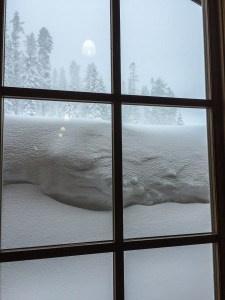
img_2421

Lassen National Park. Looking out the window of the Kohm Yah-mah-nee Visitor Center. February 2016.

Saturday morning dawned clear and cold to Lassen Park covered with the cleanest, most beautiful snow imaginable. After a nice cup of coffee and warm breakfast we filled out the wilderness permit and snowshoed away from the Kohm Yah-mah-nee Visitor Center.
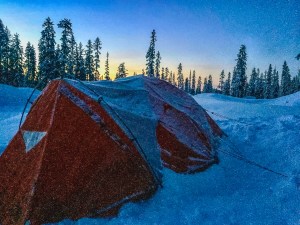
img_2351

My home away from home.   Christmas present from my husband. Sunrise at the Kohm Yah-mah-nee Visitor Center. Lassen National Park. February 2016.

img_2427

Kohm Yah-mah-nee Visitor Center in Lassen National Park. February 2016. Just a little bit of snow!

Our destination to camp was the Bumpass Hell Parking Lot area because it’s a nice flat area with a great view. The hike is about 5 to 6 miles one-way with approximately 2000 ft of elevation gain, depending on the route chosen. Travel during the winter into the backcountry anywhere requires avalanche hazard awareness. Lassen National Park in no exception.We all had avalanche safety gear, including beacons, shovels, and probes. I also had my InReach Explorer that tracks travel that can be followed via the internet and also allows two-way communication without cell service.

In addition to the usual winter safety awareness, Lassen is a geothermal area. When traveling in the Lassen backcountry, especially in winter when snow can cover geothermal areas, it is necessary to be aware of the location of those geothermal areas. The Lassen National Park website has a map of the avalanche and geothermal hazards in the southwest section of the park. Anyone venturing into the backcountry in winter should be well aquatinted with the information on that map. The visitor center sells laminated copies that are waterproof. We had several copies with us.

When snow is deep in Lassen travel to the Bumpass Hell area is via the Ranger Cutoff to avoid avalanche danger near Diamond Peak. The Ranger Cutoff shortens the hike in miles but it is more difficult than taking the road due to the steep elevation gain around the back side of Diamond Peak.

img_2428

Snowshoeing along SR89 Lassen National Park. Steam from the Sulfur Works is visible dead center of this photo. February 2016.

The day was absolutely gorgeous. The Sulfur Works area was in full steamy and bubbly swing as we headed up the first significant elevation gain approaching the Ranger Cutoff. This part of the hike follows SR89 until it rounds the corner at Windy Point. Then the route heads up the shoulder of Diamond Peak. I don’t have any photos of the actual Ranger’s Cutoff because I was too busy working my butt off in the soft, knee-deep powder to get to the ridge top! The slope of the climb on the Ranger Cutoff varies between 15% – 30%, at times we were literally using steps in the snow. It was very hard work. However, the view as we passed the backside of Diamond Peak was absolutely amazing.
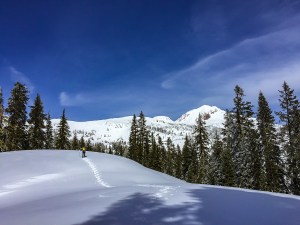
img_2436

Lassen Peak visible from the backside of Diamond Peak. February 2016.

We descended the Practice Hill area where we met some backcountry skiers. We saw a lot of skiers and several snowshoers during the day. The backcountry of Lassen is a popular destination. We continued to slog through the knee-deep powder in a winter wonderland. As we descended the backside of Diamond Peak we found SR 89 again and followed until the switchbacks in the road heading up to the Emerald Sidehill area. We took a shortcut evident in the snow left by skiers that skipped some of the road and ended up at the entrance to the Emerald Sidehill area. I am familiar with this area of Lassen and wondered what it would look like covered in snow. It was impressive. The road was not visible at all anymore, being covered by deep snow. The slope of the snow over the road in this area is steep. We sized up the snow condition and the track left by skiers earlier in the day. We then spread out, crossing one at a time, staying away from the edge as we traveled across the area. I was a little nervous but the snow was stable and we all got across without incident.
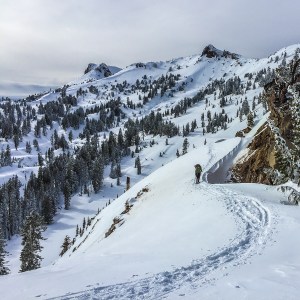
img_2437

Snowshoeing across the Emerald Sidehill area of SR89. Lassen National Park. February 2016.

The rest of the hike was easy. Relatively flat and open. We quickly located the Bumpass Hell parking lot and found the flattest area for our tents. Next it was time to dig the tent platform and entry step. Then the tents were all set up. Ready for dinner! But first, the ever-present necessity of melting snow. I brought my Sumo Jetboil pot so the snow melting went pretty quickly and we had enough water for both drinking and to make dinner. I also made a hot water bottle in an extra wool sock for my sleeping bag, something I learned from my climbing buddy when climbing Mt Whitney.

The sunset was amazing. Then, of course, the temperature dropped and we got into sleeping bags since the number one mission during winter camping seems to be staying warm. The temperature overnight dropped into the upper teens. However, I was surprisingly cozy even with my 15 deg sleeping bag but I did use a silk liner. And I had an inflatable pillow – a must for winter camping!

img_2352-2

Sunset at Bumpass Hell parking lot. Looking southwest. Lassen National Park. February 2016.
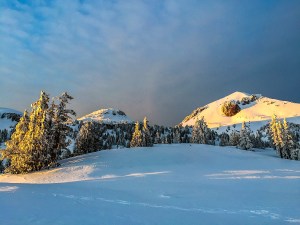
img_2454

Lassen Peak bathed in golden sunset light. February 2016.
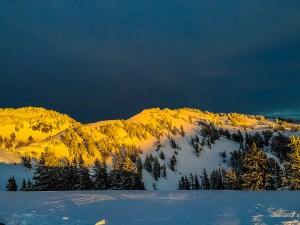
img_2451

Amazing lighting looking towards Bumpass Hell. Lassen National Park. February 2016.


Sunday morning was glorious. The view of Lassen Peak from the Bumpass Hell parking lot area is amazing. We had hoped to summit Lassen Peak but losing Friday to the storm meant that we needed to pack up and head back to the visitor center. We lounged around the area for the morning – in our shirtsleeves by noon. Then we packed up camp and headed back.


img_2461

Campsite with a view of Lassen Peak. Bumpass Hell parking lot. Lassen National Park. February 2016
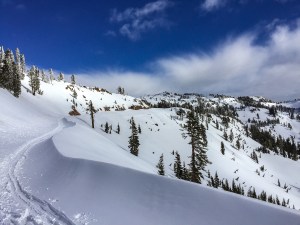
img_2490

Lassen National Park. Emerald Sidehill on SR89, looking back east on our way back. Such a lovey day! February 2016.


The hike back felt leisurely since it was mostly downhill and the weather was so pleasant. We arrived back at the cars late in the afternoon and headed home. My first winter backcounty camping trip since college as a success!

We repeated the trip one more time in May 2016 hoping to summit Lassen Peak. Unfortunately, we were hit with an unseasonable snowstorm. We were able to follow the road in May making the hike quick and navigation not really necessary. However, to say the weather was inclement is an under statement.  Once again I was denied a summit of Lassen Peak in the snow. The photos below show that on the return trip we got our practice dealing with winter storm conditions! I am looking forward to returning to Lassen this winter fo more winter camping adventures and maybe a winter summit of Lassen Peak.
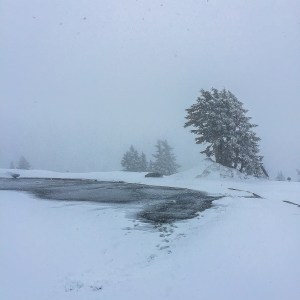
 

img_2739

Bumpass Hell parking lot. Not such great weather conditions! May 2016.

The Benson Lake/Matterhorn Canyon Loop Backpacking Trip

It started with a somewhat random text from my daughter, Ashley. She wanted to know if she could take my dog, Sport, on a solo backpacking trip. After a little back and forth texting, I invited myself instead. Playing the part of Sport is Terri. After a little bit more discussion about destinations, I suggested we do the 54 mile Benson Lake/Matterhorn Canyon Loop. I have wanted to do this trip for at least 15 years. And, I have wanted to return to Matterhorn Canyon ever since an amazing backpacking trip I took from Tuolumne Meadows to Twin Lakes in 1975. I was excited to share the canyon with Ashley. I did warn her that it would be strenuous. We are both marathon runners but backpacking has been an only an occasional thing for both of us. However, she was definitely game. Especially because this route had the varied scenery she wanted during the trip. It passes through thick forest, travels along beautiful alpine lakes, traverses the wide and long Kerrick Meadow, crosses over several high elevation passes and threads up two rocky canyons, Matterhorn Canyon and Slide Canyon, before descending into thick forest again.

Me in Matterhorn Canyon in the summer of 1975. Photo Credit: Ivan Lee

Me in Matterhorn Canyon in the summer of 1975. Photo Credit: Ivan Lee

Among family and friends, I am known as the trip planner. All it takes is a vague suggestion for a trip and in 10 minutes flat I’ve got the itinerary, lodging, and menu planned. This trip was no different with the exception of the menu, which I will get to in detail a little later. Ashley and I settled on a 5 day trip over the Labor Day weekend. We would camp near Twin Lakes Wednesday, enter Hoover Wilderness from Twin Lakes on Thursday, and exit on Monday. We decided to do the loop counterclockwise because I wanted to walk up Matterhorn Canyon from the south. The camp spots were chosen with each day’s mileage charted out.

With only 5 days we would need to stick to the schedule (or better) or we would not make it out by Monday! I typically have a pretty relaxed approach to backpacking planning. I don’t mind carrying a heavy-ish pack for the kind of trips I usually take. But this time the goal was much bigger. In fact, I had not done a trip this big since 1975! So, I did a lot of research on hiking speed, calories burned, and meal planning. We needed to keep things light since we needed to average 11 miles per day. I found the website https://caseyfiedler.wordpress.com by an ultra-light hiker that covers everything you need to know about the calorie to weight ratio approach. I used that approach to plan our meals and snacks. We are not ultra-light hikers, neither of us have the latest and lightest equipment. But the food information was excellent. I developed an EXCEL spreadsheet to calculate the weight of the food and the calories for each day. It totally changed which freeze dried meals and what kind of snacks I chose for the trip. I will never look at backpacking food the same again! By the time I was finished we each had 3000 calories per day with an average calorie density of 150 calories per ounce and our total food weight was 5 lbs apiece. We were never hungry. We ate all the food except for a couple of snack bars and some of the gorp.I also estimated the time each day’s hike would take (It turned out we tended to be faster uphill than estimated but we were a little slower downhill). At the start of the trip our packs each weighed under 30 lbs without water. I added 4 lbs of photography equipment because that was important to me.

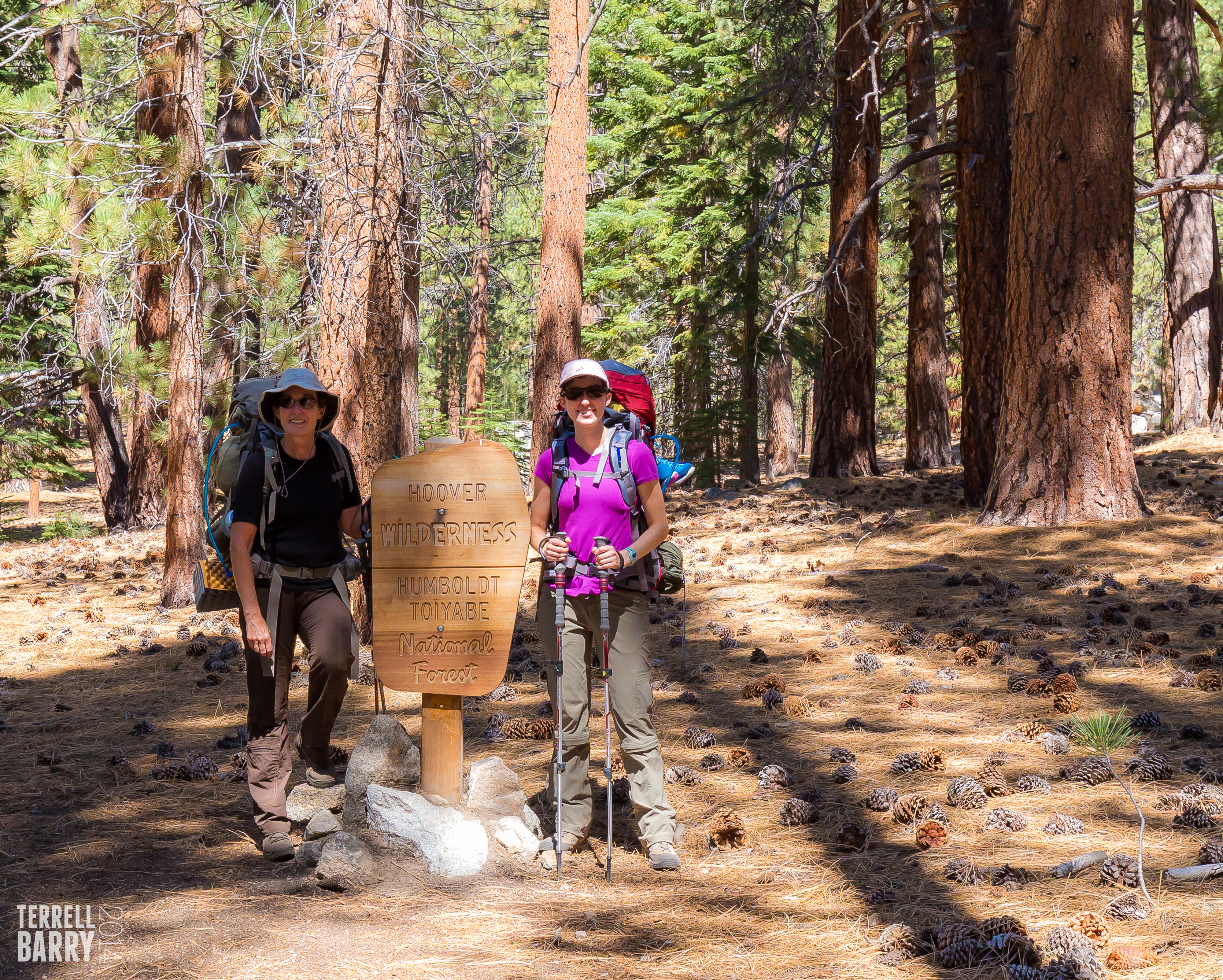
Entering Hoover Wilderness

Entering Hoover Wilderness

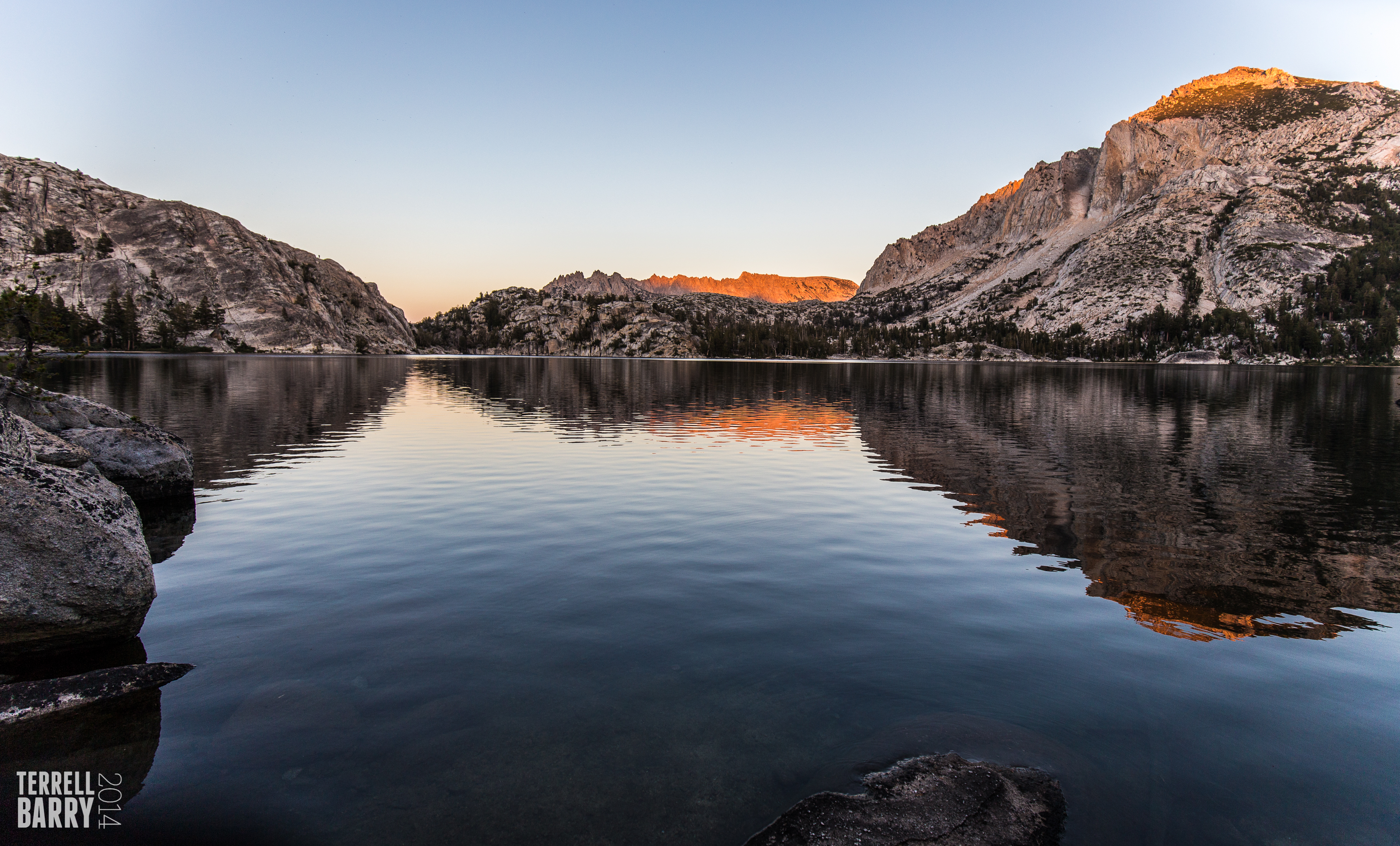
Our first night was at Peeler Lake. This was the shortest day at 8 miles. We found a beautiful campsite on the southwest side of the lake. We had gotten a later start than we wanted so we arrived late. We were setting up camp and getting water in near darkness. Ashley did remark that night that everything about backpacking was harder than she remembered. But she is a tough cookie and took it all in stride.

Peeler Lake at sunset

Peeler Lake at sunset

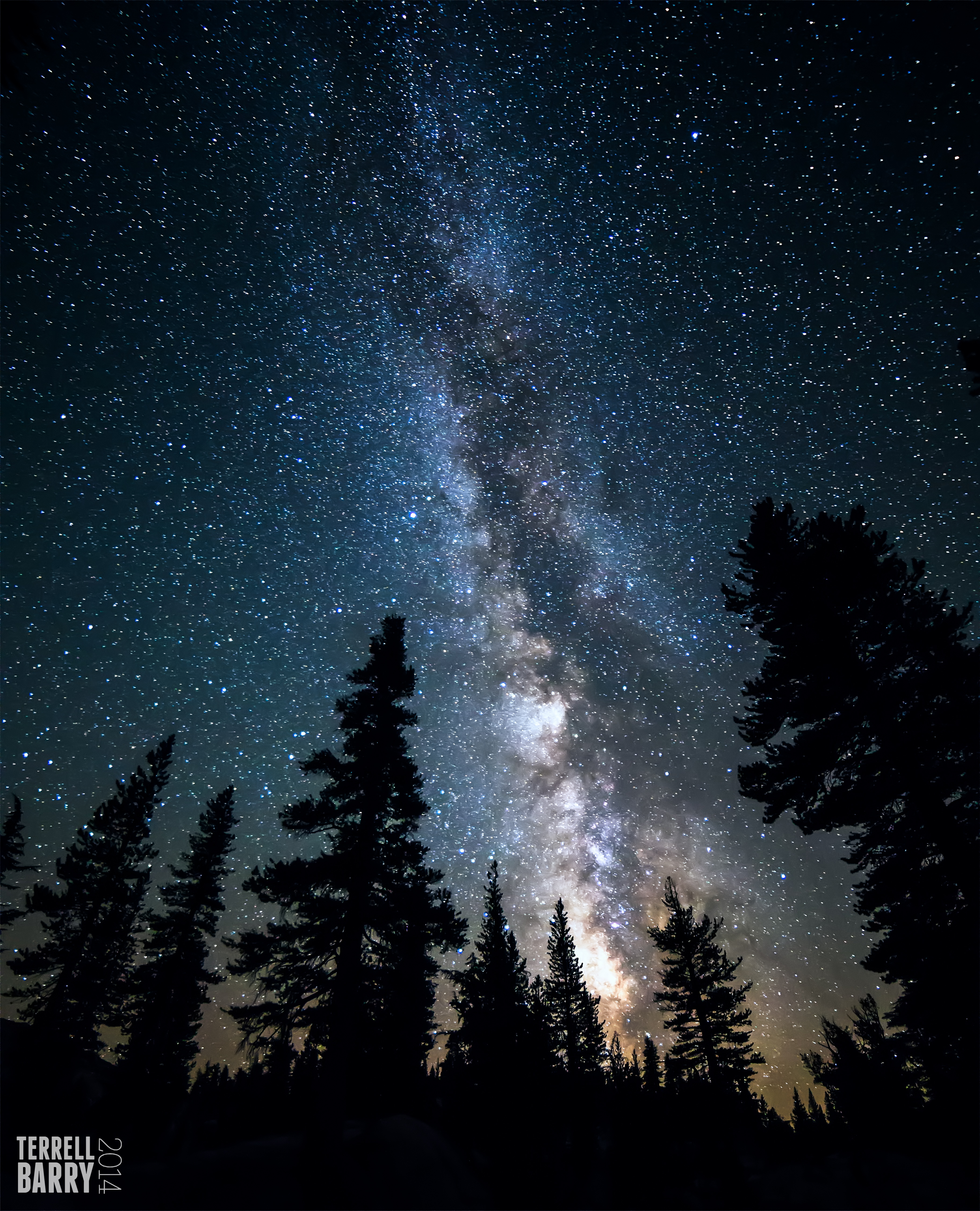
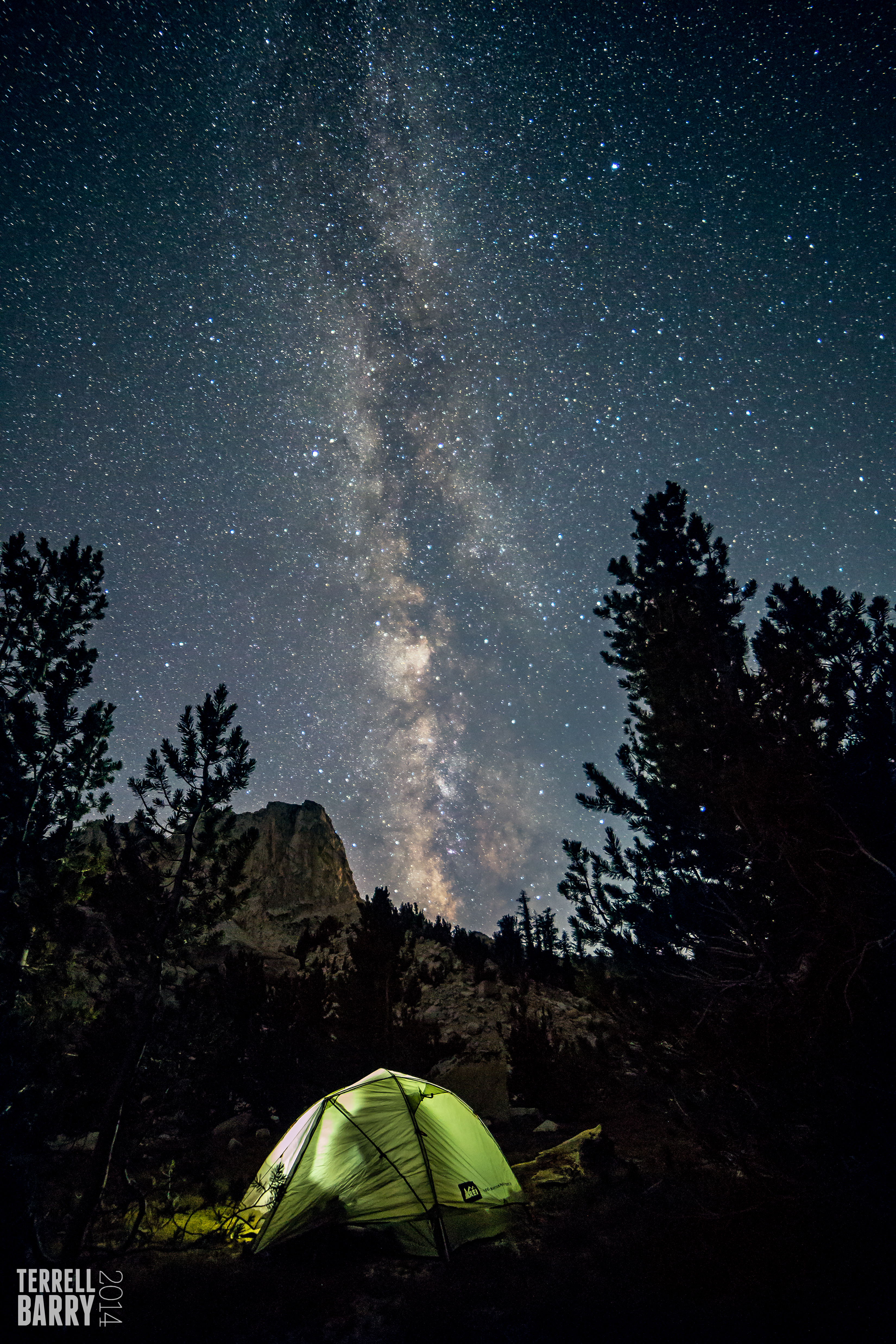
Once we were finished with dinner and the sun had set, I prepared to take my first Milky Way photos ever. I set up the tripod and camera and realized right away that I had not played with my new manual lens enough at home. I couldn’t get the remote to interact with the camera (that turned out to be operator error!) so I had to use the delayed shutter instead. Oh, well, I still got some shots I really like. In between one of the shots we saw a meteor so big it actually lit up the sky like firework. I wish I would have been lucky enough to get it in one of my photos. But just seeing it was amazing.

My first serious Milky Way photo!

My first serious Milky Way photo!

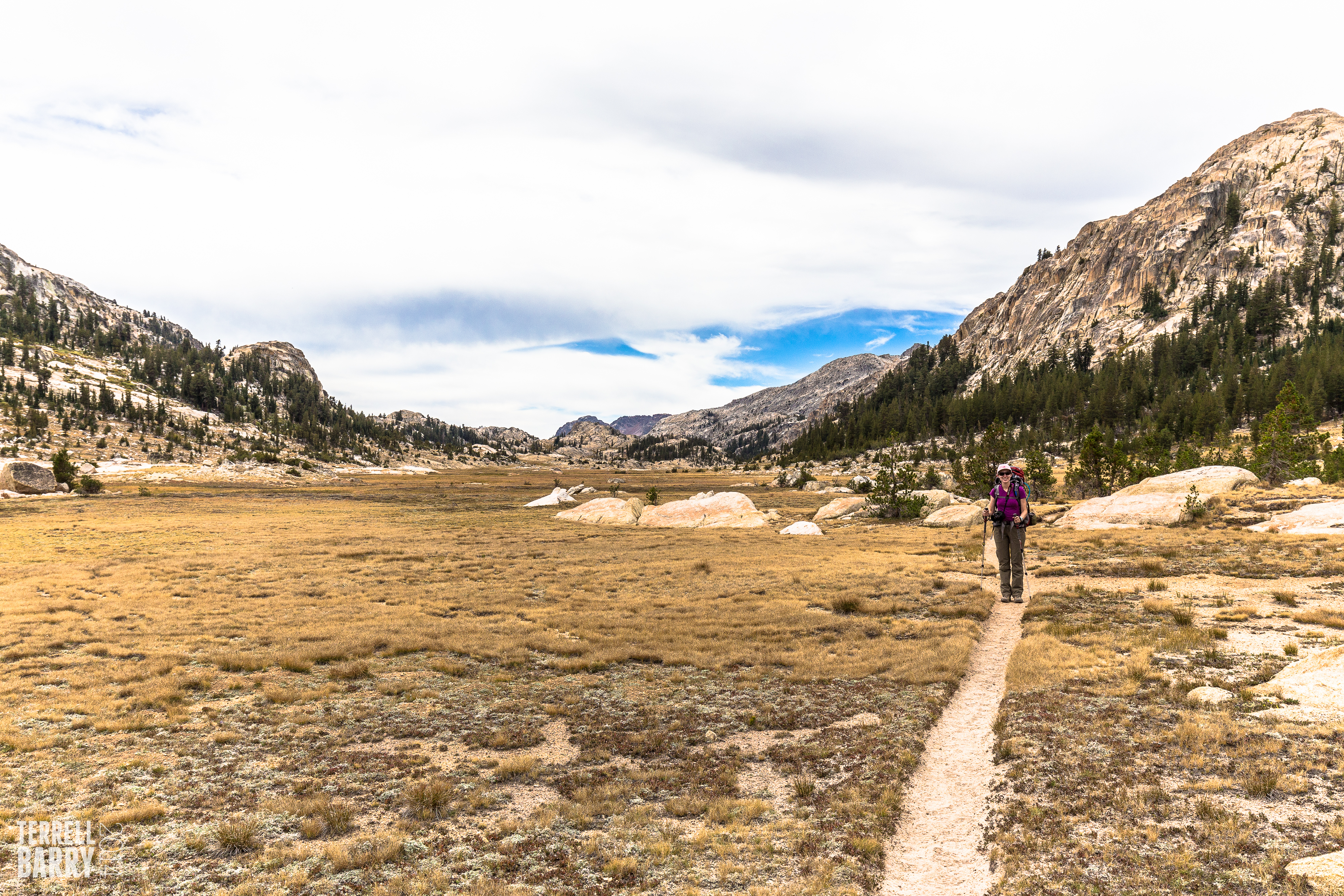
The next day, Friday, we headed to Benson Lake. This is an alpine lake with a huge sand beach. The hike to Benson Lake was lovely. The route travels through Kerrick Meadows and over Seavey Pass. I will say this day was tougher than either of us expected. The elevation gain on the route was not huge and it was net downhill. But once we were over Seavey Pass it seemed like it took forever to reach the lake, even though it was only 3 miles.

Ashley enjoying  the hike through Kerrick Meadow

Ashley enjoying the hike through Kerrick Meadow.

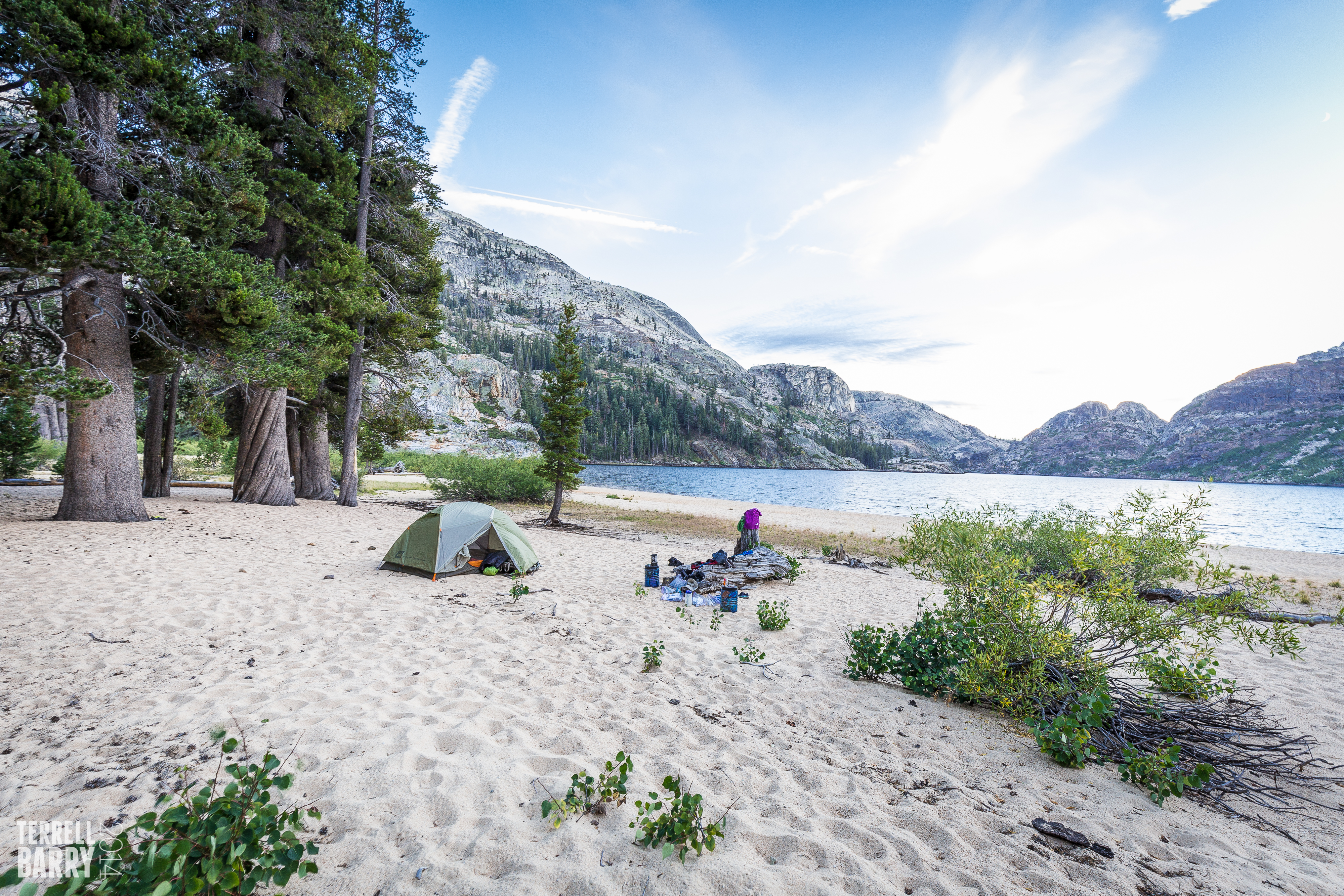
When we finally arrived we were surprised and happy to find that we had the lake completely to ourselves. Ashley wanted to camp on the beach, which we did. It was nice and soft but I worried about getting sand in everything. But, we managed and it was a really nice view from our spot. Unfortunately, it was too late and chilly for the swim we had hoped to take. We also found we had to stand in the lake to collect water. Oh, well. More information for next time!

Camping on the beach at Benson Lake.

Camping on the beach at Benson Lake.

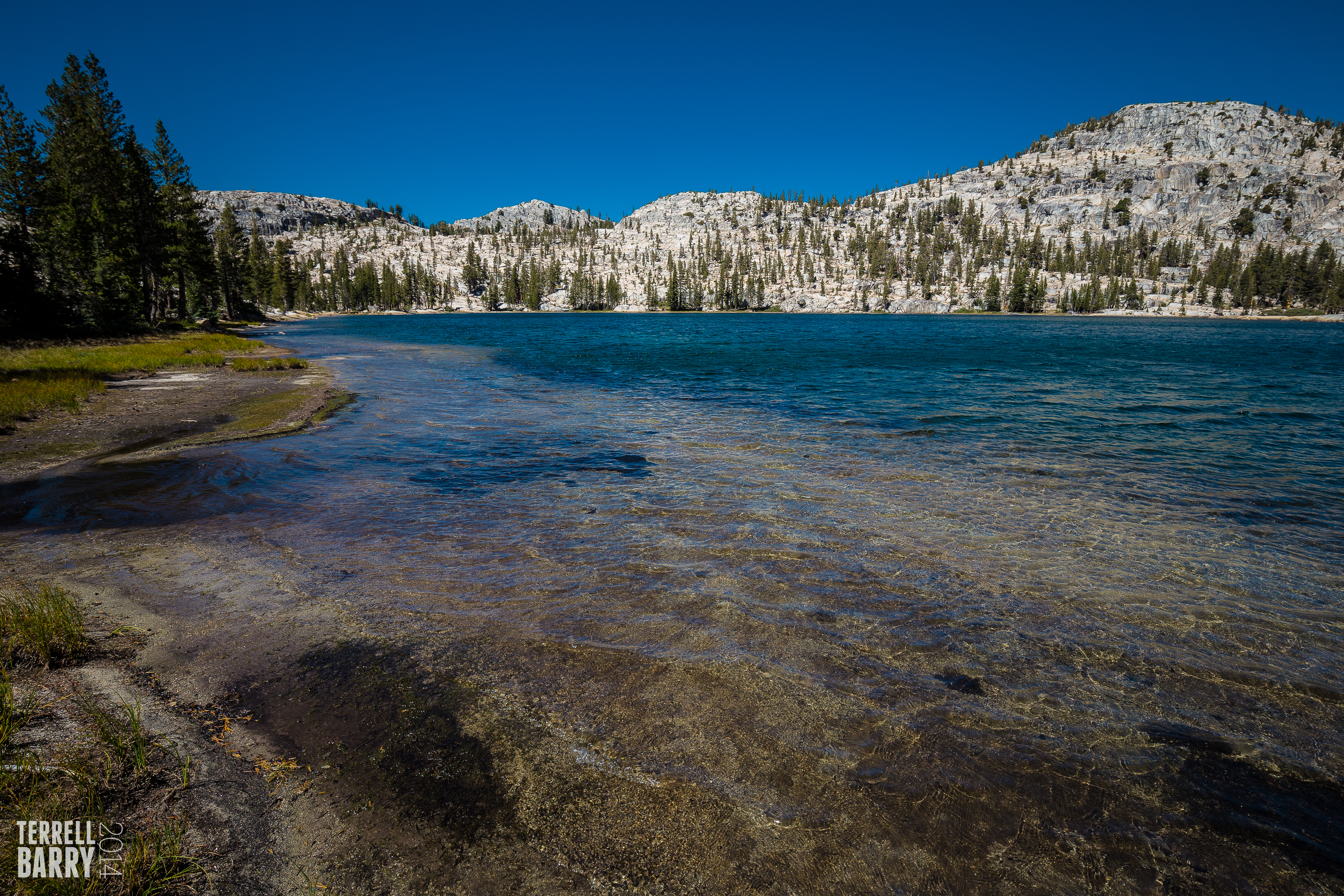
Saturday’s hike was from Benson Lake to the south end of Matterhorn Canyon. This was a big day with 11 miles that included 2500 elevation gain and 1600 ft of elevation loss. And I was not entirely clear where we would camp in Matterhorn Canyon. But the weather was beautiful and we were excited to head to Matterhorn Canyon. Our first climb of the day was from Benson Lake (7581 ft) up to Smedburg Lake (9213 ft). We arrive at Smedburg Lake around 2 pm. Smedburg Lake is one of the most remote lakes in Yosemite National Park. It is beautiful, huge, and 25 miles from anywhere. I wish we had an extra day to spend there. However, the wind had picked up. It was very windy, the white caps on the lake were impressive.

Just the southwest corner of Smedburg Lake. This lake is huge and 25 miles from anywhere.

Just the southwest corner of Smedburg Lake. This lake is huge and 25 miles from anywhere.

We had lunch at Smedburg Lake and then headed out to cross Benson Pass. We thought we had crossed the pass several times but each time we were deceived! Once we reached the pass it was unmistakable. The view was amazing. We spend just a little time there because we still had 5 miles to go and it was 4:00 pm. Onward!

Benson Pass, facing east.  Matterhorn Canyon is to the left.

Benson Pass, facing east.
Matterhorn Canyon is to the left.

We reached the Matterhorn Canyon trail junction at 6:00 pm. I had thought we would camp close to that junction but there was no convenient water and it was not a great camping location. So, we continued up the canyon. We ended up hiking 2 more miles, the last of it in the dark, to arrive where the trail crossed Matterhorn Creek. That made for easy water collection. Finding a relatively flat spot to set the tent was challenging since the canyon gets more narrow and steep-sided the higher up you travel. And we were in thick forest. We made do with a slightly sloping spot positioning our heads up hill. Dinner made in the dark with the stars above was still better than any day back in civilization!

We hiked a total of 13 miles that day. We were now a little ahead of schedule. That night we discussed the last two days of hiking. The itinerary as planned for Sunday was to have a shorter hiking day and to camp in Slide Canyon. Then Monday we would hike 13.5 miles out over Mule Pass on Monday. We decided, instead, to hike over both Burro Pass and Mule Pass on Sunday, camping just below Mule Pass. After all, Saturday was a huge day, with more elevation gain, and we handled that fine. How hard could it be? This would make Monday a shorter day.

Our first view of the head of Matterhorn Canyon

Our first view of upper Matterhorn Canyon


Re-enactment of 1975. Photo credit: Ashley Barry

Re-enactment of 1975.
Photo credit: Ashley Barry

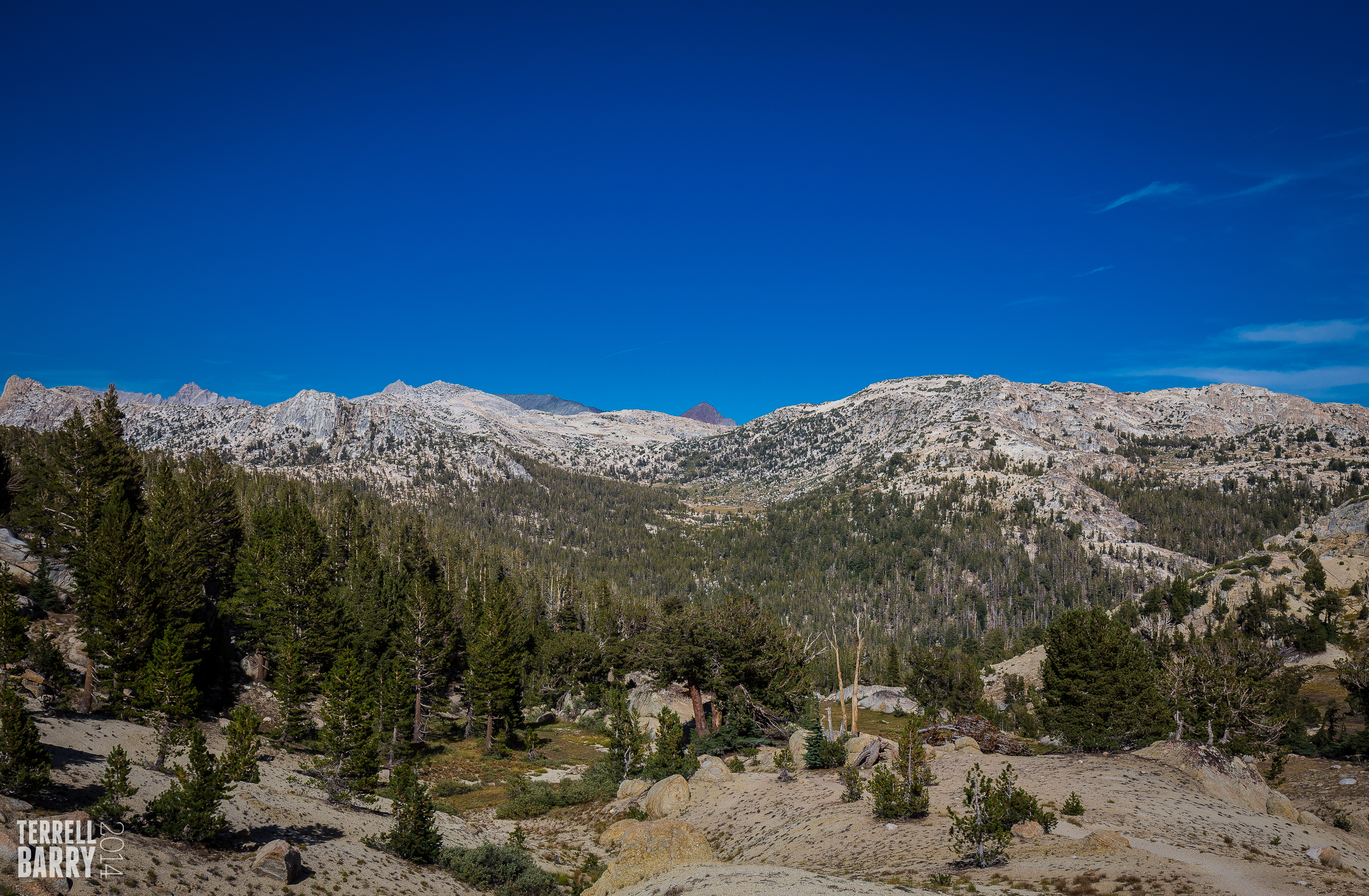
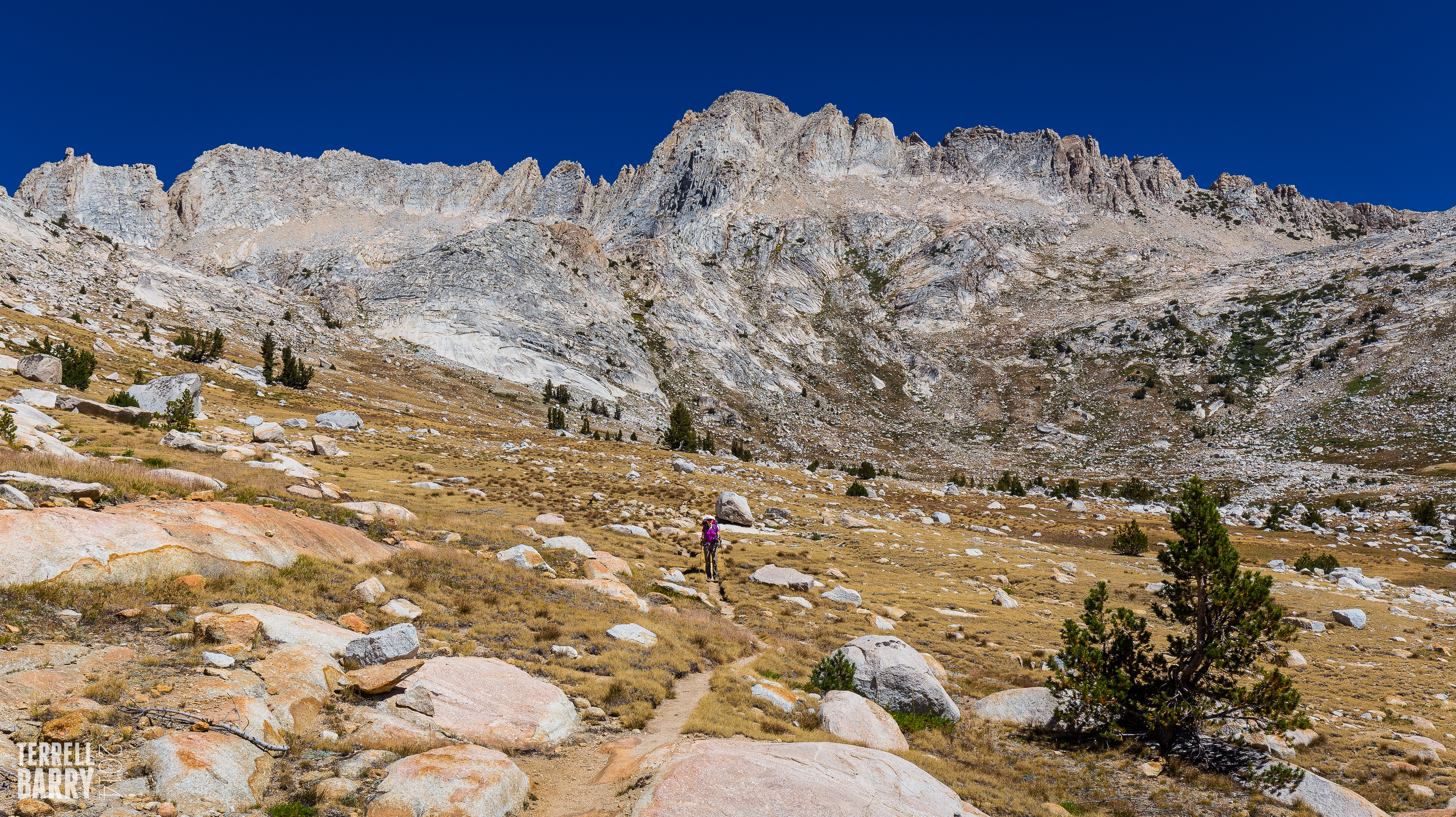
Sunday morning we set out to cross our two passes, Burro Pass and Mule Pass. After a short time Matterhorn Peak came into view. It was just a beautiful as I remembered. Our pace was leisurely to enjoy the canyon but we were mindful of the time. We were at the top of Burro Pass at 1:00 pm. We took our lunch break there. The view in both directions were breathtaking. I had scrambled up Matterhorn Peak in 1975 but there was no time for that this trip. I looked across to Mule Pass and thought it didn’t look too bad…

Approaching Burro Pass.

Approaching Burro Pass.

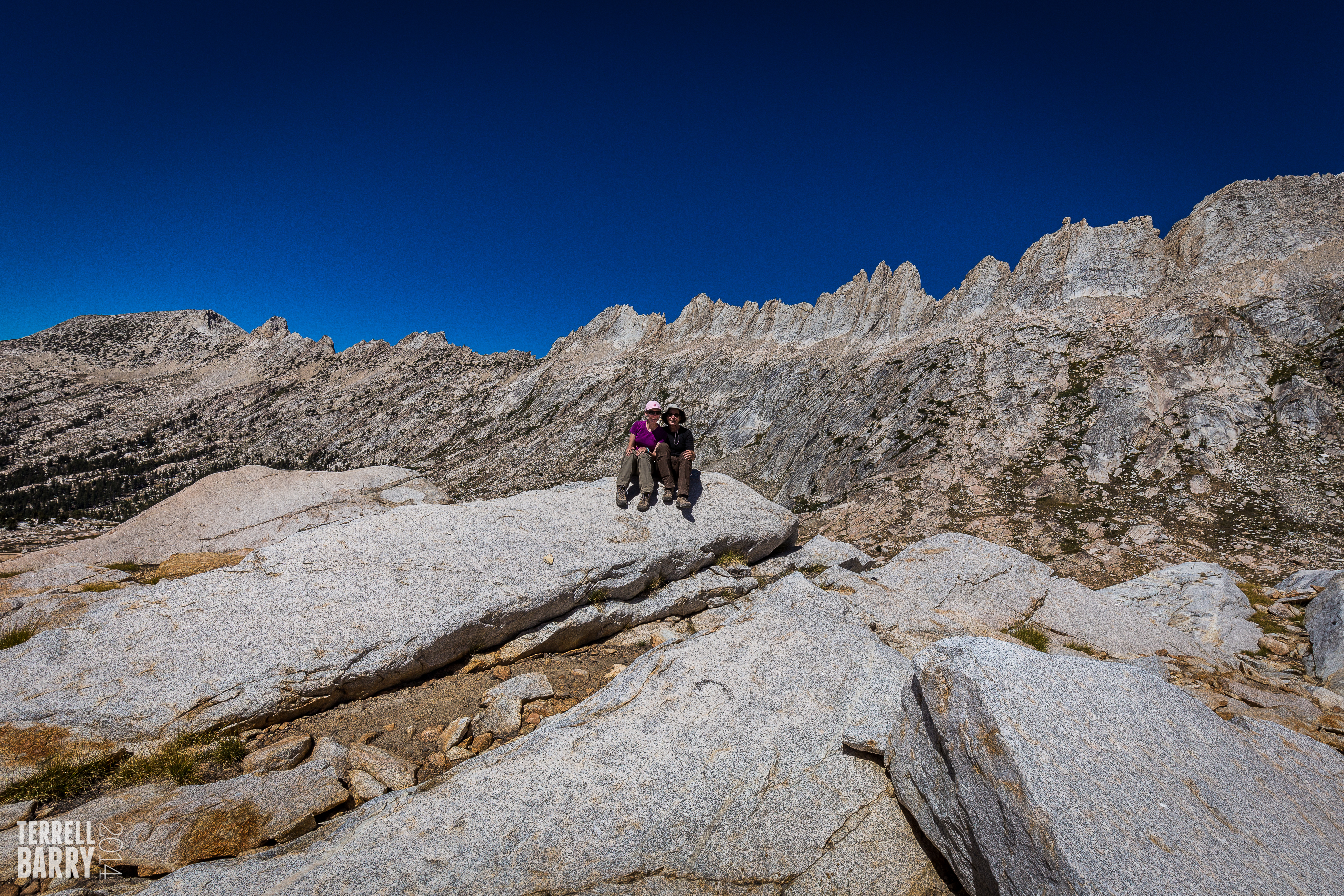
Our one and only selfie attempt. Sawtooh Ridge behind us.

Our one and only selfie attempt. Sawtooh Ridge behind us.

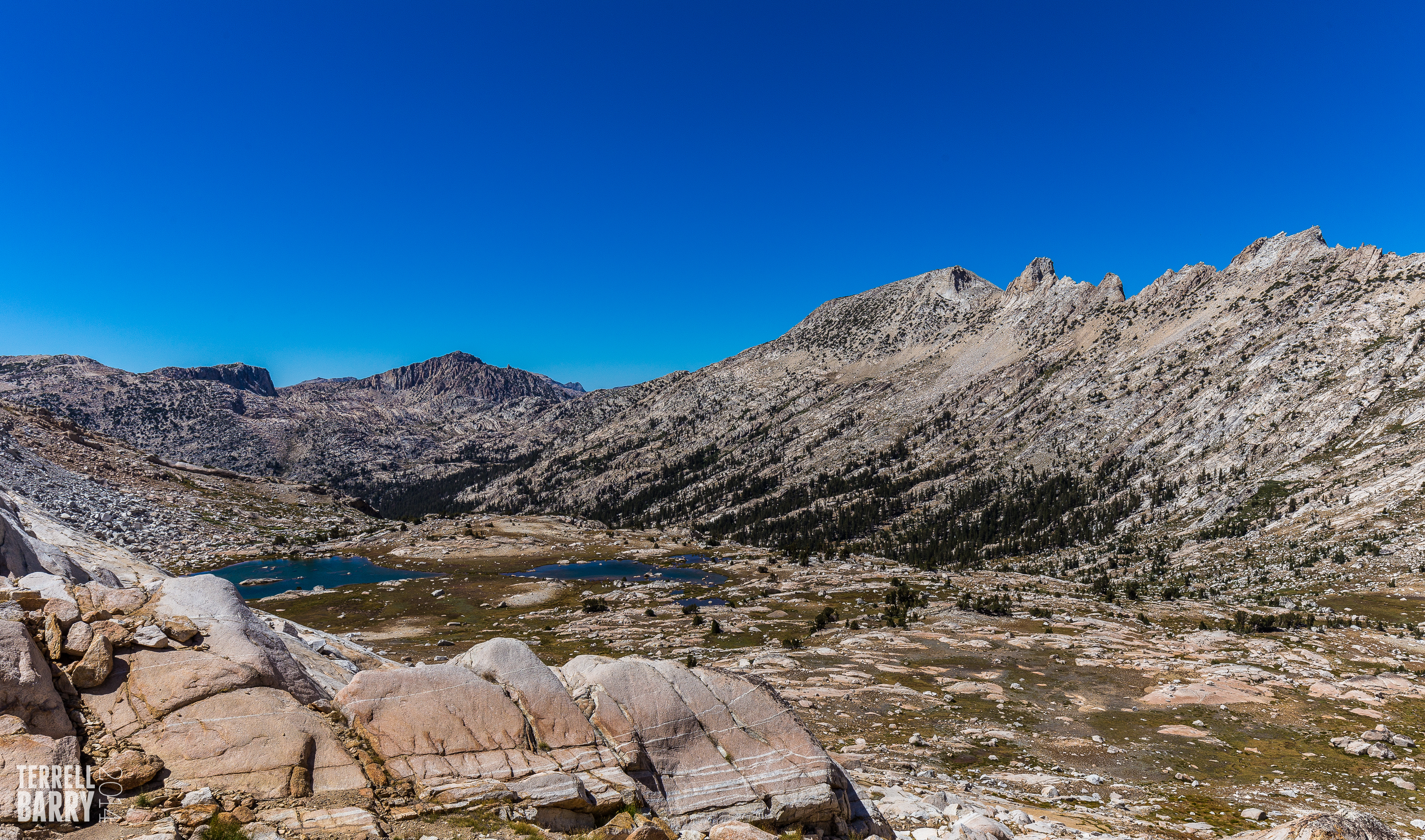
Slide Canyon and Mule Pass directly across from us on the right.

Slide Canyon and Mule Pass directly across from us on the right.

After lunch we quickly descended into Slide Canyon. This is such a beautiful area that I plan to return next season directly from Twin Lakes. The hike directly from Twin Lakes into Slide Canyon in the clockwise direction is about 14 miles. Ashley loved the Sawtooth Ridge, that’s my daughter! I love the Sawtooth Ridge too. In retrospect, we probably hiked through Slide Canyon at a little too leisurely a pace but we planned to camp just over Mule Pass so it didn’t seem that far. As we hiked along I started to think about the pass name. Burro Pass versus Mule Pass. Hmmm, mules are more cantankerous than burros. I hope that isn’t why the names were assigned that way. Well, Mule Pass kicked our butts. It was long and hard even though the elevation gain was only 1000 ft. That was a big surprise, nothing we hiked the entire trip felt that hard. It could have been because we were tired from the day before or the trip as a whole. But Ashley reminded me that people  we talked to way back on the first day said that hikers had to be “dumb as a mule to go up Mule Pass.” The counter-clockwise loop (our direction of travel) takes hikers up Mule Pass. When we reached the top, which is the border between Yosemite Park and Hoover Wilderness, Ashley remarked that Yosemite had just chewed us up and spit us out.

The next surprise was that a party with pack lamas was camped in the only dry spot in the area below Mule Pass we had planned to stop. So we had to continue hiking. I wasn’t sure exactly where the next opportunity to camp would be but I knew it was at least a mile. We were hungry, tired, and almost out of water. I was not happy. Luckily, Ashley became the cheerleader. Then in a talus field along the trail we saw our first, and only, Pika. It was so cute and it really interacted with us. We both enjoyed the Pika visit. We also took that opportunity to also have a snack and a little water. We also put on some warmer clothes since it had gotten quite chilly. Refueled, we headed further down in elevation. We ended up finding a perfect camping spot, flat and nearby water. There was even still a little daylight as we set up camp. That night we had hot chocolate after dinner for the first time during the trip. To make things even better, even tho it was a full moon but I managed to take a few more Milky Way photos. It was perfect!

Ashley relaxing in our tent while I'm taking Milky Way photos. It was chilly!

Ashley relaxing in our tent while I’m taking Milky Way photos. It was chilly!

The next morning we woke early, packed quickly, and decided to aim for lunch at the Cafe at Mono Village. We had 9 downhill miles to cover. Off we went. We passed Crown Lake on the way. It was a beautiful little lake but there were not many campsites and people were camped in all of them so we were glad we stopped where we did the previous night.

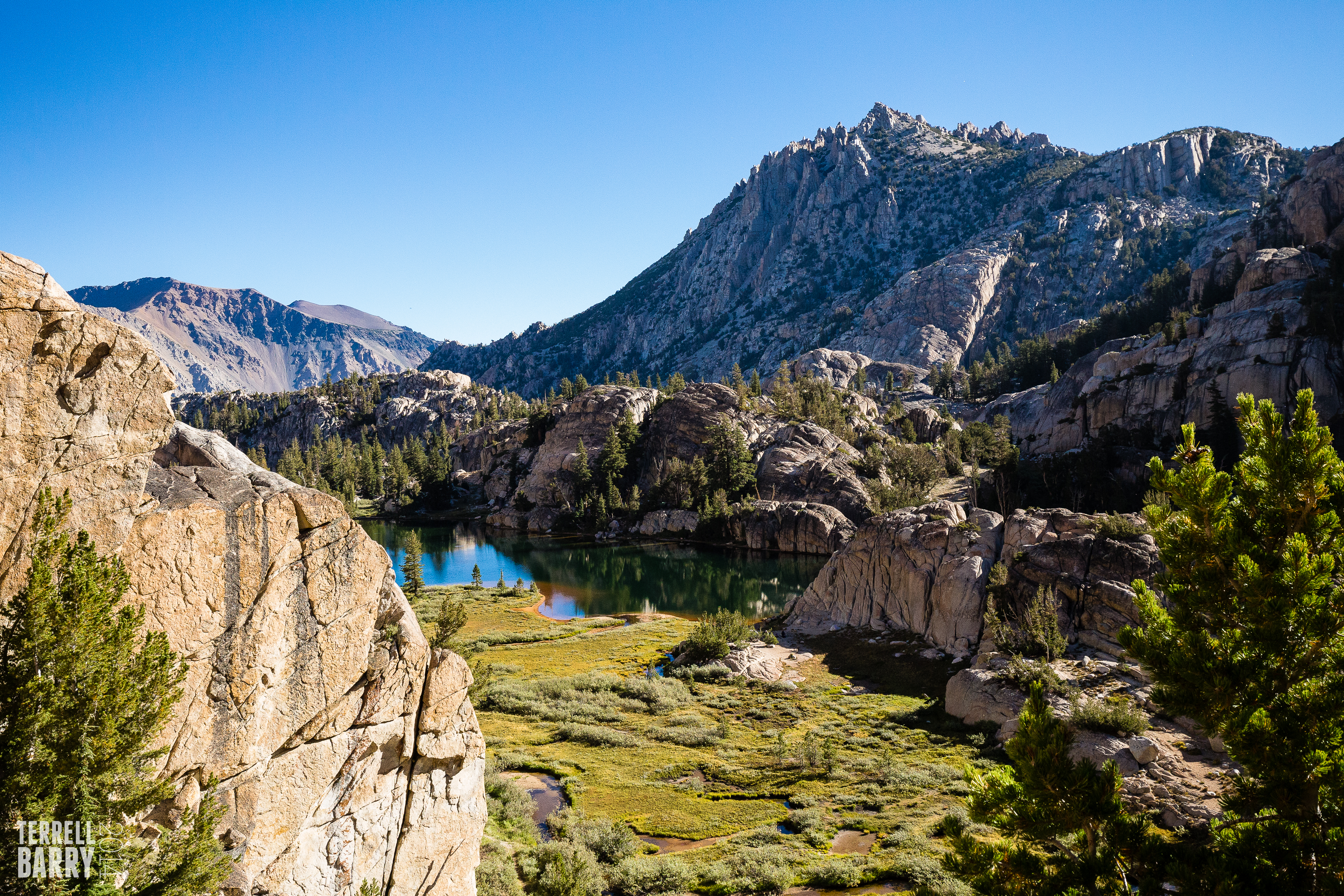
Crown Lake. The colors were gorgeous.

Crown Lake. The colors were gorgeous.

We quickly reached the trail junction heading back to Twin Lakes. We had 6.7 miles left that we had also covered on the way in. Ashley experienced firsthand why backpackers heading out on a route that they covered going in have that “look” in their eye and determination in their step! We covered 9 miles in a little over 4 hours, including breaks. We had a great lunch and then left for home. Since it was Labor Day, and Tahoe traffic can be expected to be heavy, we decided to go home over Sonora Pass. It was a nice drive and a nice end to a wonderful, but tough, mother/daughter backpacking trip.

My full set of photo can be found on Flickr in the Benson Lake/Matterhorn Canyon Loop – Backpacking Album.